

Passengers from the MV Hondius cruise ship have completed their isolation periods as of last Sunday, marking the successful containment of a hantavirus outbreak that experts feared could have spiralled into a multicountry epidemic. The outbreak, caused by the Andes strain of hantavirus, was limited to 13 confirmed cases among the 147 passengers and crew on board, with no onward transmission to the wider public. Public health officials have described the outcome as a rare and significant success in global disease control.
The worst-case scenario was stark. Had the virus not been identified quickly after the first cases emerged on 4 May, passengers could have disembarked and dispersed across the globe. The Andes strain of hantavirus is one of the deadliest known respiratory viruses, with a case fatality rate estimated between 20 and 40 percent, and in parts of southern Chile approaching 60 percent. Its incubation period — ranging from one to eight weeks, with a median of 14 to 18 days — means infected individuals could have been asymptomatic while travelling through airports, attending family gatherings, or visiting crowded markets. By the time severe symptoms developed, secondary cases would already have emerged in multiple countries, making contact tracing nearly impossible. With no approved antiviral treatments or vaccines, governments would have been forced to consider public health mandates while the public faced confusion and fear.
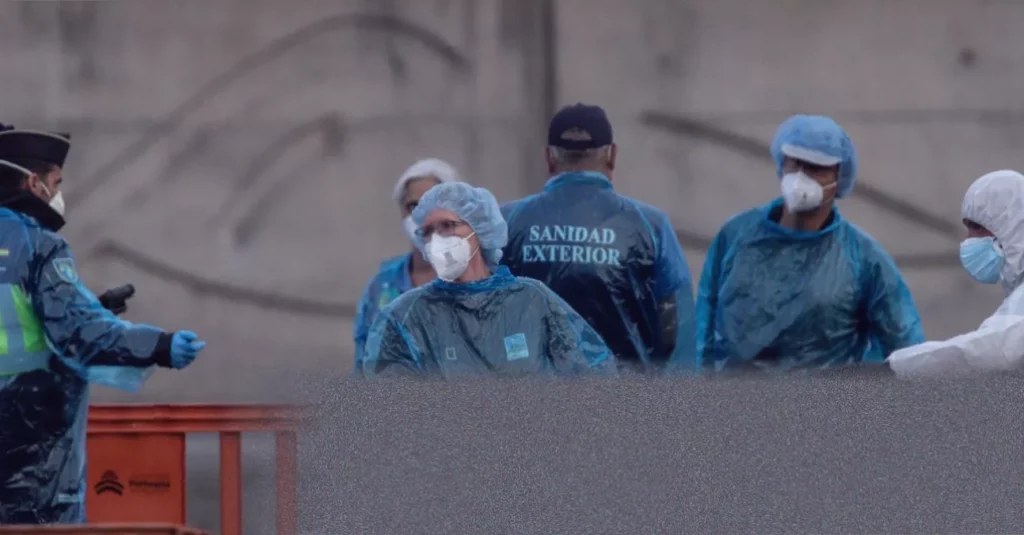
The success of the containment effort hinged on rapid international coordination, with Spain and the World Health Organization taking central roles. When the MV Hondius — a Dutch-flagged ship that had departed from Ushuaia, Argentina, on 1 April — requested permission to dock after being held off the coast of Cape Verde, Spain agreed on humanitarian grounds, despite initial objections from local authorities in Tenerife. The Spanish government and linked public health authorities took the lead in organising the safe disembarkation of passengers, implementing stringent disinfection measures and providing isolated transport to the airport for repatriation. This decisive action reduced the likelihood of wider spread and set the template for the response that followed.
Alongside the Spanish response, the WHO issued technical guidance to all 23 countries whose citizens were on board, setting out standardised protocols for isolation, monitoring and clinical management. The organisation also facilitated the shipment of diagnostic kits and developed operational guidance for safe disembarkation. This coordination proved essential because, as the WHO acknowledged, countries with different healthcare systems and political orientations needed to act in unison to stop a worldwide outbreak. The guidance ensured consistency in contact tracing across flights, airports and public transport.
The UK Health Security Agency was among the national bodies that executed the protocols effectively. It repatriated British nationals back to the UK, organising their care, testing and monitoring. British passengers were transferred to Arrowe Park Hospital on the Wirral for isolation and assessment, with some continuing their isolation at home under supervision. Contingency plans were also in place for managing wider spread to secondary contacts. Passengers from other nations, including 18 Americans, underwent monitoring at the National Quarantine Unit at the University of Nebraska Medical Center. A 42-day monitoring period was implemented for all exposed individuals, reflecting the virus’s incubation period, with some passengers required to self-isolate for up to 45 days.
While the nature of hantavirus transmission worked in favour of containment — the Andes strain is known to spread from human to human but requires close, prolonged contact and is far less contagious than SARS-CoV-2 or influenza — health officials stressed that luck alone did not account for the outcome. No cases were reported from those exposed on flights or in airports before the outbreak was identified, which would have been expected with a more infectious virus given the incubation period. The absence of secondary cases in the community is attributable to the rapid response, leadership and international cooperation that characterised the operation.
Research initiative launched to prepare for future outbreaks
The outbreak has also prompted a globally coordinated research programme known as NAVIS, involving 21 countries, which aims to improve understanding of Andes virus transmission, incubation periods and immune responses. The study will generate comparable datasets to inform the development of medical countermeasures — a silver lining from an event that could have been far worse. As of mid-May, former passengers had been hospitalised or quarantined in at least 12 countries, including Australia, Canada, France, Germany, the Netherlands, Saint Helena, Singapore, South Africa, Spain, Switzerland, Turkey and the United States.
Health authorities consistently assessed the risk to the general public as very low throughout the response, given the controlled measures and the virus’s transmission characteristics. Nevertheless, the incident has highlighted the dangers posed by rodent-borne diseases in agricultural and wildlife farming environments, with a recent analysis calling for a “One Health” approach to prevent similar outbreaks. Some studies have detected genetic material of the Andes virus in semen long after recovery, though this does not necessarily indicate infectiousness or transmissibility.
The outbreak on the MV Hondius was contained because a combination of swift government action, international coordination and scientific cooperation prevented a pathogen with a mortality rate far higher than Covid-19 from reaching the wider population. That outcome, public health experts have noted, is the kind of success that rarely makes headlines — the diseases that do not develop, the clusters that do not form, the global spread that never happens.