

Close Menu
    Useful
    • About Us
    • Contact Us
    • Advertise With Us
    • Health Explainers
    • Our Editorial Team
    Facebook
    HealthNewsDaily.co.uk
    • Home
      • Explainers
    • NHS

      British Medical Association may lay off up to a third of employees amid financial crisis

      4 July 2026

      GB Mums: lenient justice, NHS maternity and child abuse sentences leave children unprotected

      3 July 2026

      Advance heatwave plans needed, not last-minute fixes, Letters say

      3 July 2026

      NHS calls for PMOS checks in women with irregular periods

      1 July 2026

      Months-long neglect of four cancer signs by third of Britons blamed on GP appointment crisis

      30 June 2026
    • Health Policy

      Streeting demands NHS bosses appear before MPs over Nottingham maternity scandal

      4 July 2026

      Hospital waiting list patients to get three weeks’ advance warning under NHS England plans

      3 July 2026

      Britons back morning-after pill sales in corner shops, poll finds

      1 July 2026

      Maternity investigator Ockenden says Amos review offers no fresh insights

      30 June 2026

      Bereaved mother warns England maternity commissioner role poses danger

      30 June 2026
    • Mental Health

      Letter draws attention to parents of adult children neither employed nor studying

      3 July 2026

      England sees one million children seeking help for anxiety and autism

      29 June 2026

      Joanne McNally says bulimia and breakdown in her twenties ultimately transformed her

      27 June 2026

      Dopamine sites become internet’s most dismal craze

      27 June 2026

      Blue Heron film review: a serious, nuanced examination of childhood trauma in 1990s Canada

      25 June 2026
    • Wellness & Lifestyle

      Weight-loss drugs become new battleground after Brexit rows

      4 July 2026

      Hair transplant surgeon champions specific shampoo routine for greater volume and shine

      4 July 2026

      20-minute technique could help England fans stay awake for Mexico World Cup tie

      3 July 2026

      Doctor warns cutting back on fat could sabotage low-cholesterol diet

      3 July 2026

      NHS to cover cost of shopping for 30-minute daily walkers

      3 July 2026
    • Disease & Prevention

      South-east England forecast to reach 34C as week-long heatwave hits

      4 July 2026

      French fatalities jumped 30% during peak week of record June heatwave

      4 July 2026

      Toddler’s tantrums mistaken for typical toddler phase before grave diagnosis

      3 July 2026

      600,000 mosquitos released over Washington DC to exterminate biting pests

      2 July 2026

      Remaining seated for 30 minutes or more raises risk of cancer death

      2 July 2026
    • Treatment & Research

      Woman, 24, had 12 Botox vials injected into face for non-cosmetic reason

      4 July 2026

      Statins: the purpose and risks of cholesterol medication

      3 July 2026

      Extreme fatigue from Long Covid hampers business owner’s ability to run firm

      3 July 2026

      Five-minute habit can cut cancer risk by more than 20%

      2 July 2026

      Over-40s with obesity show cholesterol and blood pressure levels within normal BMI range, research finds

      2 July 2026
    HealthNewsDaily.co.uk
    • NHS
    • Health Policy
    • Mental Health
    • Wellness & Lifestyle
    • Disease & Prevention
    • Treatment & Research
    Home » Disease & Prevention » Biggest single-day increase in Ebola cases recorded in Congo amid outbreak escalation
    Disease & Prevention

    Biggest single-day increase in Ebola cases recorded in Congo amid outbreak escalation

    Sophie HargreavesBy Sophie Hargreaves15 June 2026
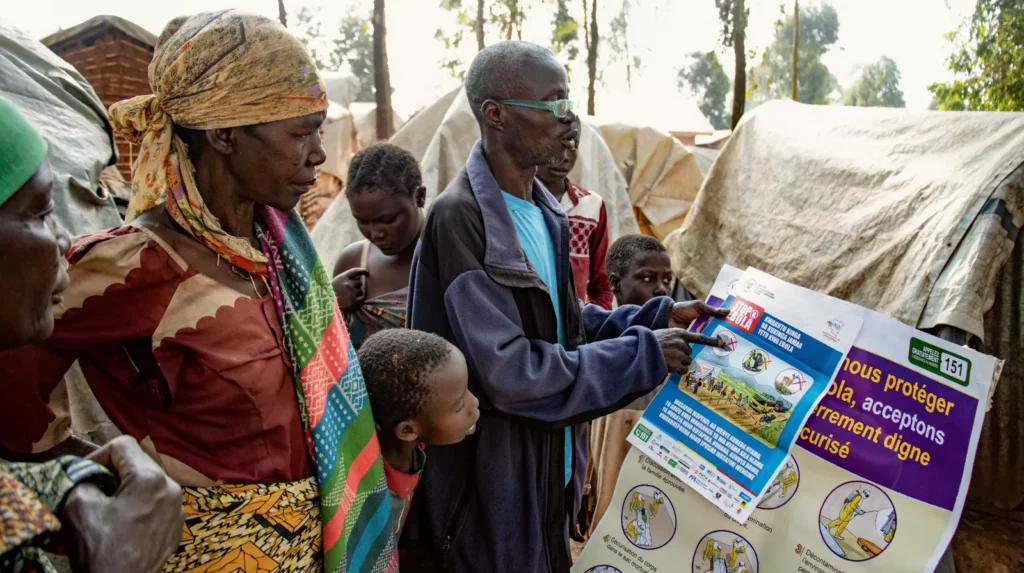
    Health workers in protective suits outside a treatment centre in eastern DRC

    Seventy-two new Ebola cases were reported in the Democratic Republic of Congo within a single 24-hour period, the Congolese Ministry of Health announced on Sunday, pushing the total number of confirmed infections to 782 since the outbreak was declared a month ago. The surge is one of the steepest daily increases recorded so far and comes as health authorities struggle to contain a virus for which no licensed vaccine or specific treatment exists.

    The ministry also confirmed 32 new deaths, bringing the total number of confirmed fatalities to 181. The current case fatality rate stands at 23 per cent. However, experts warn the true scale of the outbreak may be considerably larger. The virus was only officially confirmed on 15 May, weeks after it is believed to have first emerged, and a backlog of previously unreported cases and deaths from North Kivu province has been identified, according to health officials.

    This latest resurgence is caused by the rare Bundibugyo virus — a strain first identified in 2007 in Uganda and responsible for only two previous outbreaks, one in Uganda that year and another in the DRC in 2012. Unlike the Zaire virus, which caused the majority of the DRC’s 16 previous outbreaks, including the devastating 2018-2020 epidemic, there is currently no approved vaccine or specific treatment for Bundibugyo. The oral antiviral obeldesivir is a priority candidate for post-exposure prophylaxis, and two candidate vaccines — a single-dose rVSV Bundibugyo vaccine and a ChAdOx1 Bundibugyo vaccine — are under evaluation in clinical trials, but none are yet licensed. Experts convened by the World Health Organization have recommended that all candidate treatments and vaccines be used exclusively within clinical trials.

    The outbreak is concentrated in the eastern province of Ituri, which accounts for more than 90 per cent of the cases. Specific health zones reporting the highest numbers include Bunia, Rwampara and Mongbwalu. Cases have also spread to North Kivu and South Kivu provinces, and across the border into Uganda, including the capital Kampala. As of 10 June, 29 health zones across the three provinces were affected. In Uganda, 19 confirmed cases, including two deaths, and one probable case resulting in death have been recorded. Suspected cases across eastern DRC and Uganda rose by 103 per cent in just 96 hours, from 246 to 500, a surge that the International Rescue Committee attributes to weakened disease surveillance systems following significant health funding cuts in eastern DRC.

    Contact tracing deeply compromised by insecurity and displacement

    The most acute challenge facing the response is the severe weakness of contact tracing — a critical tool for stopping chains of transmission. According to the Congolese Ministry of Health, coverage has plummeted to 56 per cent, a sharp decrease from the previous week. But the situation on the ground is even worse. In Ituri province, where roughly 600 confirmed cases have been reported, authorities would normally expect around 24,000 contacts to be listed and monitored. So far only about 5,000 have been identified, and of those, just a limited number were under active follow-up on any given day. A broader estimate suggests that only around 21 per cent of total contacts across the outbreak zone were being followed up daily as of 12 June.

    The reasons for this failure are multiple and interconnected. Nearly one million people have been displaced by conflict in Ituri alone, according to the UN humanitarian office. People flee attacks or move frequently across the vast province, making it nearly impossible for contact tracers to keep track of who has been exposed. The region is also home to more than 120 armed groups active in eastern DRC, creating a volatile security environment that disrupts response activities, damages infrastructure, and at times leads to direct attacks on health workers. Border closures imposed by Uganda and Rwanda have further delayed the delivery of essential supplies.

    Logistical obstacles compound the problem. The affected area is characterised by dense forests, poor roads and remote villages that can take days to reach by foot or motorbike. In addition, thousands of artisanal miners move regularly between remote sites in the mineral-rich region, crossing multiple health zones and often staying off any formal register. The combination of displacement, armed conflict, difficult terrain and a highly mobile population means that a large proportion of people who have been in close contact with Ebola patients are never identified, let alone monitored for symptoms. This creates a persistent risk of sustained community transmission, particularly within households, where the virus can spread before anyone knows they were exposed.

    The World Health Organization declared the Bundibugyo virus outbreak a Public Health Emergency of International Concern on 17 May. It said on Sunday it is intensifying testing, contact tracing and treatment efforts. Africa CDC, the continent’s top health body, said the same day it is deploying technical expertise, supporting laboratory systems, active case finding and community engagement to accelerate the response. “We remain committed to supporting affected countries until transmission is stopped,” said Jean Kaseya, head of Africa CDC. “We call on partners and donors to urgently mobilise resources to strengthen the response and save lives.”

    A joint continental preparedness and response plan launched by Africa CDC and WHO aims to raise US$518 million, though concerns remain about the timely delivery of pledged funding. The International Rescue Committee has warned that years of underinvestment and recent funding cuts have left the region dangerously exposed, with reduced programming and a lack of adequate protective equipment for health workers. Infections among health and care workers have already been confirmed in both DRC and Uganda, raising fears of healthcare-associated transmission. Children, many of whom in Ituri are already malnourished, are also increasingly at risk as household transmission rises.

    Despite the grim figures, 56 individuals have recovered, the ministry said. The historic case fatality rate for Bundibugyo virus ranges from approximately 25 to 50 per cent; the current rate of 23 per cent may rise as more severe cases come to light. Candidate therapeutics, including the monoclonal antibodies MBP134 and Maftivimab and the antiviral remdesivir, are being studied, but none are yet available outside clinical trials. The WHO continues to advise against broad travel bans, favouring risk-based public health measures, while the US Centers for Disease Control and Prevention has recommended avoiding non-essential travel to Ituri and North Kivu provinces.

    Clinical Trials Public Health
    Share. Facebook Twitter LinkedIn WhatsApp Telegram
    Sophie Hargreaves
    Sophie Hargreaves

    Health Correspondent
    Sophie Hargreaves covers medical research, new treatments, disease outbreaks and prevention for Health News Daily. She holds a Master's degree in Health Sciences from the University of Leeds and has spent several years translating complex medical science into clear, accessible reporting for a general audience. Sophie focuses on the latest clinical trials, NICE and MHRA approvals, vaccination programmes and emerging health threats, always with an eye on what these developments mean for people in the UK.
    · MSc Health Sciences (University of Leeds), science communication volunteer, medical research literacy
    · Clinical trials and drug approvals (NICE, MHRA), cancer screening programmes, vaccination and outbreak response, women's health (endometriosis, PCOS, menopause), weight management treatments, AI in diagnostics

    Related Posts

    Disease & Prevention

    South-east England forecast to reach 34C as week-long heatwave hits

    4 July 2026
    Disease & Prevention

    French fatalities jumped 30% during peak week of record June heatwave

    4 July 2026
    Disease & Prevention

    Toddler’s tantrums mistaken for typical toddler phase before grave diagnosis

    3 July 2026
    Disease & Prevention

    600,000 mosquitos released over Washington DC to exterminate biting pests

    2 July 2026
    Join Our Community & Win

    Each month we select one lucky follower to receive a prize from our partners. Follow us on our social channels for your chance to win.

    • Facebook
    Latest
    Health Policy

    Streeting demands NHS bosses appear before MPs over Nottingham maternity scandal

    4 July 2026
    Disease & Prevention

    South-east England forecast to reach 34C as week-long heatwave hits

    4 July 2026
    Treatment & Research

    Woman, 24, had 12 Botox vials injected into face for non-cosmetic reason

    4 July 2026
    NHS

    British Medical Association may lay off up to a third of employees amid financial crisis

    4 July 2026
    Wellness & Lifestyle

    Weight-loss drugs become new battleground after Brexit rows

    4 July 2026
    Wellness & Lifestyle

    Hair transplant surgeon champions specific shampoo routine for greater volume and shine

    4 July 2026
    News Categories
    • NHS
    • Health Policy
    • Mental Health
    • Wellness & Lifestyle
    • Disease & Prevention
    • Treatment & Research
    Help
    • About Us
    • Contact Us
    • Advertise With Us
    • Health Explainers
    • Our Editorial Team
    About Us
    About Us

    Health News Daily provides trusted UK health news, covering NHS updates, medical research, public health and wellbeing with clear and reliable reporting.

    Facebook
    • Cookie Policy
    • Privacy Policy
    • Complaints Policy
    • Corrections Policy
    • AI Disclosure Policy
    • Editorial Policy & Ethics
    • Accessibility Statement
    • Medical Disclaimer
    • Terms & Conditions
    • Sponsored Content Disclosure
    • Copyright Notice
    © 2026 Healthnewsdaily.co.uk. All rights reserved.

    Type above and press Enter to search. Press Esc to cancel.