

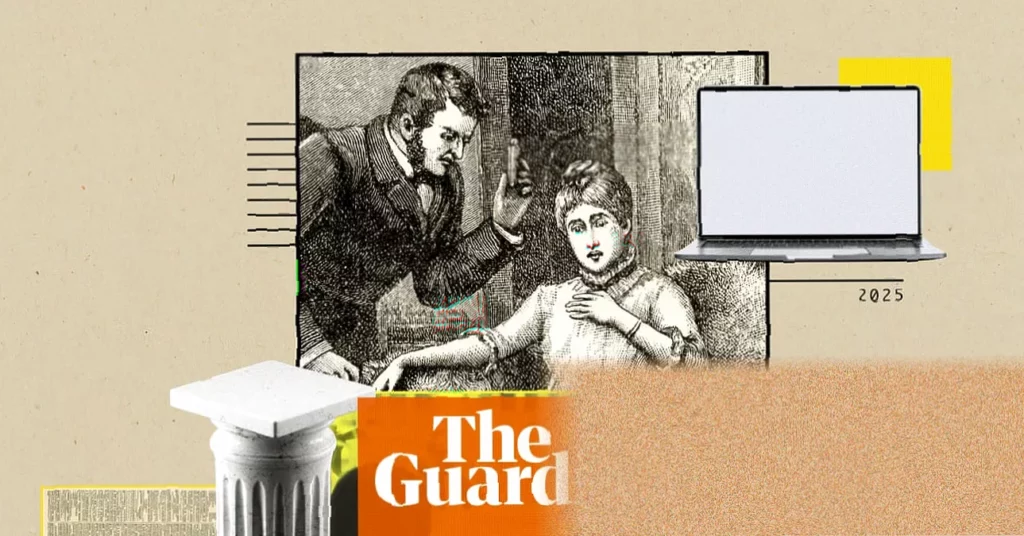
For centuries, women presenting with pain, fatigue or reproductive complaints have been met with a familiar refrain: it is hormonal, it is emotional, it is all in their heads. This pattern of dismissal—encoded in medical training, embedded in clinical practice and reinforced by a history of treating women’s bodies as inherently unreliable—remains a defining feature of healthcare today. In the UK, a survey by the Health Tech Alliance found that half of all women feel their health concerns are not taken seriously because of their gender, a figure that rises to 64% among women aged 18-24. A separate report by Mumsnet indicated that 50% of female patients believe they have been ignored or dismissed by NHS professionals due to their sex, while 64% of women surveyed said they had been explicitly told their pain or symptoms were “normal” or “in their head”. The Health Secretary, Wes Streeting, has acknowledged that “medical misogyny” is letting women down. These are not isolated anecdotes but symptoms of a systemic failure whose roots run deep.
Historical roots of medical misogyny
Western medicine has long regarded women’s bodies as governed by volatile reproductive organs. In the 1700s, women were believed to be ruled by nervous disorders such as “the vapours”. By the 1800s, they were defined as the “sicker sex”, their ageing reduced to menopause, and they became targets for experimental treatments and commercial exploitation. The underlying logic proved remarkably durable: women’s health became fodder for profit-based medicine, while their symptoms were routinely put down to hormones, nerves, emotions or reproductive organs. This historical pattern, documented by the Australia Institute, has meant that women are wronged not only in what is done to their bodies but in their status as the knowers of those bodies. Their bodily experience is doubted and psychologised; their accounts of symptoms and mistreatment are dismissed; their consent is assumed from silence or trust.
The problem is also built into the making of medical knowledge itself. For decades, clinical trials predominantly used male subjects, with researchers often avoiding the perceived complications of the female reproductive system. Analysis of UK trials conducted between 2019 and 2023 showed 67% more trials involving only male subjects than female-only trials. While 90% of trials included both sexes, women of child-bearing potential were included in only 33.1% of those. Reproductive and childbirth-related trials constitute a mere 2.2% of all clinical trials submitted to the Medicines and Healthcare products Regulatory Agency (MHRA). This research bias has meant both chronic under-research into conditions that disproportionately affect women—such as breast cancer—and the application to women of treatments tested only on men.
Gynaecology as a case study in violation and authority
Gynaecology offers a particularly powerful case example because its history starkly reveals the fusion of innovation, authority and violation. That history disrupts a common myth: that radical gynaecological surgery is an unavoidable answer to women’s suffering. The first potentially survivable hysterectomies using antiseptic measures were performed in the 19th century on women with benign fibroid tumours who were often not told what surgery they were receiving or that their tumours were not cancer. More than half died. Throughout the history of hysterectomy, there have been vigorous debates, competing treatments and repeated warnings about unnecessary mutilation. Patients have often been told little, and what counted as consent was often shaped by misogynist assumptions about marital authority and medical prerogative rather than by the patient’s autonomous choice.
Through the rise of modern gynaecology, women’s reproductive organs came to be treated as the cause of wide-ranging illness—and disposable once they seemed redundant. By the late 20th century, that attitude resulted in more than a third of all women in the west having hysterectomies by the time they reached old age. In the UK, hysterectomy rates for menorrhagia fell substantially after the 1990s—by 64% by 2002-2003 compared to 1989-1990—but concerns about unnecessary procedures persist. Data from 2001-2012 showed widely varying rates between regions, hospitals and individual gynaecologists. Forecasts suggest a continued downward trend from 2024 to 2028, yet the historical warning remains: when hysterectomy rates began to decline in the west, some medical researchers warned that cancer rates would rise if women were allowed to keep their uteruses. As late as the 1970s, US surgeons proposed hysterectomy as the treatment of choice for women of the lower classes whom they thought could not manage their own contraception. The same rationale contributed to the sterilisation of First Nations and Black women in many countries.
Hysterectomy has never been one stable intervention with one stable meaning. It has served, in different contexts, as therapy, cancer prophylaxis, gender transition surgery, covert Catholic contraception, population management and administrative convenience. That is why its history cannot be traced by technical refinement alone. Seen in this longer frame, present-day complaints about women and gender-diverse people being steered too quickly towards hysterectomy for benign uterine tumours are not unfortunate residues on the margins of an otherwise settled system. They belong to a pattern in which patients are not fully informed of alternatives, the long-term effects of radical intervention are downplayed, and clinical authority still too readily replaces dialogic consent. This is troubling because it may shortcut proper decision-making and ignore new evidence of long-term consequences for ageing and wellbeing.
Contemporary failures: from endometriosis to femtech
The same pattern of dismissal and under-investment plays out across women’s health today. Endometriosis, a condition affecting an estimated one in ten women, now takes an average of nine years and four months to diagnose in the UK—up from eight years in 2020. For women from ethnically diverse communities, the delay stretches to eleven years. Around one in four respondents to an Endometriosis UK survey needed to visit their GP ten or more times before the condition was suspected. A staggering 83% of respondents reported being told by a healthcare practitioner that they were “making a fuss about nothing” or that their symptoms were “normal”. Many women with endometriosis say they feel “gaslit” by doctors due to a lack of understanding of the condition.
Polycystic Ovary Syndrome (PCOS)—which the Australia Institute notes was long reduced to ovarian cysts, despite being a systemic endocrine condition—affects about one in eight women of childbearing age in the UK. Over a third of women with PCOS face prolonged delays in diagnosis, waiting longer than four years. After diagnosis, almost two-fifths (38%) of respondents were not provided with any resources. Women from Black and Asian backgrounds are up to 2.5 times more likely to be diagnosed with PCOS, and those from ethnic minority groups are more likely to present with more severe symptoms. PCOS is often treated narrowly as a fertility or gynaecological issue, neglecting its multisystem nature and associated metabolic, cardiovascular and psychological complications. Some studies suggest that up to 50% of women with PCOS remain undiagnosed.
Research consistently shows that women’s pain is underestimated and mistreated compared to men’s. A UK survey of 5,100 women and men found that 56% of women feel their pain is ignored or dismissed by medical professionals. Women are less likely to be prescribed painkillers than men, even with similar pain levels, and are kept in emergency departments longer. Their pain is frequently attributed to psychological causation, leaving them with the impression that their pain is “in their head” and leading to them being stigmatised as “malingerers”. This phenomenon, often called “medical gaslighting”, can leave patients questioning their own reality and giving up on the healthcare system entirely.
The systemic issues extend beyond the consulting room. A BMA survey of doctors in the UK revealed that 91% of women doctors have experienced sexism at work, with 42% feeling unable to report it. Common experiences include patronising comments, judgment based on appearance, career obstruction, and being overlooked in favour of male colleagues. Meanwhile, over half the UK public (51%) agree that women’s health has been historically underfunded. Despite reproductive and gynaecological health issues affecting a significant portion of women, only an estimated 2% of UK publicly funded research is dedicated to reproductive health. A Health Tech Alliance survey found that over 60% of the UK population has not even heard of the government’s strategy to improve women’s health, revealing a significant disconnect between national policy and patient reality.
The emerging femtech industry—digital health apps and devices marketed to women—raises further concerns. While promising convenience, these platforms collect highly sensitive health data that can be vulnerable to exploitation, including targeted scams, workplace discrimination and misinformation. There are fears that such data could be used to prosecute individuals seeking abortion services or healthcare after miscarriages in the UK. Regulations are seen as inadequate, with femtech systems not always presenting valid consent and tracking users without their knowledge. This contemporary development echoes older patterns: women’s bodies remain fodder for profit-based medicine, their privacy casually overridden.
The issue of exploitation also surfaces in egg donation. In the UK, it is illegal to pay egg donors, though compensation for costs up to £750 per cycle is permissible. However, allegations have emerged that IVF clinics offer discounted treatment in exchange for egg donation, then resell the eggs for significant profit. This practice raises concerns about exploitation, particularly for women on lower incomes. Egg retrieval involves artificial ovarian stimulation carrying risks such as Ovarian Hyperstimulation Syndrome (OHSS), which can lead to serious or fatal complications. Concerns have been raised about the lack of research into the long-term health impacts of egg retrieval and the insufficient tracking of donors over time.
None of this is to claim that nothing has changed. Surgery is certainly much safer than it was, many clinicians are deeply reflective and caring, and standards of consent are better developed. But historical scholarship makes one point clear: progress in technique does not automatically produce justice in care. When women report feeling herded into procedures they did not fully understand, or later discovering that pathology did not support the scale of intervention undertaken, this should not be dismissed as anecdotal dissatisfaction. It raises the question of whether medicine has relinquished one of its oldest habits—of treating patients not as persons but as units in a population quantum. If medicine is to confront medical misogyny seriously, it must do more than improve bedside manner. It must reckon with the histories through which women were made into unreliable witnesses of their own experience.