

GB News defies the doubters as it marks five years on air
When GB News launched in June 2021 it was written off before it had even broadcast a single bulletin. Rivals and critics alike predicted a swift demise. Five years on, the channel has confounded its detractors. As former ITN editor Nick Pollard, who was among the first to join the new venture, wrote to his old colleague Alastair Stewart: “Who would have thought it? Everyone said we wouldn’t last a year.” Some even tried to persuade advertisers to boycott the channel. They did not, and GB News has gone on to become the most-watched news channel in the UK.
GB News was Britain’s first television news start-up since Sky News in 1989, launched with the aim of broadcasting “original news, opinion and debate”. Described as right-leaning, it has carved out a distinct audience. According to industry figures, as of 2026 the channel has been ahead of both Sky News and the BBC News channel in average viewership for six consecutive months, although its total weekly reach remains lower than those of its longer-established competitors. The success has not come without cost: the channel has recorded consistent financial losses since its launch, including significant pre-tax losses in each of the financial years from 2021-22 through to 2024-25. Polling in 2025 also suggested it was the least trusted of the five main news broadcasters in Britain. Yet its resilience in the face of early predictions of failure has been undeniable.
Former ITN colleagues: Nick Pollard and Richard Frediani
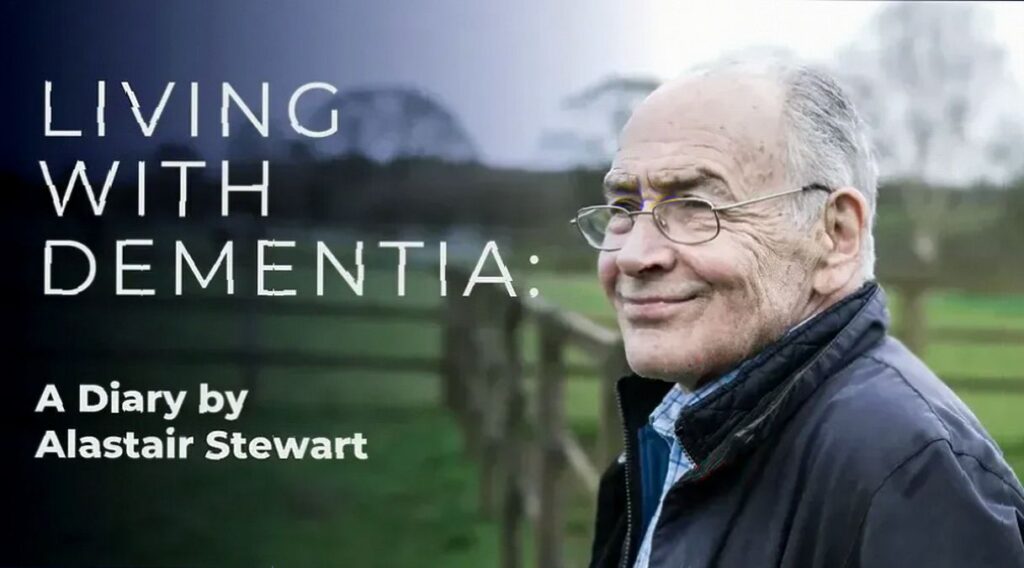
The card Stewart received from Nick Pollard was one of two messages from old friends that brought “a flood of happy memories”. Pollard, now retired, had a distinguished career that included helping to establish other television channels and a stint at Ofcom — experience that proved invaluable when GB News was being built. Stewart, the longest-serving male newsreader on British television, remembered covering the Berlin Wall, the Gulf War, and countless General Elections and Budgets alongside Pollard, whom he described as one of the two best programme editors he ever worked for, alongside the late Sir David Nicholas.
The other programme editor Stewart held in equal esteem is Richard Frediani. Stewart believes Frediani could and should have been editor of ITV News alongside Pollard. Instead, Frediani moved to the BBC, where he now edits the highly successful BBC Breakfast programme and the lunchtime news bulletin. He is also an award-winning documentary maker. Frediani’s record on two of the most significant stories in recent years — the Post Office scandal and Rob Burrow’s battle with motor neurone disease — has been described by Stewart as “second to none”. Under Frediani’s editorship, BBC Breakfast won a BAFTA for its coverage of the Post Office scandal. He was appointed editor of the programme in September 2019 and has since been cleared of bullying allegations following an internal review into the working culture at BBC Breakfast. Stewart, who remains in frequent contact with Frediani, noted that the BBC is looking to make significant cuts and will eventually need a new Head of News. “The Director-General could do far worse than promote Richard,” he wrote.
From the NUS to today: old friends and political reflections
Stewart’s second blast from the past came in the form of a visit from Ruairidh McAllion, a fellow Executive Committee member from Stewart’s time as Deputy President of the National Union of Students — a paid sabbatical role that, alongside his television career, is one of only two paid jobs he has held. Stewart, who began his broadcasting career in 1976 with Southern Television before moving to ITN in 1980, served three years with Channel 4 News and went on to become a main newsreader for ITV News. He stepped down from that role in January 2020 and joined GB News at its launch, retiring from regular broadcasting in March 2023.
McAllion, whom Stewart describes as one of the best writers on British industry, frequently drops by for tea and conversation. They share a passion for motorsport — McAllion was a saloon car racer and his late father worked in team management. Politics inevitably enters the discussion. McAllion bemoaned the fact that Sir Keir Starmer “does not appear to stand for anything”. Stewart remarked that several friends at the top of the Labour Party have long feared that the Prime Minister simply does not “do” politics in the traditional sense. Starmer, who has served as Prime Minister since 2024 and as MP for Holborn and St Pancras since 2015, announced his intention to resign from both positions on 22 June 2026. His political positions have evolved from the soft-left to the centre.
Stewart also commented on David Lammy standing in for the Prime Minister at Prime Minister’s Questions because of the G7 summit. “I remain unconvinced by his performances,” Stewart wrote. Most MPs wore white roses in memory of Jo Cox, the Labour MP for Batley and Spen who was murdered on 16 June 2016. She was shot and stabbed multiple times in Birstall, West Yorkshire, by Thomas Mair, who was found guilty and sentenced to life imprisonment with a whole life order. The judge concluded Mair wanted to advance white supremacy and exclusive nationalism. Witnesses reported him shouting “Britain first” during the attack. Stewart remembered covering the story and seeing the mountain of flowers left by constituents in Birstall — “a moving reminder of the goodness that exists in people”.
‘A nightmare’: the daily reality of banking with dementia
Amid the memories and reflections, Stewart turned to a more prosaic but deeply frustrating experience: a customer satisfaction survey sent by his bank. He found it far too complicated. “As is so often the case,” he wrote, “communication was the biggest failing. Their online services are over-complicated and, for those of us living with dementia, they can be a nightmare.”
Stewart’s complaint echoes a wider crisis in British banking. According to consumer group Which?, 6,719 bank and building society branches have closed across the UK since 2015. One in five consumers say these closures make it harder to access financial services. UK consumers are among the most affected in Europe by the decline in in-person banking. Only 60% of UK consumers say they can speak to a real person when applying for financial products — the lowest figure in Europe. Sixteen per cent actively disagree that they can access a human at all.
The challenges are particularly acute for elderly people and those living with dementia, who may struggle with complex online interfaces and the lack of face-to-face interaction. Stewart noted that the continuing closure of branches and the lack of opportunities to speak to a real person in person only make matters worse. To add to the frustration, banks take far too long to answer the telephone. “The scammers must love that,” he wrote.
The government has launched an independent “Access to Banking Review” to examine the impact of branch closures, while banking hubs and post offices are being used to provide alternative access. The Competition and Markets Authority conducts annual surveys on banking satisfaction, ranking providers on online, mobile and in-branch services. Challenger banks such as Monzo and Starling Bank generally score higher than traditional banks, while Handelsbanken has been rated top for customer satisfaction for 17 consecutive years by the EPSI Rating Group. But for Stewart, and for the many others living with dementia, the digital-first approach remains a source of daily struggle — one that no survey is likely to capture in full.