

Tony Blair and Alan Milburn, two of the most prominent figures from the New Labour era, have delivered a double-barrelled critique of the current government’s direction, with Blair accusing Sir Keir Starmer’s administration of “playing with the future of the country” and Milburn warning of a “lost generation” as youth unemployment approaches one million.
A day at the horse show
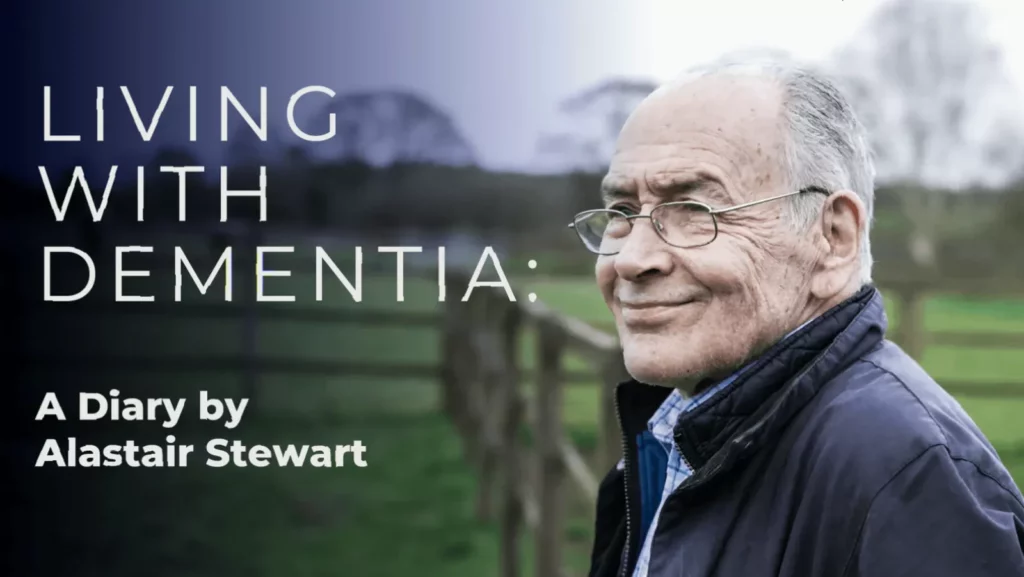
The interventions come against a backdrop of a personal account from the broadcaster Alastair Stewart, who detailed his attendance at a local horse show organised by a friend named Floss. Stewart, who revealed in September 2023 that he had been diagnosed with early-onset vascular dementia, described the event as a far cry from the “snooty set” caricatured by some on the left. The gathering drew landowners alongside the people they employ, rural workers, local businesses, and a feed and bedding supplier who reported a strong day commercially. A food wagon serving bacon and sausage baps, tea, coffee and cold drinks completed the scene.
Floss, whom Stewart first met through her mother Sheila Baigent, is a keen supporter of the Ebony Horse Club, a charity that provides equestrian activities and life-skills coaching for children from disadvantaged backgrounds in London. That charity normally sends a team to the event but was unable to do so this year — a much-missed absence, according to Stewart. Sheila Baigent was herself an early star of women’s show-jumping and later became a judge in her retirement. Stewart recalled her gentle and supportive manner with his two youngest children during their early days of competing, when youthful exuberance sometimes got the better of them. The sport, he noted, has since become a major focus in their lives. His older children, Alex and Clem, worked while at university — Alex in a café, Clem in an upmarket fashion shop where she still buys clothes today alongside her career in education.
Blair’s warning: ‘playing with the future’
It was in this context that Stewart turned to politics, observing that two “blasts from the past” had enlivened the dormant tussle over Labour’s direction. Tony Blair, the party’s most electorally successful former leader, published an essay arguing that the government has held back business and growth since winning the election. He cautioned that the world is changing fast, with a more belligerent and intrusive United States, and with Nato and wider security arrangements under sustained pressure.
Blair’s critique zeroed in on a series of specific policies. He condemned the increases in employers’ National Insurance contributions — due to rise from 13.8% to 15% from April 2025, with the threshold reduced from £9,100 to £5,000, a change expected to increase payroll costs especially for small and medium-sized businesses. He attacked the Workers’ Rights Bill, aspects of the government’s Net Zero strategy (arguing that cheaper energy and use of North Sea oil and gas should be prioritised), and rises in the minimum wage. He also called for reform of the state pension triple lock, which guarantees annual increases in line with the highest of inflation, average wage growth, or 2.5%. Declaring the triple lock “unaffordable”, Blair joined critics who point to the Institute for Fiscal Studies’ suggestion that capping increases at inflation until 2030-31 could save billions annually, though others argue removal could push millions into retirement insecurity. More broadly, Blair contended that the government is governing from a “traditional Labour ‘soft left’ position” and lacks a coherent plan for a fast-changing world.
Milburn’s youth crisis
Alan Milburn, a former cabinet minister under Blair who was responsible for bringing private-sector capacity into the NHS to cut waiting lists — a relationship he famously said should not be viewed as a “one-night stand” — followed with the first part of his own review into youth unemployment. Milburn highlighted what he called a crisis: around one million young people aged 16 to 24 are now not in education, employment or training (NEETs), costing the economy up to £125 billion a year. Official figures show the NEET rate stood at 13.5% in the first quarter of 2026, up from the previous year. Milburn warned that this figure could rise further without urgent action and that Britain risks creating a “lost generation”. He observed that more state money is currently spent on benefits for these young people than on helping them into work, and called for reforms to the education system and an overhaul of Universal Credit. His report is interim, with more detailed proposals promised in the autumn.
Stewart, who said he knows Milburn reasonably well, described him as a bright and thoughtful man whose performance before the press underlined how much some people miss the Blair years, when senior politicians often appeared intellectually confident, capable and quick on their feet.
Political fallout
The response from parts of Labour’s soft Left, Stewart wrote, struck him as weak. Blair and Milburn were dismissed for not focusing on inequality or redistribution of wealth — a charge Stewart rebutted by noting that both come from a tradition that believes wealth must first be created before it can be redistributed. In his view, many of Labour’s fiscal policies since taking office have hindered that process, despite the government’s repeated emphasis on growth.
Stewart compared the current crop of Labour figures — Andy Burnham, the Mayor of Greater Manchester and a former Health Secretary, and Wes Streeting, the current Health Secretary — unfavourably with earlier generations. While acknowledging the comparison may be unfair, he argued that Blair was clearly challenging today’s leadership to think on a bigger scale, while Milburn offered a substantial project to tackle. Burnham has echoed arguments from Labour’s soft Left; Streeting, Stewart noted, said little or nothing. Milburn concluded that youth unemployment represents a moral crisis for which Britain has neither a coherent plan nor an effective system to solve it.
The political landscape, Stewart suggested, has fallen into an intellectual drought. He questioned when serious plans will emerge to provide young people with meaningful work experience and to help employers offer affordable jobs, adding that Chancellor Rachel Reeves has made both harder for many businesses. This, he argued, is one reason Reform UK and the Green Party are thriving. Recent local elections have seen both parties make significant gains, with Reform performing best in areas of lower educational attainment and older populations, and the Greens in more educated areas and those with larger Muslim populations. Stewart warned that Labour and the Conservatives should take note.
The upcoming by-election in Makerfield — where Burnham is standing for the Westminster seat — has concentrated minds. Early polling data shows Burnham leading Reform UK’s candidate Robert Kenyon by a narrow margin, but on a generic Westminster ballot Reform leads Labour by a significant margin in the same constituency, suggesting a potential challenge for Burnham in appealing to working-class, pro-Brexit voters. The Greens are running a scaled-back campaign, while the Restore Britain party is also on the ballot. Stewart recalled being in the hall at Blackpool when Blair removed Clause Four from Labour’s constitution in 1995 — the symbolic commitment to common ownership that was replaced with a new statement of principles, a move that redefined the party. He was also reminded of Margaret Thatcher’s vision of a productive, resurgent economy built on trade union reform and privatisation. Now, he concluded, it looks as though Britain may face a contest between relatively modest political figures for the premiership. As the Conservatives keep observing, the problem is not just Sir Keir Starmer; it is Labour more broadly. The likelihood, Stewart wrote, is that Reform or the Greens could ultimately deny Burnham victory.