

John Underhill MBE, a dedicated supporter of the Royal British Legion whose charity work took him from Salisbury Cathedral to the Falkland Islands, has died while on holiday in Kenya. His wife, Tiggy, confirmed that the 77-year-old suffered from Parkinson’s disease, and that his heart and lungs eventually “gave up”. Despite his illness, the couple continued to live a full and active life, running a successful logistics business near Salisbury.
A Life of Service for the Armed Forces Community
Underhill’s commitment to the Royal British Legion was extraordinary. He provided transport for the Legion’s annual “Pedal to Paris” fundraiser — a gruelling 460km cycle ride from London to the Arc de Triomphe, held over four days. In 2025, the 29th edition saw 150 participants, including 129 veterans and serving personnel, raise more than £9 million for the Armed Forces community; the 30th anniversary ride is already planned for 2026. Underhill also regularly attended the Legion’s Christmas Carols event at the Guildhall in Salisbury, an occasion hosted by broadcaster Alastair Stewart.
His most celebrated achievement was writing and producing The Angel & The Fallen, a music, poetry and prose piece commemorating those who fell in the First World War. Stewart hosted and presented the work at Salisbury Cathedral, where it raised £10,000 for the Legion. Underhill was awarded his MBE in recognition of this work. For the Legion’s centenary, he took on the monumental task of organising a concert at every cathedral in England and Wales. By the end of the project, 40 cathedrals had taken part, including venues in the Isle of Man, the Falkland Islands and Gibraltar. Stewart recalled Underhill as “the go-to man” for the anniversary, and described him and Tiggy as “always great fun” and “kind and supportive”.
Mandelson Papers Expose Internal Turmoil
On the political front, the release of more than 1,500 pages of documents concerning former UK ambassador to the US Peter Mandelson has deepened the pressure on Sir Keir Starmer’s government. The papers, which include Mandelson’s personal texts and WhatsApp messages, paint a picture of an “incurable dabbler” who held a low opinion of the Prime Minister, the Cabinet and Labour in office. Some documents were withheld at the request of the police, who are still investigating Mandelson for possible misconduct in public office — an investigation that, according to the released material, involves his relationship with convicted sex offender Jeffrey Epstein. Mandelson was arrested on suspicion of sharing sensitive government information with Epstein, though he denies wrongdoing and is cooperating with the police.
The files also reveal private messages from then-Cabinet Office minister Pat McFadden, who expressed frustration that Labour backbench MPs were obsessed with identifying new taxes to fund ever-higher benefits rather than pursuing welfare reform. This prompted Conservative leader Kemi Badenoch to accuse Starmer at Prime Minister’s Questions of having “given up on welfare reform because Labour MPs have given up on him”. Badenoch repeated her charge that the party, not the Prime Minister, was the problem.
Stewart, who followed the release on GB News, praised the broadcaster’s coverage, particularly the work of political editor Christopher Hope, who led a team rapidly digesting the documents throughout the day.
Henry Nowak Murder and the Two-Tier Policing Storm
The killing of 18-year-old university student Henry Nowak in Southampton has ignited a fierce debate about police conduct and racial bias in law enforcement. Vickrum Digwa stabbed Nowak multiple times with a dagger — a weapon Digwa claimed he was carrying for religious reasons — on 3 December 2025. When police arrived at the scene, Digwa falsely alleged that Nowak had racially abused and assaulted him. Officers believed Digwa and, instead of tending to Nowak’s life-threatening injuries, handcuffed him. Nowak, who repeatedly told officers he had been stabbed and could not breathe, died in handcuffs and while under arrest.
The court subsequently dismissed Digwa’s claims of racial abuse as lies. He was convicted of murder. But the case has triggered widespread accusations of a two-tier policing system in which ethnic minorities receive preferential treatment. Far-right groups have exploited the incident to stoke division, but the controversy runs far deeper. Nowak’s father has called for knife crime to be treated as a national emergency, highlighting the broader epidemic of youth violence. The police watchdog, the Independent Office for Police Conduct, has launched an official investigation into the handling of the incident. Many observers argue that the force’s credibility has been severely damaged, with a long and difficult road ahead if public trust is to be restored. Stewart noted that the official investigation “may yet unearth some deeply embarrassing policy briefings”.
The case has placed policing tactics and unconscious bias under an unforgiving spotlight, with questions being asked about how quickly officers accepted Digwa’s version of events and why a dying teenager was not believed. The IOPC’s findings will be critical in determining whether systemic problems exist — or whether this was a catastrophic error of judgment by individual officers.
Television: A Personal Story of Care and Dementia
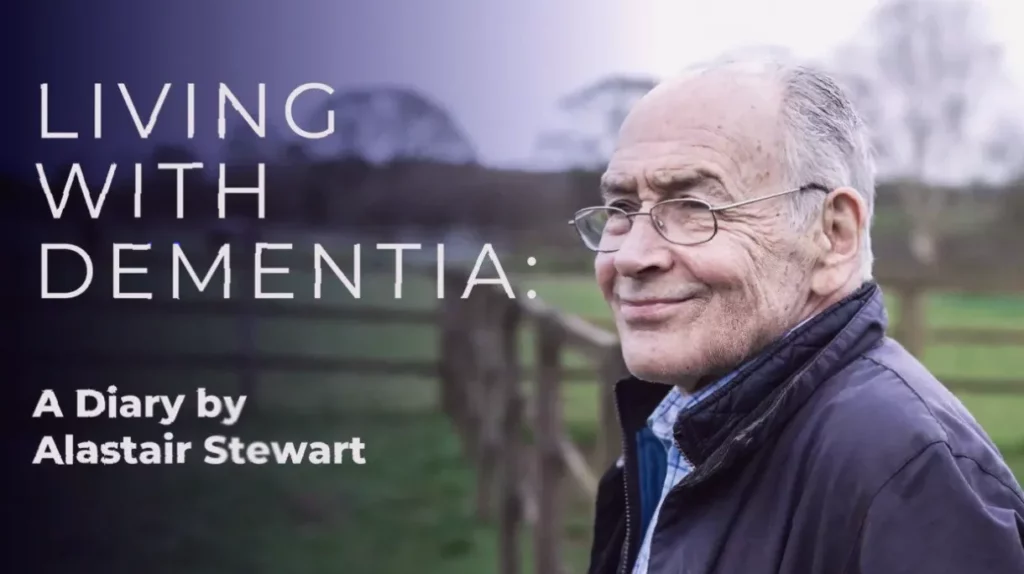
On a different note, Stewart has been gripped by the BBC’s eight-part series Natalie Cassidy: Caring Together. The programme follows Cassidy’s career pivot after she supported her own father through end-of-life care at home. An episode focused on learning about dementia was described as “quite brilliant”, informed by Cassidy’s friendship with the late Barbara Windsor and her widower, Scott Mitchell. Both Cassidy and Mitchell have been active in fundraising for dementia research, including through the “Bab’s Army” London Marathon team. As one lecturer in the series observed, “If you meet someone with dementia, you’ve met one person with dementia” — a reminder that every case is unique and individual.