

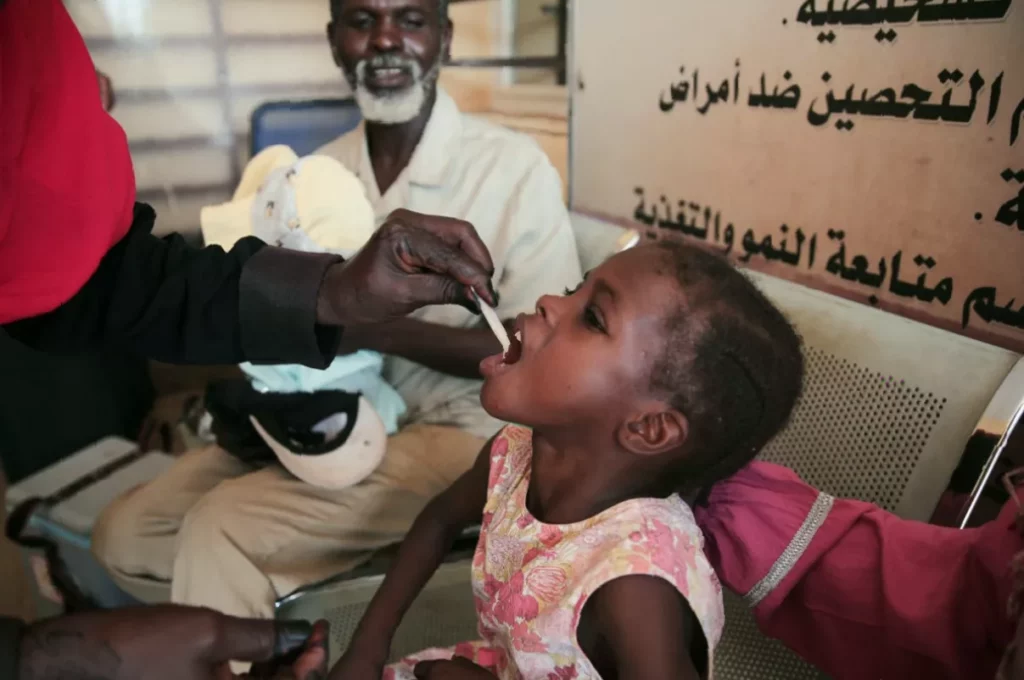
Sudan’s health crisis — described by the United Nations as the world’s worst — has received only a third of the funding it needs this year, leaving millions without access to even basic medical care. The World Health Organisation (WHO) has itself received less than 15 per cent of the money required to carry out its operations in the country, its representative in Sudan, Dr Shible Sahbani, said during a media briefing on Wednesday.
The health sector component of the broader humanitarian appeal for Sudan is just 35 per cent funded, Dr Sahbani added. The shortfall comes as the country endures its third cholera outbreak in three years and as three years of civil war have “completely devastated” the health system. Across conflict-affected regions, an estimated 70 to 80 per cent of health facilities are no longer operational, according to the International Rescue Committee, with more than 70 per cent of Sudan’s hospitals destroyed.
The funding gap is compounded by aid cuts from the United States and other donor nations, ongoing fighting and the onset of the rainy season — all of which prevent humanitarian teams from reaching the people most in need, the WHO said. The consequences of underfunding are stark: mothers unable to access maternity care, children missing vaccinations, patients without essential medicines and entire communities left vulnerable to outbreaks, said Dr Hanan Balkhy, the WHO’s Regional Director for the Eastern Mediterranean.
Cholera outbreak becomes near-constant threat
Since May, a new cholera outbreak in Sudan’s Kordofan state has killed 120 people, with a further 1,102 suspected cases recorded, Dr Sahbani confirmed. That outbreak emerged just two months after the previous epidemic was declared over in March 2026. Between July 2024 and March 2026, more than 124,000 people were infected with cholera across all 18 states and approximately 3,573 died, according to the WHO.
Cholera used to appear in Sudan cyclically every three years, Dr Sahbani noted, but the country now faces near-continuous outbreaks. The high case fatality rates seen during the conflict — 2.6 to 2.7 per cent in 2024 and 2.4 per cent between January and September 2025 — far exceed the WHO’s emergency threshold of 1 per cent. A specific outbreak in the town of Foga recorded a case fatality rate of approximately 29 per cent in late May 2026, according to the research briefing.
The crisis is not limited to cholera. Multiple disease outbreaks are running simultaneously, including malaria, dengue, measles, polio, hepatitis E, meningitis and diphtheria, reported from various states. Meanwhile, more than half of Sudan’s population — 28.9 million people — face acute food insecurity, with over 10 million suffering severe or extreme hunger. An estimated 4 million people are acutely malnourished in 2026, making them highly vulnerable to medical complications and disease.
Dr Balkhy highlighted the stark regional imbalance: the Eastern Mediterranean accounts for less than 10 per cent of the global population yet bears nearly half of the world’s humanitarian burden. “Put simply, one in every two people affected by humanitarian crises worldwide is in this region,” she said. For 2026, the WHO requires US$633 million for health emergencies across the region, with an additional US$56 million for its Regional Health Emergencies Programme — more than 40 per cent of that funding remains unavailable.
Health system in ruins after three years of war
The devastation of Sudan’s health infrastructure is the result of more than three years of civil war between the Sudanese Armed Forces and the Rapid Support Forces (RSF). The conflict has killed tens of thousands of people, forced millions to flee their homes and created what the UN describes as the world’s largest humanitarian and displacement crisis. As of early 2026, over 33.7 million people require humanitarian assistance, with nearly half of Sudan’s population facing high levels of acute food insecurity.
An estimated 70 to 80 per cent of health facilities in conflict-affected regions are non-operational. Those that remain functional operate with severe shortages of staff, medicines, vaccines, equipment and supplies. The International Rescue Committee says more than 70 per cent of Sudan’s hospitals are destroyed, leaving millions without access to essential medical care. Attacks on healthcare have been relentless: more than 671 documented attacks since the conflict began in April 2023, with at least 173 health workers killed and 83 arrested between April 2023 and December 2025, according to research compiled from UN and other sources.
The mass displacement — approximately 14 million people internally displaced and over 4.5 million fleeing to neighbouring countries — exacerbates public health risks. Overcrowded living conditions and limited access to safe water and sanitation leave civilians increasingly vulnerable to disease, malnutrition and violence, particularly in the Kordofan region where the latest cholera outbreak is centred. Escalating conflict, disrupted health services and restricted humanitarian access are compounding the danger.
The economic collapse triggered by the war has accelerated inflation and disrupted supply chains for food and essential commodities. US aid reductions have led to the closure of hundreds of American-funded soup kitchens and community kitchens, while an estimated 200,000 women are at risk of losing access to essential reproductive health services due to suspended medical supply funding. The UK has doubled its aid to Sudan and neighbouring countries to £231.3 million in 2024-25, and the World Bank approved $182 million to enhance health and safety nets, including $82 million for the Sudan Health Assistance and Response to Emergencies (SHARE) project. Yet the Sudan Health Cluster has warned of a severe disruption risk to 335 health facilities and services across 13 states beyond June 2026 unless immediate bridge funding is provided.
On Wednesday, Amnesty International accused the RSF of committing crimes against humanity and ethnic cleansing during its campaign to capture the western city of El Fasher. The human rights organisation said crimes including murder, torture, rape, enslavement and sexual slavery were carried out as part of a widespread and systematic attack against civilians, and alleged that the RSF deliberately targeted children in North Darfur state. The RSF has previously denied all allegations. An independent UN fact‑finding mission concluded in February 2025 that the RSF’s assault on El Fasher bore the “hallmarks of genocide” against non-Arab communities. Conflict-related sexual violence is widespread: the UN Human Rights Office has verified 546 incidents across 16 Sudanese states, affecting at least 838 individuals.