

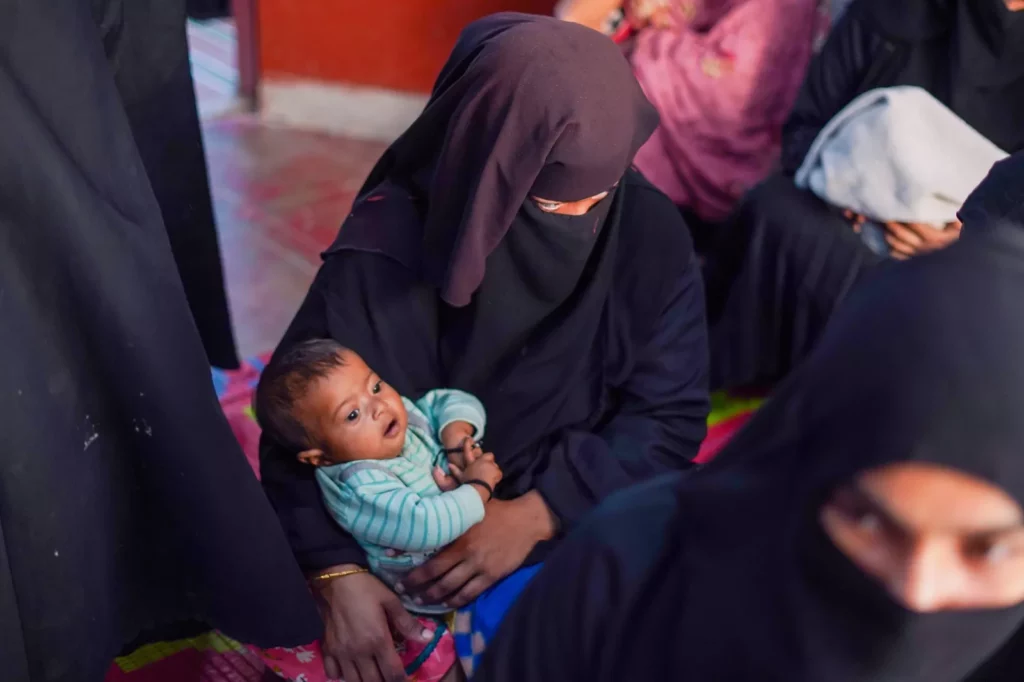
For the 25,000 residents packed into each square kilometre of Baba Island, life is growing harder with every passing summer. The island, lying just off the coast of Karachi, endures regular summer temperatures exceeding 45°C, and for pregnant women the risks are particularly severe. “I would say that in the summer months, maybe 30 to 40 per cent of the population has some kind of adverse event, and most of those adverse events are related to heat in some way,” says Neha Mankani, a midwife and charity founder who runs the only maternal health clinic on the island.
Life on Baba Island
Baba Island is one of the most densely populated island communities on earth. Together with neighbouring Bhit Island, it houses roughly 35,000 residents across 0.3 square kilometres, yielding a density exceeding 100,000 people per square kilometre. Baba alone has around 6,600 people in 0.15 square kilometres – a density of 44,000 per square kilometre. The settlement dates back more than 400 years, predating Karachi itself, and its inhabitants, primarily of Katchi and Sindhi descent, have historically relied on marine fishing for their livelihoods.
That livelihood is under threat. The catch is shrinking as overfishing, industrial pollution from factory trawlers, and rising sea temperatures degrade the waters the community depends on. Economic precarity forces many to work even during extreme heat. On land, the island suffers from severe infrastructure deficiencies: unreliable electricity with frequent and prolonged power outages, limited healthcare and educational facilities, and a lack of clean water. Sewerage and drainage systems are inadequate, adding to unsanitary conditions.
Women face additional constraints. They often have less freedom to move than men and spend their days in cramped, poorly ventilated concrete homes without the option of cooling off in the sea as men do. Cultural norms can also lead to newborns being “over-wrapped”, increasing their risk of overheating.
How Extreme Heat Endangers Pregnant Women and Newborns
Pregnant women are physiologically more vulnerable to heat due to changes in body temperature regulation during gestation. High temperatures can lead to dehydration, hypertension, pre-eclampsia, and reduced blood flow to the placenta. The consequences are stark. Research has found that heat exposure during pregnancy can increase the odds of premature birth by as much as 26 per cent, and that stillbirths rise by roughly five per cent per 1°C increase in temperature. Other studies point to increased risks of cardiovascular complications for mothers and decreased blood flow to the placenta, which can exacerbate conditions like pre-eclampsia. In Pakistan, which has one of the highest maternal mortality ratios globally – 186 per 100,000 live births in 2019 – research indicates that 9 to 13 per cent of low birth weight cases are attributable to heat exposure.
Neha Mankani has witnessed these effects firsthand since converting a small shop into a clinic on Baba Island six years ago. The clinic, equipped with solar-powered fans but no air conditioning, is the only maternal health facility on the island. “Oftentimes women will come and just sit in the clinic, or bring their newborns to the space, just to cool down,” she says. The number of women arriving severely dehydrated after weeks stuck in homes without electricity is high during summer. Mankani has observed rising second-trimester pregnancy losses that are difficult to explain but suspected to be heat-related. Hotter months also bring increased numbers of babies born prematurely and in need of intensive care, while others are born with neurological or cardiac problems. Overheated and dehydrated newborns are frequently brought back to the clinic.
Mankani’s charity, Mama Baby Fund, has established the first clinics on the islands and runs an ambulance boat service to transport patients to mainland Karachi. Her clinic handled more than 4,000 prenatal visits last year, and her organisation funded neonatal intensive care for approximately 200 babies. Her work has earned recognition: she was named to the BBC’s 100 Women list in 2023 and to TIME magazine’s TIME100 Climate list in 2025 as a “Defender”.
Midwives around the world are raising similar alarms. A 2024 survey of 77 midwives across 41 countries, conducted by the International Confederation of Midwives, found that 75 per cent believed climate change was harming the communities they serve, citing rising rates of preterm births, food insecurity, and restricted access to care during disasters such as floods.
World’s First Heat-Pregnancy Insurance Programme
Despite mounting evidence of the threat, practical solutions have been scarce. Traditional public health systems are overstretched, and wealthy governments have slashed foreign aid. Money for adapting to the climate crisis is particularly tight, while NGOs report that training on how heat and other climate impacts affect pregnant women has dried up since the effective closure of the US Agency for International Development (USAID) by Donald Trump.
Constrained budgets have spurred innovation. Last week, at a sweltering London Climate Action Week, the women-led climate adaptation NGO HERA unveiled HERA Materna – the world’s first heat-pregnancy insurance programme. The scheme is an add-on to an existing insurance programme that already protects more than 300,000 informal workers in India by paying out direct cash when temperatures exceed dangerous thresholds. For pregnant women, the trigger temperature is set lower, providing support before severe harm occurs. The programme also includes philanthropy-funded cash support, early warning systems, cooling solutions, and maternal health education.
“Women are already at the bottom of the ladder when it comes to extreme heat, working over hot stoves, caring for family members, sitting at hot market stands, or being forced to remain inside when the men can go outside,” explains Kathy Baughman McLeod, CEO of HERA. “If you bring pregnancy into the mix, women’s vulnerability only increases.”
The programme is backed by philanthropic funding, including from the L’Oréal Foundation, which has committed €20 million through 2030 to its Climate Emergency Fund. L’Oréal’s fund has already supported over 30 projects in 32 countries since 2023, including a heat insurance programme for 50,000 women informal workers in India in partnership with HERA and SEWA. HERA Materna will first be introduced in India in 2027, with plans to expand into Thailand and Sierra Leone.
“I can absolutely see how this scheme would benefit women here,” says Neha Mankani on Baba Island. “We don’t have a public health system that is accessible to everyone. Therefore in the summer months, things like water, electricity, or hospital visits are all added costs. A scheme that could protect from the hottest days while ensuring women still receive money could go a long way.”
A Wider Crisis
The challenges extend beyond pregnancy. Baughman McLeod notes that women suffer more domestic violence during hot weather, and face other health challenges including hormone fluctuations and more difficult menstrual cycles. Across the world, researchers are promoting low-cost, low-tech cooling measures such as canvas canopies, hand fans, damp cloths, and solar reflective paint, which can cut indoor temperatures by 3 to 4°C – crucial in places with unreliable electricity. Karachi has adopted its own Climate Action Plan, aiming for carbon neutrality by 2050 through improved public transport, urban forestry, waste management, and gender-integrated safety programmes.
Yet significant gaps remain. There is a critical lack of data on how heat specifically harms mothers and babies in low- and middle-income countries like Pakistan, leading to an underestimation of the global burden. “Not everything we witness in the clinic is reflected in the research yet,” says Mankani. And while innovative insurance offers a lifeline, experts warn that the pace of climate impacts is outstripping responses. “Heat is killing more people than any other climate hazard. It’s a huge drain on productivity, and many parts of the world remain completely ill-adapted,” says Baughman McLeod. “As it stands, there remains a chasm between the reality of extreme heat and the policy conversations taking place.”