

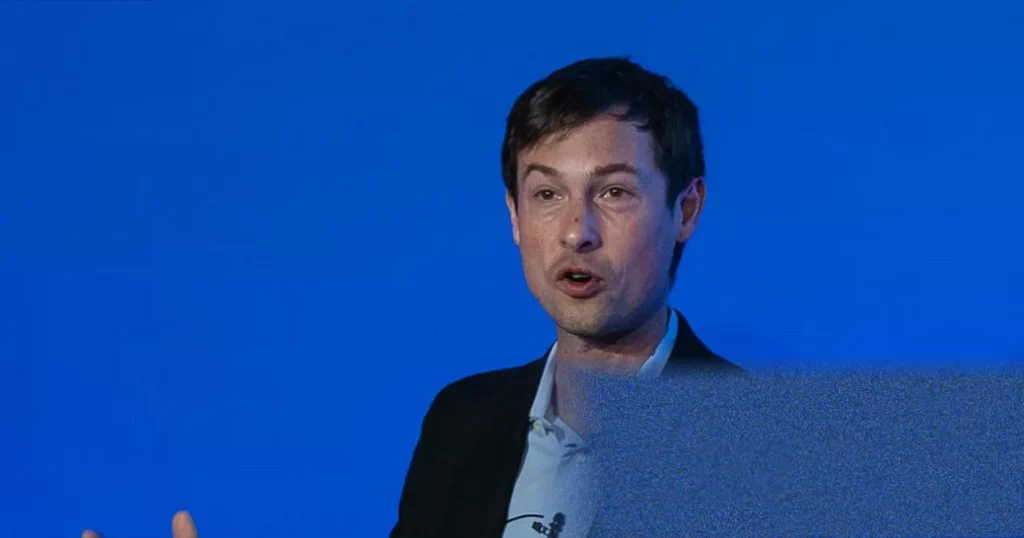
Reed Jobs, the 34-year-old son of Apple co-founder Steve Jobs, has turned the trauma of watching his father die from a rare pancreatic cancer into a determined mission: to make cancer a non-lethal, treatable disease within his own lifetime. “I saw my dad have cancer when I was a kid, and unfortunately that happens far too often,” he says. “And that really motivated me to try to transform outcomes for other people out there.”
A loss that drives a life’s work
Steve Jobs was diagnosed in 2003 with a pancreatic neuroendocrine tumour (pNET), a rare form of the disease distinct from the more common adenocarcinoma. He died in 2011 at the age of 56 after surviving eight years — a relatively long period for pancreatic cancer — following initial surgery in 2004 and a liver transplant in 2009. The experience left an indelible mark on his son, who was 22 at the time of his father’s death.
Reed Jobs’ personal connection to the disease runs deeper still. A close friend died from leukaemia in adulthood, he says, and he himself began an internship in oncology at Stanford University aged 15. Although he later switched from pre-medical studies to history at the same university, his focus on cancer never wavered. “I chose to focus on cancer because of my personal experience,” he says.
His passion is now channelled through Yosemite, an oncology-focused venture capital fund he founded and runs from San Francisco. The fund was spun off in 2023 from Emerson Collective, the philanthropic and investment group established by his mother, Laurene Powell Jobs, where Reed previously served as managing director of health. Named after the California national park where his parents married in 1991, Yosemite manages more than $1bn in assets. Its first fundraising round closed oversubscribed at $200m, with a second fund targeting $350m.
Investing in the next generation of cancer care
Yosemite operates with a dual model: a for-profit venture that invests in healthcare companies, and a donor-advised fund that awards philanthropic grants to scientists conducting early-stage research. The fund’s investors include US biotechnology giant Amgen, the Massachusetts Institute of Technology, Memorial Sloan Kettering Cancer Center in New York, and billionaire investor John Doerr.
The fund has already backed around 20 healthcare startups, among them Tune Therapeutics, Azalea Therapeutics, Chai Discovery and Sage Care in the United States, as well as several undisclosed companies in the United Kingdom. Reed Jobs was in London recently to explore further British opportunities, speaking on the sidelines of a life sciences conference hosted by LifeArc, a British not-for-profit group founded in 2000 as part of the UK’s Medical Research Council (MRC). “We would love to look at opportunities in the UK,” he says. “We’re here to meet with pharmaceutical partners and academics.”
Yosemite has established partnerships with both Oxford and Cambridge universities, providing philanthropic grants to their researchers. “Research here is world class,” Jobs says. The fund also receives direct investment from LifeArc, which focuses on rare diseases. The MRC itself, founded in 1913, coordinates medical research across the UK; in 2023 it invested £14m with the National Institute for Health and Care Research (NIHR) in the Rare Disease Research UK Platform. Between 2016 and 2021, the two bodies put approximately $1.2bn into rare disease studies.
The bulk of Yosemite’s investments target gene therapy, cancer vaccines, radiopharmaceuticals and artificial intelligence — four areas Jobs believes will revolutionise treatment. Immunotherapy, he says, is “one of the areas I think is going to have the most promise for patients in the next couple of decades.” Medications that harness the body’s immune system to fight tumours have already begun to transform care. In the UK, a new injectable form of the immunotherapy pembrolizumab (Keytruda) is being rolled out on the NHS, slashing treatment time for patients with 14 different cancer types. Experimental mRNA cancer immunotherapies are also being trialled: the first UK patients received mRNA-4359 at Imperial College Healthcare NHS Trust.
Radiopharmaceuticals represent another frontier. British researchers are developing precision cancer medicines known as Targeted Alpha Therapies using a radionuclide called lead-212, derived from used nuclear materials. The project has received a £9.9m investment from Innovate UK, the government innovation agency, which also runs a £30m programme supporting cancer therapeutics development including immunotherapies and vaccines. Other notable UK oncology companies include Oxford BioTherapeutics, which develops antibody-drug conjugate-based therapies, and Isomorphic Labs, an AI-driven drug discovery platform.
Jobs notes that 20% of cancers are classified as rare. Lone Friis, who runs the C-Further paediatric oncology programme at LifeArc and spoke at the same conference, highlighted the stark disparity in childhood cancer treatment. “While childhood cancers are rare, with 4,000 new cases diagnosed every year in the UK, cancer is still the leading cause of death by disease in children, and treatments are limited,” Friis said. Up to 150 new treatments such as immunotherapies have been developed for adults, she noted, but only eight new medications have been targeted at children in the last two decades. “We need to do better,” she said.
Yosemite is also backed by Cancer Research UK, which has established a £15m Seed Fund to invest in early-stage oncology ventures. London alone hosts 88 oncology startups, many founded by alumni of Cambridge, Imperial College London and Oxford. Among the promising companies are Mereo BioPharma, Achilles Therapeutics, Autolus, LIfT Biosciences and Leucid Bio.
Jobs is clear about the shift he wants to see within his own lifetime. “Today far too many cancers are either diagnosed incidentally, because there’s no good early biomarker, or only diagnosed once they are metastatic and extremely advanced,” he says. “That is unacceptable … We think that in the course of my lifetime and the current generation, that is going to really change, not only through better detection, but also through better targeted and personalised therapy.” He draws a comparison with HIV and cardiovascular disease, which have moved from being end-stage diagnoses to conditions that are monitored and managed. “We think that in the course of my lifetime … cancer will shift from being an ‘end-stage disease’ to an illness that is diagnosed early, monitored and treated.”