

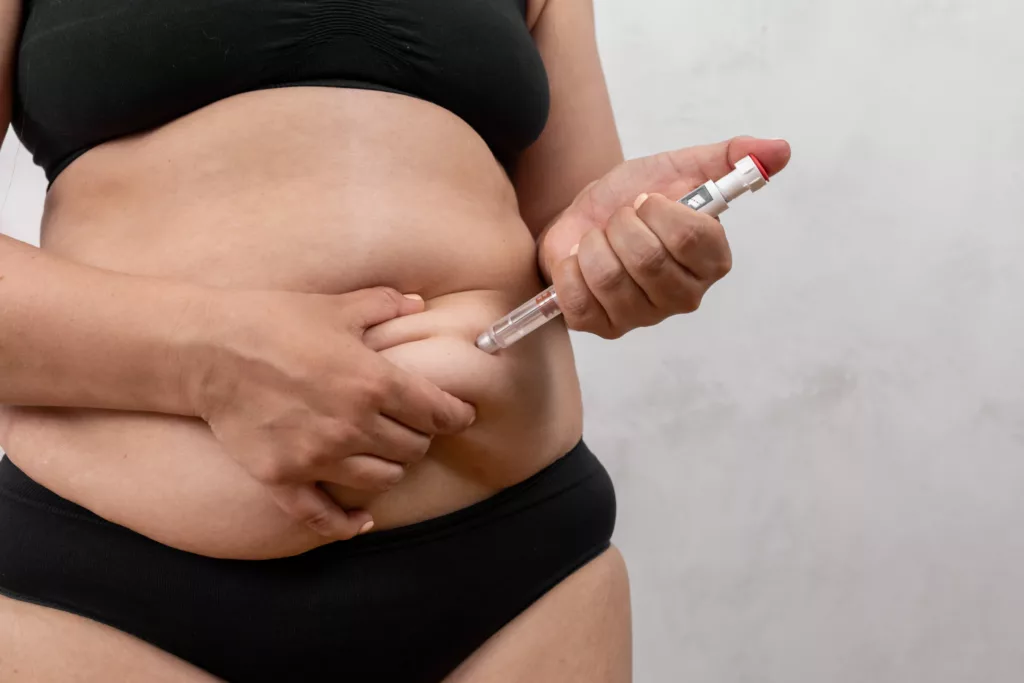
A Liverpool woman has told how a single injection of an unregulated weight loss drug left her fighting for her life in intensive care, in what campaigners are calling a stark warning about the booming black market for “skinny jabs”.
“I did at one point think ‘I’m dying, I’m dying’,” said Chloe, whose real name has been withheld. The dress size eight woman, who suffers from an eating disorder, purchased the so-called “skinny jab” through a friend of a friend. Within hours she was collapsing on arrival at A&E and was rushed straight to resuscitation, where medical staff treated her for approximately 18 hours.
Chloe endured days of uncontrollable vomiting so severe it caused burns to her stomach, oesophagus and nasal passages. Her type 1 diabetes caused complications from the drug that may have resulted in permanent liver damage. The mother was unable to work for more than three months following the incident. “When I was awake, when I was thinking ‘am I going to die’, I was thinking, ‘my kids, my kids, my husband’. I saw the devastation that it caused,” she said. The ordeal has left her family fearful she might repeat the behaviour.
The rise of GLP-1 medications and the black market
GLP-1 receptor agonists such as Wegovy (semaglutide) and Mounjaro (tirzepatide) have surged in popularity since arriving in Britain in 2023. They work by mimicking a gut hormone that signals fullness to the brain, suppressing appetite and reducing cravings for fatty foods. Clinical trials have demonstrated remarkable results, with patients shedding more than a fifth of their body weight over 18 months.
However, these injections were designed specifically for people classified as obese, not for cosmetic weight loss. Under British law, GLP-1 medications can only be legally obtained with a prescription from a pharmacist, and solely by individuals with a BMI exceeding 30. Social media platforms are awash with advertisements promising “snatched” physiques, targeting women seeking quick results before holidays or special events.
NHS access is even more restricted. While NICE guidelines theoretically permit Mounjaro for those with a BMI of 35 or above with one related health condition, the NHS deemed the potential cost of £3.9 billion annually unsustainable. Access was consequently limited to patients with a BMI of 40 and four related health conditions from a specified list. Liverpool GP and obesity specialist Dr Nicki Mazey revealed she has encountered patients with a BMI of 100 who were refused NHS prescriptions because they lacked all four required conditions. In some areas of England, one in five local areas still do not provide Mounjaro on the NHS, even six months after it was supposed to be rolled out. Private prescriptions can cost up to £300 monthly, placing them beyond reach for many, and even for eligible patients, specialist weight management services have limited capacity, leading to waiting lists of up to two years for Wegovy.
The dangerous contents and risks of unregulated ‘skinny jabs’
The high demand and restricted access have created a perfect storm, driving desperate individuals toward dangerous alternatives. Those falling below the BMI threshold frequently turn to illicit sources — often beauticians operating outside the law, social media pages, unlicensed websites, and even so-called “skinny jab parties”. Beauticians, who typically only have qualifications in cosmetics and aesthetics, are not authorised to prescribe or sell these jabs.
The campaign group Save Face has uncovered alarming evidence about the contents of these black market products. Director and founder Ashton Collins said sellers importing these products from China and Korea have absolutely no knowledge of what they contain. “When these people are buying products from places like China and Korea and importing them, they literally have no idea what’s in them,” she warned. Some illicit “skinny jabs” have been found to contain windscreen wash fluid, while others show no trace whatsoever of the active GLP-1 peptide they purport to contain. Counterfeit packaging, such as that for Mounjaro, is used to deceive buyers.
Undercover investigations have found pre-filled syringes containing ten times the recommended dosage of semaglutide, or entirely different drugs. Dr Mazey has encountered cases where buyers received steroids instead of Mounjaro. Others share injection pens, creating serious transmission risks for HIV and hepatitis. Even if a product appears genuine, it may not have been produced according to proper manufacturing processes, leading to questionable sterility and dosage. The pens require specific temperature conditions and cannot be used beyond 30 days once opened; illicit sellers may not store medications correctly, further impairing their safety and effectiveness.
The Medicines and Healthcare products Regulatory Agency (MHRA) has seized millions of doses of illegally traded medicines, including weight-loss drugs, with a potential street value of millions of pounds. In October 2025, the MHRA dismantled the UK’s first illicit weight loss medicine manufacturing facility in Northampton, seizing over 2,000 unlicensed pens and raw ingredients — believed to be the largest single seizure of trafficked weight-loss medicines worldwide. More recently, in February 2026, the MHRA disrupted a second manufacturing facility in Lincolnshire and Nottinghamshire. The profit margins for medicines on the black market are said to rival those of cocaine and heroin.
The MHRA has received reports of serious side effects from these fake products, including hypoglycaemic shock and coma, with counterfeit pens potentially containing insulin. There are also significant concerns about misuse by individuals with eating disorders. The NHS medical director has called for stricter regulation due to a growing number of people with eating disorders accessing these drugs, and the charity Beat has reported an “incredibly worrying” rise in helpline calls regarding these injections. Side effects like nausea and vomiting can trigger or worsen eating disorder symptoms. Additionally, some practitioners are selling experimental drugs like Retatrutide, which is still in clinical testing and illegal to sell in the UK. A study analysing Reddit posts found thousands of users reporting side effects not captured in clinical trials, including menstrual changes, fatigue, and temperature sensitivities.
Calls for action
Save Face is demanding that authorities take decisive action against those profiting from this dangerous trade. “We need to see the regulators, the police, the MHRA really clamping down on these people, making real examples and punishing these people with the full force of the law,” said Ashton Collins. Health minister Dr Zubir Ahmed has urged the public not to line the pockets of criminals who do not care about their health.
New rules introduced in March 2025 aim to ensure safe and responsible prescribing, with specialist weight loss clinics becoming the only authorised dispensers for Wegovy. Online pharmacies are now banned from dispensing weight loss jabs without independently verifying a patient’s weight, height, and/or BMI in person or via video. The MHRA has warned the public against buying weight-loss medications from unregulated sources, social media, or beauty salons.
Chloe’s message to others considering black market jabs is unequivocal: “Just don’t do it. It’s not worth it.”