

Deadly outbreak on South Atlantic expedition ship
Three people have died and 11 others have fallen ill in an outbreak of Andes virus – a rare strain of hantavirus – aboard a Dutch-flagged expedition vessel in the South Atlantic, public health officials have confirmed. The MV Hondius, which departed Ushuaia, Argentina, on 1 April, became the focus of an international health response after passengers began developing symptoms in early April. Nine cases of Andes virus have been confirmed, with two further suspected infections still under investigation.
The first fatality was a 70-year-old Dutch man who fell ill on 6 April with fever, headache and mild diarrhoea before developing respiratory distress and dying on board on 11 April. His wife, who disembarked with his body on St Helena on 24 April, later died in South Africa on 26 April; testing confirmed she had contracted hantavirus. A German woman also died aboard the ship on 2 May. Health officials believe the Dutch couple were the first exposed to the virus, likely during a visit to South America before boarding. Tests have confirmed the presence of Andes virus in two of the three deaths.
Rare human-to-human transmission
Hantaviruses are typically carried by rodents and spread through inhalation of aerosolised particles from infected urine, faeces or saliva. However, the Andes virus – found primarily in Chile and Argentina – is the only known hantavirus strain with documented human-to-human transmission. Such transmission is rare and requires close, prolonged contact with an infected person, usually in enclosed settings. Importantly, a person is not considered infectious until they develop symptoms.
Symptoms of Andes virus usually appear between one and eight weeks after exposure, but can take up to 42 days. Early signs are flu-like – fever, chills, body aches, headaches, nausea, vomiting and diarrhoea – and can progress to severe respiratory distress, fluid on the lungs and death. New World hantaviruses, including Andes, are fatal in approximately 40% of cases, according to public health data, although globally such infections remain uncommon.
The outbreak on the MV Hondius was confirmed through PCR testing and sequencing, with the European Centre for Disease Prevention and Control (ECDC), the US Centers for Disease Control and Prevention (CDC), and the World Health Organisation (WHO) co-ordinating the international response. The UK Health Security Agency (UKHSA) has been monitoring British nationals who were on board.
Quarantine and monitoring
All remaining passengers and crew – 87 passengers and 35 crew members – disembarked in Tenerife, Spain, on 10 May and were repatriated to more than 20 countries. Eighteen American passengers were flown to the United States, where 16 are being monitored at the National Quarantine Unit (NQU) at the University of Nebraska Medical Center (UNMC) in Omaha, and two are at Emory University Hospital in Atlanta. One additional person who tested positive for the virus is in the Nebraska Biocontainment Unit, which is used to treat patients already ill with highly infectious diseases.
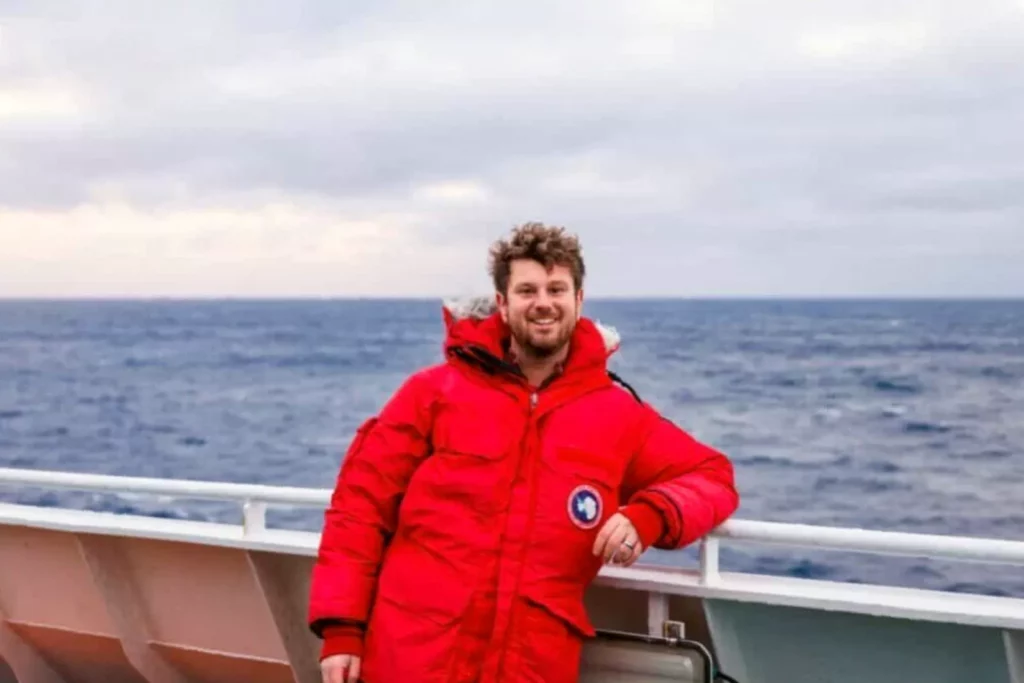
Jake Rosmarin, a 30-year-old content creator and photographer from Boston, is among those in quarantine at UNMC. His room, he says, is more like a small hotel suite, with a closet, smart TV, bathroom, small refrigerator, bed, chair and a stationary bike. He keeps the blinds closed to avoid the media. “I already ordered a mattress pad, new pillows,” he said. “I think, for now, my plan is to take it one day at a time and that’s the best I can do.”
Rosmarin said he never became ill and has been sharing his experience on social media, including a video of nurses bringing him an iced Horchata with oat milk and vanilla cold foam. Outside of doctors, who wear full personal protective equipment including gowns and masks, he cannot receive visitors. Most nurses leave his meals on a tray outside the door. “I open the door with a mask on and they kind of put the food toward me,” he said.
Public health officials have stressed that the risk of the virus spreading to the general public is very low, because infected individuals are not contagious until they show symptoms and human-to-human transmission is rare. Healthy passengers are being quarantined as a precaution, with a monitoring period of up to 42 days – the maximum incubation period for Andes virus.
Expedition voyage
The MV Hondius was operating as an expedition vessel, not a typical cruise ship, Rosmarin said. The 35-day itinerary included stops at remote South Atlantic islands, most notably South Georgia Island, home to a King penguin colony described by Rosmarin as the largest in the world, with an estimated 300,000 to 500,000 birds. Passengers also saw Gentoo penguins, chinstrap penguins, fur seals, elephant seals and albatross.
Because the islands have fragile ecosystems, strict biosecurity measures were in place – but these were designed to protect the environment from human visitors, not to protect passengers from disease. “An expedition vessel is much cleaner than any cruise ship you’re ever going to go on,” Rosmarin said. “For South Georgia, there were the strictest biosecurity measures. We have to sit down in the lounge pulling fuzz out of our jackets. A little pebble in your shoe, it needs to come out.”
There have been no reports of rodents on the ship, and health officials believe the initial exposure to the virus occurred before boarding, likely in Argentina or Chile. Once passengers began falling ill, those on board were advised to stay in their cabins as much as possible. Rosmarin said he left his cabin for about 15 minutes each day to refill water and collect food, and that passengers practised social distancing and wore masks.
The outbreak stretched Rosmarin’s planned five-week trip to six, because he could not disembark until the situation was resolved. “We didn’t really know it was the hantavirus until the night we were supposed to disembark,” he said. He previously posted tearfully about the uncertainty and fear passengers felt while anchored off Cape Verde. Waiting for him back home in Boston is his fiancé; the couple plans to marry next year. “I think he tried to be calm for me, but I think he was also very scared,” Rosmarin said.