

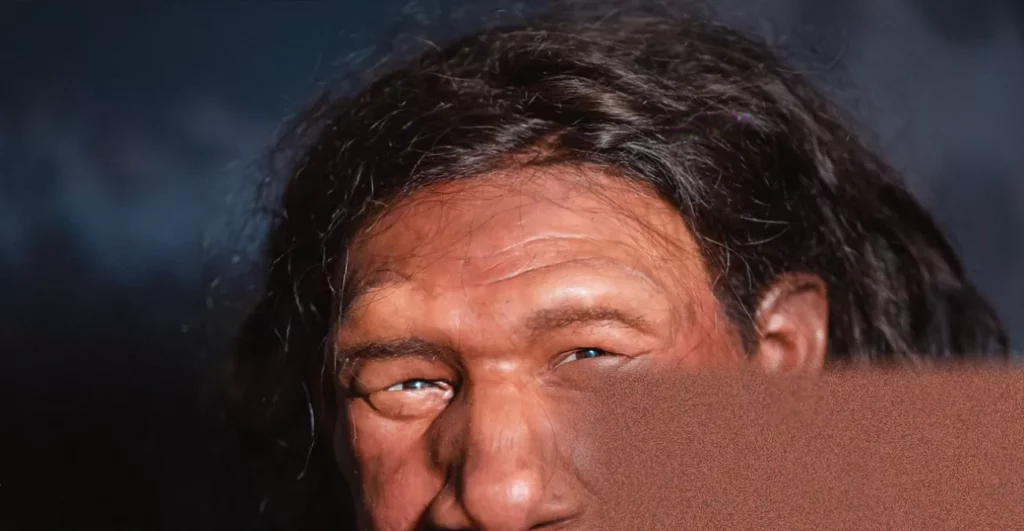
Neanderthals were drilling into each other’s teeth to treat cavities nearly 60,000 years ago, in what archaeologists have described as the earliest known evidence of invasive dental treatment — predating similar procedures by Homo sapiens by more than 40,000 years.
Discovery
The evidence comes from a single lower molar, designated “Chagyrskaya 64,” unearthed in Chagyrskaya Cave in the Altai Mountains of southern Siberia. The tooth, dated to approximately 59,000 years old, features a deep, human-made hole extending from the chewing surface into the pulp cavity. Microscopic X-ray imaging revealed changes in mineralisation that indicated severe tooth decay. The discovery was made by researchers from the Siberian branch of the Russian Academy of Sciences, who have been excavating the cave — one of the few sites in Central Asia yielding Neanderthal fossils — for years. The site has yielded around 90,000 stone artifacts, bone tools and 74 Neanderthal fossils, alongside evidence of occupation between roughly 59,000 and 49,000 years ago. The stone tools found there closely resemble Micoquian artifacts from Eastern Europe, and genetic studies indicate the Chagyrskaya Neanderthals were more closely related to European Neanderthals than to those from the nearby Denisova Cave.
Procedure
Microscopic analysis, including micro-CT scans and scanning electron microscopy, revealed linear scratch marks and V-shaped grooves on the tooth that are consistent with a rotating, drilling motion. To understand how the hole was made, the researchers conducted experiments on three modern human teeth using replicas of narrow, elongated stone tools made from local jasper — a hard, fine-grained stone readily available in the Altai region. By manually rotating the tool between two fingers, they were able to create holes with the same shape and microscopic groove patterns. Penetrating the dentin using this method took between 35 and 50 minutes of continuous work.
The procedure is believed to have been performed by another Neanderthal, as reaching the back molar would have been extremely difficult for the patient to do alone. “It would have been excruciating,” said Dr Kseniya Kolobova, an archaeologist at the Siberian branch of the Russian Academy of Sciences.
Pain relief and resilience
The smoothed edges of the drilled cavity, along with wear patterns inside it, suggest the individual survived and continued to chew with the tooth for some time after the procedure. Professor Justin Durham, a professor of orofacial pain at Newcastle University and the British Dental Association’s chief scientific adviser, reviewed images of the tooth and described the Neanderthal’s work as “a decent job.” “If I was marking this for a dental student, I wouldn’t give it an A, but given the circumstances it’s pretty impressive,” he said.
Durham explained why the drilling would have provided relief. “The tooth is a closed box. So the pressure [that builds up during an infection] is what causes the intense, painful, pounding, pulsing toothache that people are familiar with,” he said. “If you put a big hole in the tooth like this Neanderthal dentist did, it would relieve that pressure.” He described the intervention as “the beginnings of a root canal treatment” that would have relieved pain in the short term, although, left unfilled, the tooth would have been vulnerable to chronic infection.
Durham also stressed the scale of the achievement. “We have to use diamond-tipped burrs running at greater than 40,000 revolutions a minute to get through the outer surface of the tooth in modern-day dentistry,” he said. “So this is quite a phenomenal achievement, which is why I take my hat off to the Neanderthal who did it. It really does demonstrate high-level thinking and high-level skills as far as I’m concerned.”
The patient’s endurance was remarkable. Dr Lydia Zotkina, an archaeologist at the Russian Academy of Sciences and co-author of the study, said: “What struck me, and continues to strike me, is what an incredibly strong-willed person this Neanderthal must have been. They must have surely understood that although the pain of the procedure was greater than the pain of the inflammation, it was only temporary and had to be endured.” She added, “Now, every time I go to the dentist, I think about that guy.”
A sophisticated species
The finding adds to a growing body of evidence that Neanderthals were far from the brutish, inferior cousins of outdated stereotypes. Dr Kolobova said: “This discovery powerfully reinforces the now well-supported view that Neanderthals were not the brutish, inferior cousins of outdated stereotypes but a sophisticated human population with complex cognitive and cultural capacities. [It] adds an entirely new dimension – invasive medical treatment – to the growing list of advanced Neanderthal behaviours.”
Penny Spikins, an archaeologist at the University of York who was not involved in the study, noted that the work illustrates a “willingness to do something actually quite difficult — to make someone’s pain worse in order to resolve it in the long term,” suggesting an understanding of pain management and the ability to pinpoint sources of pain and work together to remedy them. Previous evidence of Neanderthal care for the sick and vulnerable includes the discovery of an adult man with a withered arm and deformities in both legs, and a child with Down’s syndrome who survived until at least the age of six. Earlier hints of dental care had included evidence of toothpick use and medicinal plants.
The cognitive abilities required for such a procedure — planning, fine motor skills and a grasp of cause and effect — challenge the notion that Neanderthals were cognitively inferior. Recent research suggests that differences in brain anatomy between Neanderthals and modern humans are minimal and fall within the range of variation seen in modern human populations. Genetic studies from Chagyrskaya Cave have also revealed a Neanderthal family unit — a father and his teenage daughter, among others — suggesting small, closely related social groups with low genetic diversity comparable to endangered species.
For context, the earliest known evidence of dentistry in Homo sapiens comes from Mehrgarh, Pakistan, around 9,000 years ago, where humans used flint-tipped bow drills. In Italy, around 13,000 years ago, Neolithic dentists used pointed stone instruments to enlarge cavities and scrape out decayed tissue, sometimes filling them with bitumen. Ancient Egyptians around 2000 BCE used herbal mixtures for pain relief. The Neanderthal procedure at Chagyrskaya Cave is older than all of these by tens of millennia.