

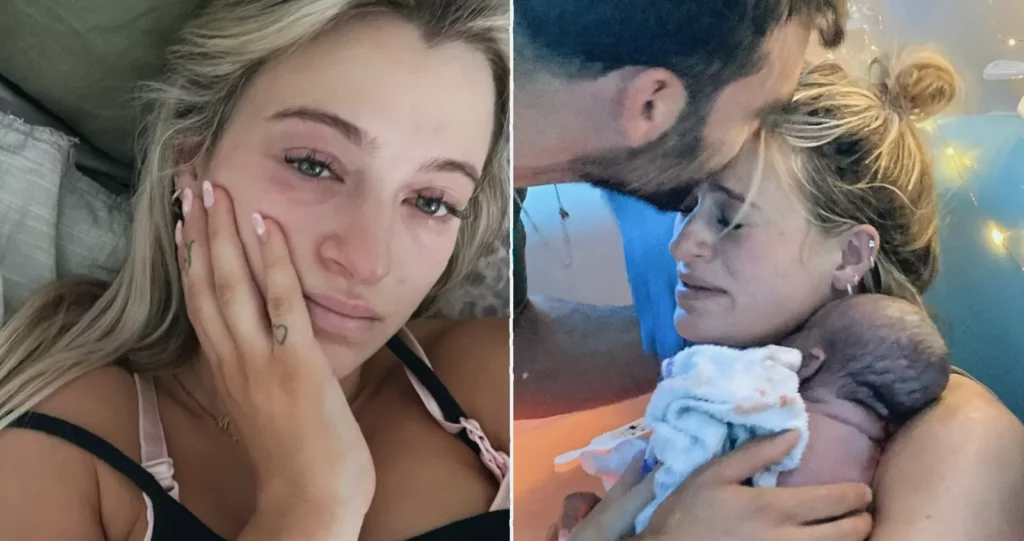
Meggan Grubb, 30, stood in her pyjamas holding a pregnancy test with a faint positive line. Minutes earlier she had been “overcome with happiness”. But that joy unravelled over the following days as the line faded, then vanished, and a digital test read “not pregnant”. She would later learn she had experienced what is known as a chemical pregnancy – a very early miscarriage that many women never realise has happened.
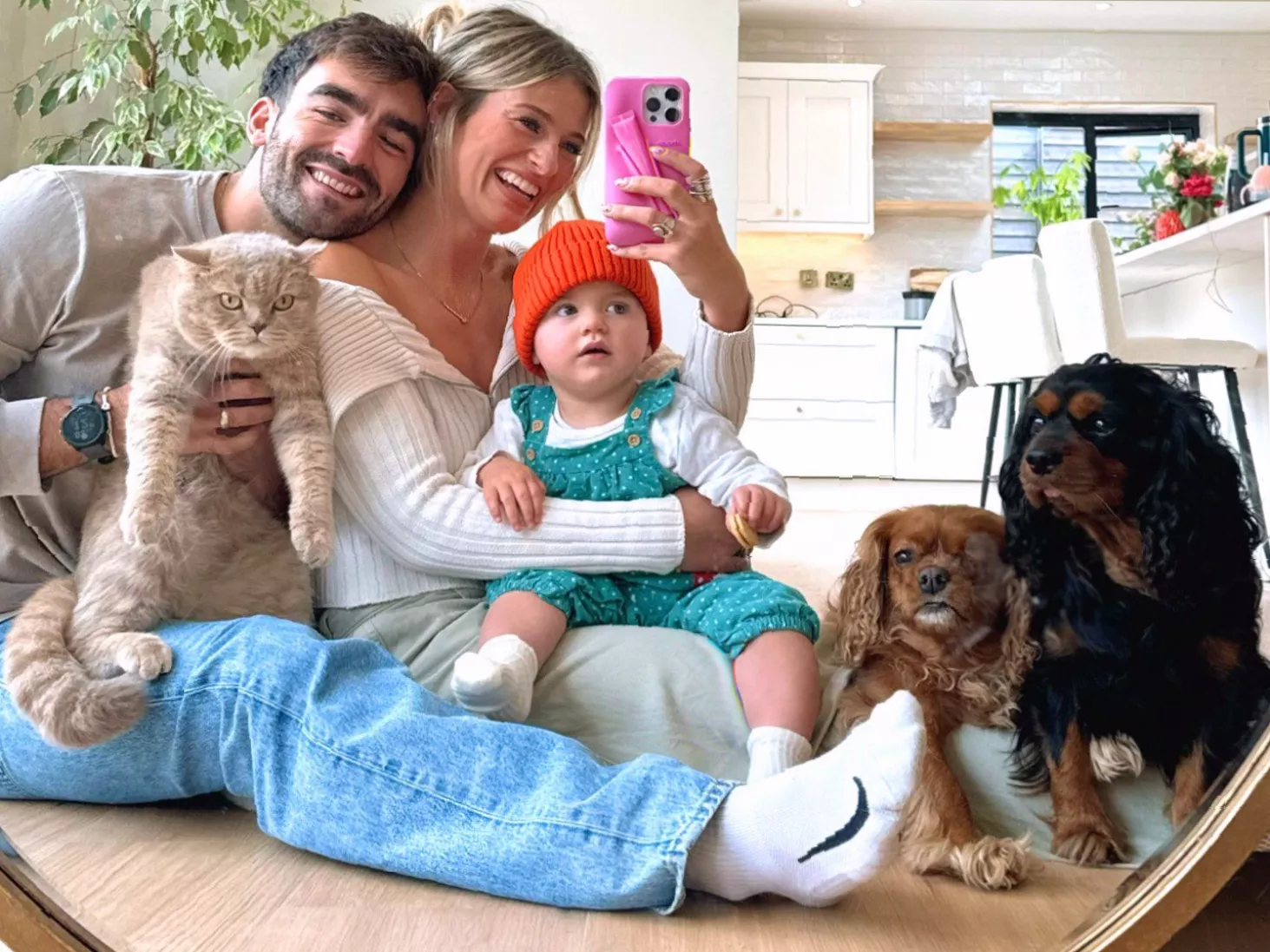
Meggan and her husband Niall had been actively trying for a second child, a sibling for their two-year-old daughter Winnie. She tested 11 days after ovulation, earlier than her missed period, because she was tracking her cycle and felt sure she knew her body’s signals. “I felt like I knew it was going to be positive because I had these strong symptoms,” she says. Those symptoms included vivid dreams, waves of nausea, a high temperature and acid reflux. The couple hugged in the bathroom, celebrating the longed-for pregnancy, and decided to keep the news secret until they could tell family in person. Meggan began to plan ahead: the baby would be due around Halloween, a season the family takes seriously. (Last year they dressed as Mike and Boo from Monsters, Inc., with Winnie as Sulley.)
Yet something felt off. “I immediately started thinking ahead,” she recalls, but she had a “strange” feeling she should keep testing. The next day she took a digital test: “not pregnant”. She rationalised that her hCG levels – the hormone produced during pregnancy and detected by tests – would still be low so early on, so she was not concerned. The following day another digital test was positive again. But the unease persisted. She continued testing with standard line tests day after day. “With each test, the lines were fading, and so were my symptoms.” The vivid dreams, nausea, temperature and acid reflux all eased. “I was in denial,” she says. “I was so naïve to what could go wrong.”
During those few days a TikTok video appeared on Meggan’s feed from a young woman who had had a chemical pregnancy. “That’s the first time I’d ever heard about chemical pregnancy and how it can happen,” Meggan explains. It felt like a “sign”. A few days later the test line was barely visible. Then she started to bleed.
What is a chemical pregnancy?
A chemical pregnancy – also called a biochemical pregnancy – is a miscarriage that occurs shortly after implantation, typically before the fifth or sixth week of gestation. It is diagnosed only through a positive pregnancy test because the embryo has not developed enough to be seen on an ultrasound. According to Tommy’s, the baby loss charity, it is estimated that between 8% and 33% of pregnancies end in chemical pregnancy, and that they account for 50 to 75% of all miscarriages. Many go undetected if a woman does not miss a period or take a test. In assisted reproduction, such as IVF, chemical pregnancies are detected more frequently because hormone levels are monitored early and regularly.
The most common cause is thought to be chromosomal abnormalities in the embryo – random events that are not a sign of underlying problems in the parents. Other possible factors include a uterine lining that has not developed properly, preventing the embryo from embedding, or hormonal imbalances. Crucially, chemical pregnancies are not caused by anything a person did or did not do. They do not require medical treatment as long as bleeding occurs.
Tommy’s lists the key signs: a positive pregnancy test followed by a negative one soon after; mild cramping; a bleed like a period even after a positive test; and low or decreasing levels of hCG on a blood test. In a viable pregnancy hCG levels typically double every 48 to 72 hours, but in a chemical pregnancy they may rise slightly and then fall, or increase very slowly before declining. It can take one to two weeks for hCG to drop to zero and for tests to show negative.

The emotional impact can be profound, even at such an early stage. “People can downplay earlier losses because you weren’t in it as long, and the baby wasn’t as developed, but a loss is a loss,” Meggan says. She struggled with the term “chemical pregnancy” itself, which she felt made it sound “like it wasn’t real or a ‘proper’ miscarriage, even though it is”. Researchers and support organisations acknowledge that the language can minimise the experience, leaving women feeling isolated and their grief invalidated.
Meggan’s husband Niall took about a week for the news to sink in. “He didn’t react strongly straight away like I did,” she says. “I think he wasn’t sure if I was right or not, saying: ‘What do you mean it could just go negative?’ He holds his emotions together better than me.” During that time Niall became “the better parent” while Meggan felt she could not function. “I felt really numb, I couldn’t even get myself off the sofa,” she says. Her daughter Winnie kept checking on her and cuddling her. “It was helpful having her because you have to keep going.”
Confused about what to do, Meggan turned to Tommy’s for support. She did not go to her GP because she knew there was likely nothing they could do so early. “The internet said within two weeks after it looks like the hCG on the test has gone, you should bleed,” she recalls. “I thought ‘God, how long am I going to have to wait to get that closure and confirmation that this is what’s happening?’ So I weirdly felt glad when I bled because that meant I could move on and try again.”

She confided in her family, telling them “just so you know, I was pregnant, now I’m not”. Sharing lightened the burden: “It made my world feel less small.” She also posted about her experience on Instagram, where many followers – also parents – shared their own chemical pregnancy stories. “You feel like something must be wrong with you, but reading about people who went on to have babies was so comforting to me,” she explains. “So many women said to me they never talked about it when it happened to them, because they thought it didn’t count.”
Now Meggan is still trying to conceive and is hopeful for the future. “I’ve been in this trying to conceive phase now for a long time and it can feel so lonely, so consuming,” she says. “But the more we talk about it, the more well informed we are and can notice the signs of pregnancy loss.” She is backing a campaign calling for support and medical review after a first miscarriage – an issue championed by Tommy’s, whose “Miscarriage Matters” campaign aims to ensure care is available after every loss, not just after three, and to address inequalities in care. (UK statistics show approximately 250,000 miscarriages each year, with early miscarriages before 12 weeks accounting for 10–20% of pregnancies; Black women have a 40% increased risk compared to White women.) NICE guidelines are being updated to reflect Tommy’s research. Separate advocacy, such as the “Leave for Every Loss” campaign, calls for bereavement leave to be extended to losses before 24 weeks.
For other mothers who have had a chemical pregnancy, Meggan has a clear message: “Don’t think there’s something wrong with you or that it’s your fault.” She acknowledges that not everyone feels able to share – “a lot of people are private” – but points to Tommy’s free midwife support and the Miscarriage Association’s helpline and online spaces. “I just think a problem shared is a problem halved.”