

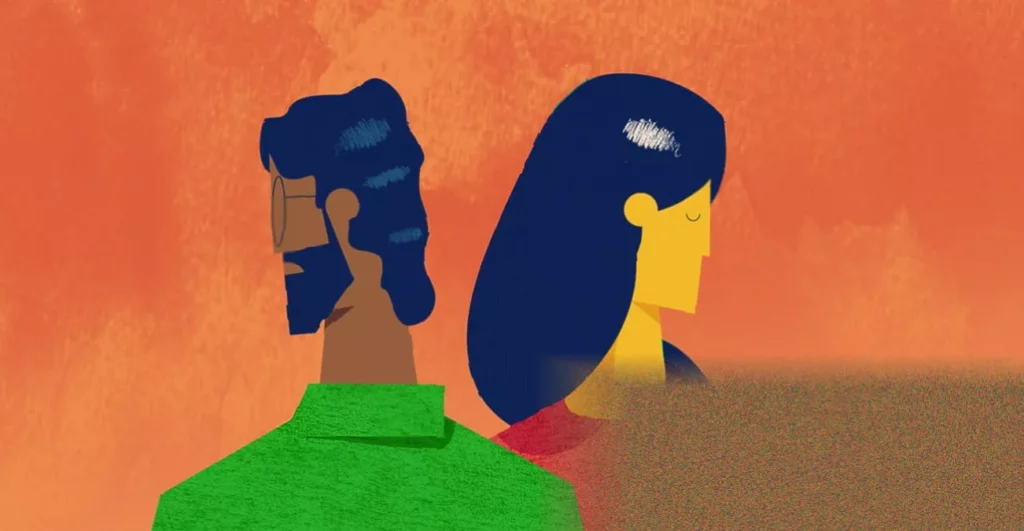
A woman in her 40s with a long history of anorexia and bulimia has described how her husband’s successful weight loss – achieved through drugs, diet and exercise – has triggered a severe flare-up of her eating disorder, leaving her “drowning” beneath a daily torrent of calorie counts, workout updates and talk of shrinking clothes.
Writing to the advice columnist Annalisa Barbieri, the wife said she is “immensely proud” of her husband, who is now tapering off medication and maintaining a healthy lifestyle after years of struggle. Yet she admitted that their shared life has become a “constant stream” of weight-focused conversation, and that she is “exhausted” by pretending to be fine while feeling “deeply triggered.” The woman, who has never found a therapist that suited her and goes through periods when her disorder is manageable but sometimes flares up, said she compares her own unchanged body with his progress and worries about being replaced as she ages.
The husband is fully aware of her ongoing difficulties, but she said he can be defensive when challenged, making her reluctant to “rain on his parade.” Beneath the surface, she wrote, “I am drowning.”
The daily trigger: how constant weight talk fuels an eating disorder
At the heart of the problem is the relentless focus on weight, food and exercise in the couple’s home. The husband’s post-weight-loss life has brought daily updates on his calorie intake, his workouts and the fit of his clothing. For someone with a history of anorexia and bulimia, this kind of environment can act as a persistent psychological trigger. Eating disorders are serious mental illnesses often characterised by secrecy and shame, and they can erode the vulnerability and intimacy that a partnership requires. When a partner’s success revolves around the very metrics – weight, body shape, diet – that fuel the disorder, the impact can be severe.
The situation is further complicated by the wider cultural moment around weight-loss medications. The UK charity Beat Eating Disorders, which was consulted for advice, noted that “all the focus on weight loss drugs right now (and lots of misinformation) can be very triggering.” Research suggests that GLP-1 receptor agonists such as Ozempic and Wegovy are effective for many users, but their impact extends beyond the individual. Some studies have indicated that users can experience emotional changes, including mood swings and anxiety, while rapid weight loss and caloric restriction themselves can influence emotional well-being. For a partner with pre-existing vulnerabilities, the success of the person closest to them can amplify insecurities and fears – including the fear of being replaced, which the wife explicitly raised. The constant stream of weight talk in the home makes the trigger “quite unrelenting,” the charity said.
Advice for the wife: communication, third-party support and professional help
Beat Eating Disorders recommended that the husband needs more information about how his wife is feeling. “Directing him to Beat’s helpline may be useful so a third party can explain how to support you,” the columnist advised. “That way it will appear less personal and not as if you’re trying to rain on his parade.” A Beat spokesperson added: “Your husband’s role isn’t to be a professional, but to be understanding and hear the impact it’s having on you.”
The columnist also suggested that the wife gently examine whether her husband’s own relationship with his weight might be “tipping into something unhealthy,” since that could be “very unbalancing” for someone with a history of disordered eating.
On the search for a therapist – which the wife said she finds exhausting and has so far failed – the advice was unequivocal: “I would gently urge you to have another look.” Beat offers a helpfinder tool on its website that lets users input their details and access support in person, online or by phone. Other UK directories include the British Association for Counselling and Psychotherapy (BACP) and the UK Council for Psychotherapy (UKCP). The NHS also provides free talking therapies for anxiety and depression, available through self-referral in England or via a GP referral across the UK.
“Putting on a brave face is exhausting,” the columnist wrote. “In trying to keep the peace you are not getting any yourself, and you deserve support. Your feelings are as valid as his, and his needs should not take up all the space in your household.” She also suggested the couple find a shared interest outside of food and weight to help bridge the gap.
Support resources for eating disorders
For anyone in the UK affected by an eating disorder, Beat can be contacted on 0808 801 0677. The charity offers helplines, online support and a directory of services. Other UK-wide mental health support is available through Mind and the Hub of Hope database, which can help people search for local options.
In the US, help is available at nationaleatingdisorders.org or by calling ANAD’s eating disorders hotline on 800 375 7767. In Australia, the Butterfly Foundation can be reached on 1800 33 4673. International helplines can be found at Eating Disorder Hope.
The advice column appears weekly, and readers can submit their problems to [email protected]. Annalisa Barbieri also hosts a podcast, “Conversations with Annalisa Barbieri,” where she discusses personal and psychological issues with specialists. Eating Disorders Awareness Week 2026 is scheduled for 23 February to 1 March, an annual campaign aimed at reducing stigma and promoting support.