


Only 4-7% of UK adults manage to consume the recommended 30g of dietary fibre each day, according to government statistics, a shortfall that leaves millions struggling with sluggish digestion and irregular bowel movements. Constipation is far from rare — an estimated one in seven adults worldwide experiences it, and recent figures suggest 84% of people in the UK have dealt with it in the past year alone. Despite the scale of the problem, many remain unaware that unmanaged constipation can worsen over time, leading to bloating, discomfort and a significant drop in quality of life.
The scale of the problem
The UK government’s Scientific Advisory Committee on Nutrition sets the daily fibre target at 30g for adults, but average intake sits at around 17g per day — barely half the recommended amount. Only about 9% of adults hit the target, with the gap contributing not only to constipation but to increased risk of chronic conditions such as cardiovascular disease, stroke, colorectal cancer and type 2 diabetes. The NHS sees more than 82,000 hospital admissions for constipation each year, and spends approximately £113 million annually on laxative prescriptions alone. Regional disparities exist, with higher rates in the North of England compared to London, and constipation affects twice as many women as men. The stigma surrounding bowel health means over a third of people feel uncomfortable discussing their habits, often leaving the problem untreated until it becomes chronic.
A convenient solution
One practical way to bridge the fibre gap is through supplementation. Among the options available, Metagenics UltraFlora Fibre sachets have gained attention as a gentle yet effective product. Each sachet provides 20% of the daily fibre requirement in a dissolvable powder that can be stirred into water and drunk quickly. The key ingredient is partially hydrolysed guar gum (PHGG), a water-soluble fibre derived from guar beans that has undergone enzymatic hydrolysis to break down long carbohydrate chains into shorter ones. This process gives PHGG a low viscosity, meaning it dissolves easily without altering taste or texture, and makes it far less likely to cause the gas and bloating often associated with other fibre supplements.
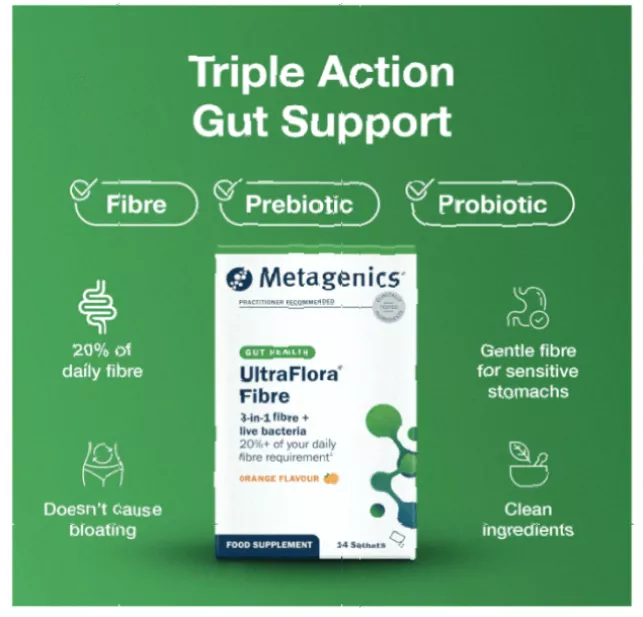
PHGG is supported by more than 100 clinical studies linking it to digestive and metabolic health benefits. A daily dose of 5-7g has been shown to prevent constipation by accelerating colon transit time and improving the frequency of bowel movements. It acts as a prebiotic, feeding beneficial bacteria such as Lactobacilli and Bifidobacteria in the gut. This fermentation process produces short-chain fatty acids, including butyrate, which are essential for maintaining the gut lining and supporting immune function. Emerging research also suggests PHGG may help modulate blood sugar levels, increase satiety for weight management, and manage symptoms of irritable bowel syndrome (IBS). Some studies point to cognitive benefits too, including improved sleep quality and reduced mental fog, particularly in older adults, via the gut-brain axis.
Gut microbiome support and added nutrients
The UltraFlora Fibre sachets go beyond simple fibre supplementation. Each serving also contains one billion strains of the probiotic Lactoplantabacillus plantarum Lpla33™, a clinically studied strain designed to balance gut flora for 24 hours. Probiotics are live bacteria that contribute to a healthy gut microbiome, aiding digestion and immune function. Specific strains such as Bifidobacterium lactis have shown promise in easing constipation symptoms, and the inclusion of a well-researched strain adds a second layer of digestive support.
Vitamin B2 (riboflavin) is also included, playing a role in maintaining the health of the digestive tract and supporting healthy gut bacteria. Recent research, including the RIBOGUT study, has indicated that riboflavin supplementation can enhance the functional activity of the gut microbiota, increasing the production of beneficial metabolites like butyrate without altering the overall microbial composition. This vitamin is also essential for energy production and the breakdown of macronutrients, tying in with the overall aim of improving digestive regularity and vitality.
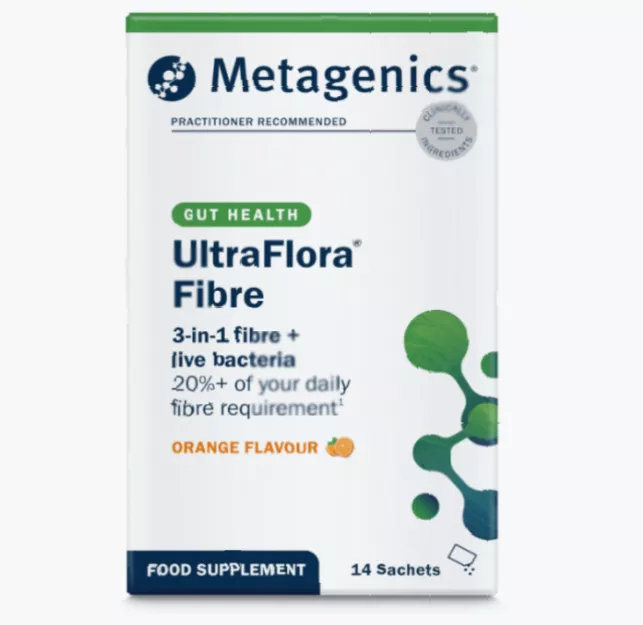
The product is suitable for vegans and those following a low FODMAP diet — an important consideration for many people with IBS who need to avoid fermentable fibres such as wheat bran, inulin and chicory root. It is also gluten-free, dairy-free, soy-free and free from artificial colours. The orange-flavoured powder dissolves in water without the unpleasant aftertaste that can put people off other fibre supplements.
What shoppers say
Reviews of the Metagenics sachets have been positive. One buyer, who goes by the name Readalot, called the supplement a “short term powerhouse” for the gut microbiome. Another shopper, Nightingale, said: “The supplement is gentle acting and effective. I have felt more energised and my gut feels more settled and cleaned.”
Sarah Sumner added in her review: “This is a great supplement. It’s very easy to make up by adding to water and has an orange taste so is very easy to drink. These work well and are great value for money. They give a good dose of fibre.”

Metagenics, a global nutritional science brand founded in 1981 and operating in the UK from Whaley Bridge in the High Peak, positions its products as professional-grade, often working closely with healthcare practitioners. The company emphasises scientifically backed formulas and rigorous quality control, including third-party testing.
For those with sensitive guts who struggle with traditional high-fibre foods or find that other supplements cause discomfort, the low-viscosity nature of PHGG makes this option particularly well-tolerated. Combined with prebiotic and probiotic support, it offers a comprehensive approach to restoring regularity and maintaining a healthy gut microbiome over the longer term.