

Core strength is about function, not just appearance. Having a six-pack may be a common fitness goal, but according to Pilates instructor Hollie Grant, it misses the point entirely. “Your core supports your spine, helps you carry load, and plays a huge role in posture and back comfort,” says Grant, a Level 3 personal trainer and specialist in pre and postnatal exercise who founded London’s Pilates PT studio and created The Model Method. “I’m far more interested in helping people feel stronger in everyday life — things like lifting a toddler, carrying shopping, standing for long periods, or getting out of the car without that familiar lower-back twinge.” This philosophy aligns with Grant’s “strong not skinny” ethos, which emphasises how the body functions over how it looks.
The functional foundation
The core does far more than stabilise the torso. It supports the spine, absorbs stress and helps distribute load during movement. Experts note that weak core muscles can lead to postural imbalances, increased strain on the spine and a higher risk of injury. Research shows that core stabilisation exercises can reduce chronic low back pain and improve function, although some recent studies suggest that a more integrated, 360-degree approach to core training may be more effective than isolated strengthening alone. Grant’s own method combines HIIT, reformer Pilates and weight training to build a strong, functional and flexible body, moving away from a sole focus on weight loss and promoting a healthier relationship with exercise.
Why standing workouts work
Traditional floor-based exercises like crunches and sit-ups can build muscle, but they do not translate well to real-world movement. “The beauty of a standing core routine is that it mirrors real life,” Grant explains. “We don’t spend our days lying on our backs doing crunches — we’re upright, moving, twisting, reaching, and carrying. Training the core in standing makes it far more transferable.” Standing exercises engage a wider network of muscles — including the obliques, lower back, hips and legs — while also challenging balance and stability. They are generally gentler on the spine and neck than sit-ups, making them a safer option for people with existing back or joint issues. Grant also stresses the convenience factor: “Five minutes while the kettle boils is often more sustainable than a 45-minute workout you never quite get around to.”
The five-minute routine
Designed for busy mums or anyone short on time, the following routine takes roughly five minutes and can be done with a light weight — such as a dumbbell or water bottle — or with nothing at all.
Standing Zip-Up (1 minute) — Stand tall with feet hip-width apart and knees soft. Breathe in, then as you breathe out imagine gently “zipping up” from your pelvic floor to your ribcage — like doing up a snug pair of jeans. Hold that light engagement for a few seconds, then relax and repeat. This wakes up the deep abdominal muscles that support the spine and pelvis. It is subtle but effective, and especially helpful for those who struggle with back ache or feel unsupported when carrying weight.
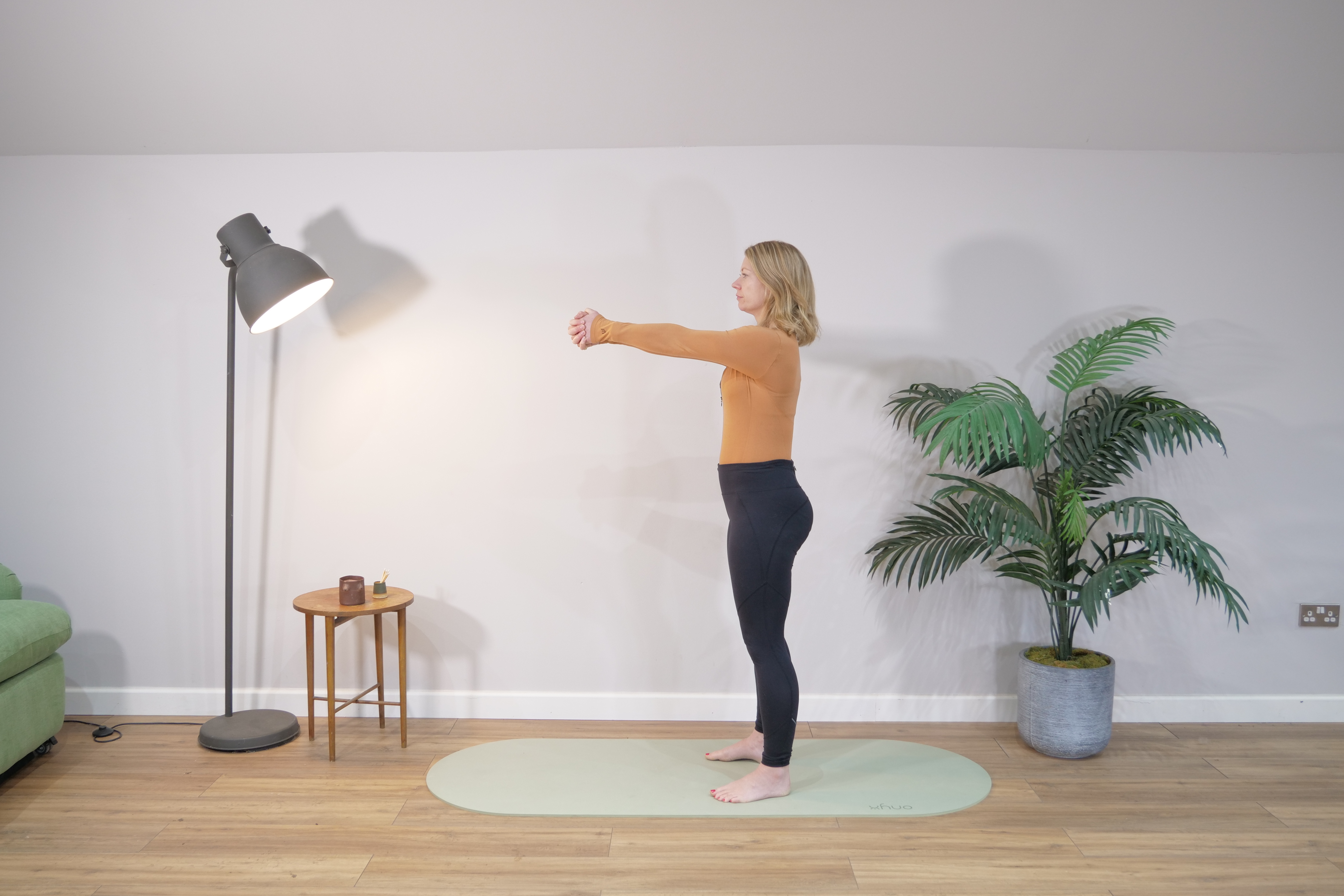
Standing Anti-Rotation Hold (1 minute) — Stand tall with feet hip-width apart, clasp hands together in front of your chest, and extend arms straight out in front. Stay tall through the spine, ribs stacked over pelvis, and breathe normally. To make it harder, slowly move the arms a few centimetres side to side without letting your torso twist. This trains the core to resist movement — exactly what you need when carrying a toddler on one side, pushing a buggy, or holding a child while doing something else. It is brilliant for back support and postural strength.
Standing Woodchop (1–2 minutes) — Hold a light weight or clasp your hands together. Start with hands high to one side of your body, then rotate and bring them diagonally down across your body towards the opposite hip. Return to the start and repeat before switching sides. Rotational strength is key for everyday movements — lifting, twisting, reaching into the back of the car. This works the obliques and helps protect the lower back.

Standing Hip Hinge with Reach (1 minute) — Stand with feet hip-width apart, knees soft. Hinge forwards slightly at the hips (keeping a long spine) and reach your arms forwards as if you are passing something across a table. Return to standing and repeat. This exercise links the core to the hips and upper body, helping you move load through your whole body rather than dumping it into the lower back. It is highly transferable to real-life lifting and carrying.
If you do nothing else today, do this. Five minutes of purposeful movement can make a real difference to how your body feels — especially if you are spending your day lifting, carrying and moving other humans.