

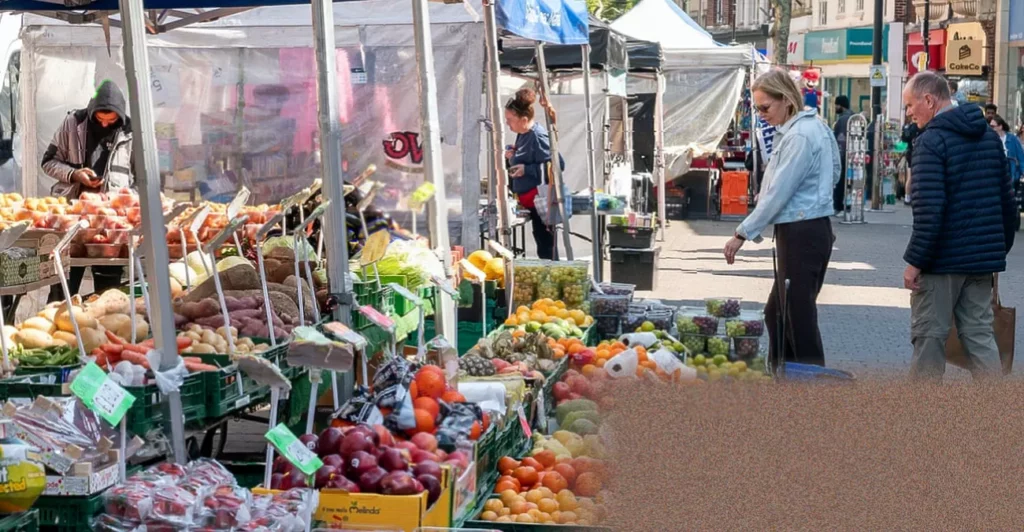
UK households face the prospect of food prices rising by 50% by November 2026 compared with mid-2021 levels, according to projections that lay bare the scale of the cost-of-living crisis still bearing down on families. The warning comes from industry analysts tracking the combined effect of climate shocks, global instability and rising domestic policy costs on staple goods. The Food and Drink Federation (FDF) has further forecast that food inflation will hit 9–10% by the end of 2026, an acceleration that risks pushing already stretched households deeper into hardship.
Food Price Surge
The projected 50% increase – nearly four times the rate of the two decades before the crisis – reflects a tangle of pressures. Extreme weather events, including droughts, floods and heatwaves, have disrupted harvests, while volatile oil and gas prices have pushed up energy costs for producers and retailers. Global tensions in the Middle East and the conflict in Eastern Europe continue to fuel inflationary pressures, alongside persistent supply chain disruptions. Domestically, retailers are grappling with higher National Insurance contributions, the National Living Wage and new packaging taxes – costs they say will inevitably be passed on to consumers. The British Retail Consortium (BRC) has urged the government to act on energy levies and packaging charges to help keep prices affordable.
The impact on everyday shopping baskets is already stark. According to industry data, pasta has risen by 50%, frozen vegetables by 55%, chocolate by 58%, eggs by 59% and beef by 64%. Olive oil has more than doubled, while butter, milk and coffee have also been identified as major contributors to recent inflation. For households already living on a knife-edge, these numbers translate into hard choices at the checkout.
The Human Toll: Health and Hunger
The Bread and Butter Thing, an organisation that runs affordable food clubs from Maidstone to Northumberland, supports more than 10,000 households each week. Last week alone, 439 new members joined its network. Its 2025 survey of more than 8,500 members shows the mechanism by which rising prices translate into worsening health: among households with £0–£25 left each month after housing and energy bills, 87% describe their overall health as not good. More than half of members have less than £50 left at the end of the month after rent and energy bills, and 73% cannot afford an unexpected bill of £100. Many are turning to credit cards to cover basics.
The data on food insecurity paints a broader picture. In January 2024, 15% of UK households experienced food insecurity. A separate online survey in June and July 2024 found that 13.6% of households were experiencing moderate or severe food insecurity, up from 8.8% in January 2022. The Trussell Trust reported providing emergency food aid to over 1 million adults in 2018–19 – a five-fold increase since 2012–13. Food insecurity is particularly acute among younger adults, those on lower incomes, the long-term unemployed, households with children, and people living in urban areas or with long-term health conditions. Lone parents and disabled people are disproportionately vulnerable, with 41% of disabled respondents reporting they were less able to eat well compared with 29% of non‑disabled people.
The link between food insecurity and poor health is well documented. By the time deteriorating health shows up in official data, families have often been cutting back on food quality, quantity and variety for years. The freshest food is the most expensive, and whole neighbourhoods have become food deserts – areas where households struggle to access affordable fresh fruit and vegetables. About one in ten deprived areas in Great Britain (8%) qualifies as a food desert, affecting an estimated 1.2 million people in low-income areas. Camden in London has been identified as the UK’s largest food desert, with 1,153% more takeaway outlets than supermarkets, while Tameside in Manchester and Newham in London also rank high. Barriers to access include a lack of transport – car ownership is lower in deprived areas – and online grocery delivery minimum orders that can be prohibitive for low-income households. “E‑food deserts” exist in remoter areas where online grocery services are limited.
The health consequences extend beyond nutrition. Food insecurity is strongly associated with poor mental health: in June 2024, people in food‑insecure households were more than twice as likely to have a mental health condition (28.0%) compared with those who were food‑secure (10.7%). Among respondents to a food insecurity study, 69% reported anxiety and 64.8% reported low mood. Adults with severe mental illness are nearly three times more likely to experience food insecurity, and Asian or Asian British respondents experiencing food insecurity reported the highest odds of having a longstanding illness affecting their mental health. Physically, diet‑related illnesses are rising, putting additional pressure on the NHS. Children in food‑insecure households are more likely to experience stunted growth, cognitive delays and behavioural issues, with poor nutrition in early life carrying long‑term health consequences. People with long‑term conditions often require special diets, making them particularly susceptible to rising costs of healthy food.
A Path Forward: Community Solutions and Policy Reform
Despite the scale of the crisis, the trajectory is not fixed. The Bread and Butter Thing’s model – sourcing surplus food from manufacturers and retailers and offering it at a nominal fee – has delivered measurable results. More than a quarter of members with long‑term conditions report improved health since joining the scheme, and three‑quarters of all members say they now have better access to healthy food where they live. Members collectively saved £7.7 million in the past year. The organisation reports that 80% of members are cooking better at home, 85% are eating more fruit and vegetables, 73% feel more involved in their community, and over half feel less alone. The clubs provide not just affordable shopping but a reason for community gathering, reducing social isolation.
Policy interventions are also being urged at the highest level. The House of Lords Food, Diet and Obesity Committee has recommended a comprehensive, integrated long‑term strategy underpinned by new legislation. Its proposals include making large food businesses report on the healthiness of their sales, banning advertising of less healthy food across all media by the end of Parliament, and introducing a salt and sugar reformulation tax on food manufacturers, with revenue used to make healthier food cheaper. It also calls for expanding eligibility for schemes such as Healthy Start and free school meals, and simplifying access to government support through auto‑enrolment. The government has outlined a commitment to transforming the food system to make nutritious, locally grown British food more accessible and affordable for all.
The food industry is warning the Treasury that without intervention the next wave of inflation will land on consumers already at the edge. For the families served by organisations like The Bread and Butter Thing, that wave has been arriving in slow motion for years. “The government needs to stop treating affordable fresh food as charity and start treating it as prevention infrastructure,” said Vic Harper, chief executive of The Bread and Butter Thing.