

A six-year-old girl from Hertfordshire has had her sight restored by a pioneering gene therapy on the NHS, a treatment that new research suggests can rewire the brain’s visual pathways if administered early enough.
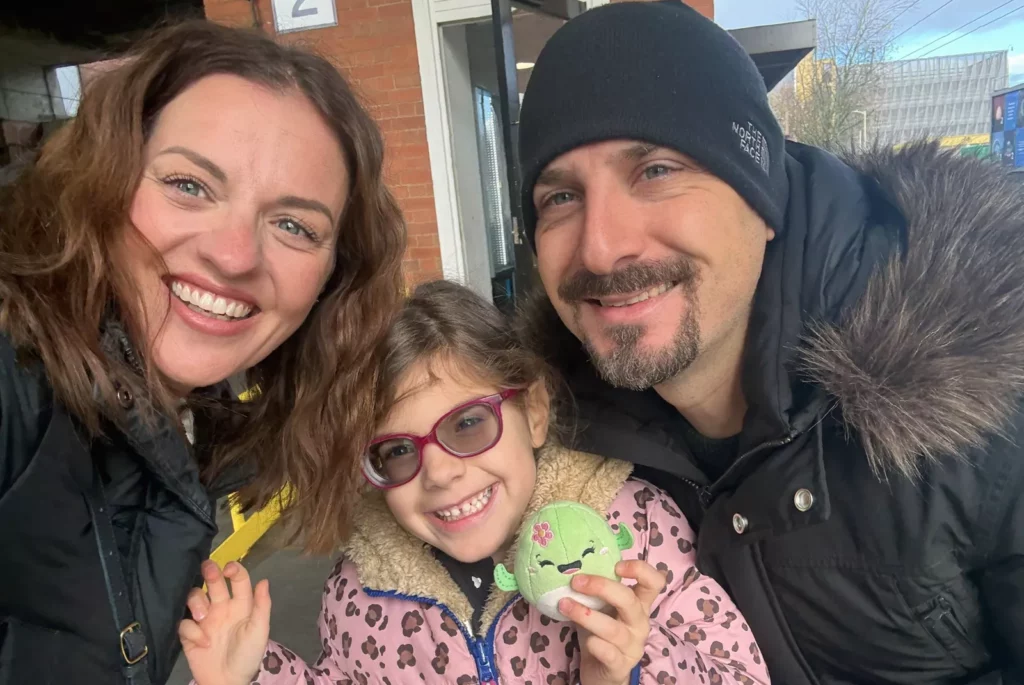
Saffie Sandford, from Stevenage, was diagnosed with the rare inherited condition Leber’s Congenital Amaurosis (LCA) at the age of five after her parents noticed she was struggling to see in the dark. The condition prevents cells in the eye from making a specific protein crucial for normal vision, leaving children with severely limited sight in daylight and none at all in low light, often progressing to complete blindness in adulthood.
After initial tests at Moorfields Eye Hospital in London, Saffie was transferred to Great Ormond Street Hospital (GOSH) for treatment. “We were told that without the treatment, she would be blind by the age of 30,” said her mother, Lisa, who described the diagnosis as a huge shock as neither she nor Saffie’s father knew they were carriers of the condition. “Before she had the treatment, her condition was really life-limiting. She was blind in the dark, which made daily activities challenging.”
Saffie underwent the one-off gene therapy, called Luxturna, in her first eye in April 2025 and in her second eye the following September. Her mother describes the change as life-changing. “Having the gene treatment has been life-changing, it’s like someone waved a magic wand and restored her sight in the dark,” she said. The family can now take Saffie trick-or-treating and out to restaurants in the evening, while her improved peripheral sight in daylight has helped her navigate hazards and thrive at school and on the playground.
How a one-off injection aims to rebuild vision
The therapy Saffie received, Luxturna (voretigene neparvovec-rzyl), is the first gene therapy for inherited retinal disease approved for NHS use. Recommended by the National Institute for Health and Care Excellence (NICE), it was first approved for funding by NHS England in January 2020 following a deal with the pharmaceutical company Novartis. The full price of the treatment is £613,410 per patient, though a confidential discount was negotiated to make it accessible.
It is designed for patients, like Saffie, with vision loss due to confirmed mutations in the RPE65 gene, who still have sufficient viable retinal cells. The treatment involves a single subretinal injection that delivers a healthy copy of the RPE65 gene directly into the eye. This healthy gene provides the instructions needed for the retinal cells to produce the vital protein they lack, effectively restoring a key part of the visual cycle. However, clinicians note it is not considered a cure, as it does not halt the underlying retinal degeneration and its effectiveness depends on being administered while enough photoreceptor cells remain alive.
Groundbreaking research from GOSH and University College London (UCL), where Moorfields Eye Hospital and UCL Institute of Ophthalmology were among the first globally to conduct gene therapy for this form of LCA, provides new insight into how this treatment works at a neurological level. Their recently published study followed 15 children treated with Luxturna at GOSH between 2020 and 2023.
The team found that the therapy can improve sight and, crucially, strengthen the visual pathways in the brain during a critical window of development. They used pattern visual evoked potentials (VEPs)—a painless test that measures how efficiently signals travel from the retina to the brain’s visual cortex—because traditional sight charts are often impractical for very young children. The results showed that while improvements in visual acuity were more limited in older children, the youngest patients, some as young as 15 months, showed more significant gains because treatment was delivered while their neural pathways were still highly plastic.
Long-term data for Luxturna shows sustained improvements in mobility and visual function for at least five years, with some data extending up to nine years. In animal models, effects have lasted a decade. However, a retrospective case series of 14 paediatric patients at GOSH noted variable effects on visual acuity and an overall decrease in structural outcomes over a median follow-up of over three years, with some patients experiencing progressive changes consistent with treatment-associated degeneration. Potential adverse events can include increased eye pressure and retinal abnormalities.
A new standard for treatment and ongoing challenges
Rob Henderson, consultant ophthalmologist at GOSH, said the research was significant. “For the first time, we’ve been able to show objectively that gene therapy can strengthen the visual pathways in babies and young children who are living with this rare eye condition,” he stated. He emphasised that even small improvements can make a profound difference to families and that tools like pattern VEPs could set a new global standard for assessing paediatric gene therapy trials.
The success of Luxturna has paved the way for research into gene therapies for other forms of LCA, such as the LCA4 type caused by AIPL1 gene mutations. A separate study published in *The Lancet*, funded by the UK National Institute for Health Research and Moorfields Eye Charity, reported remarkable improvements in four children treated at GOSH for AIPL1-related dystrophy, though they subsequently lost sight in their untreated eyes.
Despite these advances, significant challenges remain. The technical delivery of gene therapy to retinal cells is difficult, and the genetic diversity of inherited eye diseases requires personalised approaches. Furthermore, the high cost of such therapies presents an ongoing challenge for the NHS’s sustainability and equitable access, even within the context of the UK Rare Diseases Framework which aims to improve care for patients with rare conditions. For now, for children like Saffie Sandford, the treatment represents a transformative chance. As her mother put it: “We know it might not last forever, but we feel fortunate every day that she has been given this chance.”