

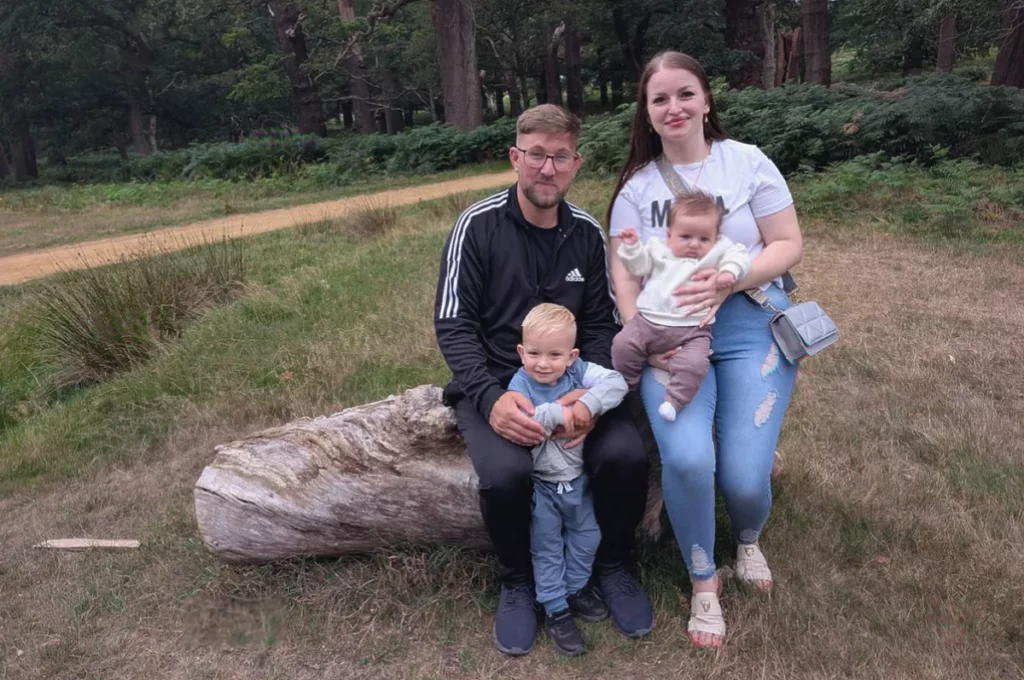
Two young brothers from west London are in a race against time to find the stem cell donors who could save their lives. Cezar Nica, aged two, and his 10-month-old brother David, have been diagnosed with the rare and life-threatening genetic disorder Wiskott-Aldrich Syndrome (WAS), and their parents have issued an urgent public appeal for help.
A Life-Limiting Diagnosis
For parents Marcela Zberea and Stelian Dorin Nica, the diagnosis came in crushing succession. Their eldest son, Cezar, was first hospitalised as a baby with dangerously low platelets. It was at a subsequent appointment, shortly after David’s birth, that doctors confirmed both boys had WAS. The condition, which affects approximately 3 in every million people worldwide, is an X-linked recessive disorder, passed down via a defective gene on the X chromosome and typically impacting boys.
The diagnosis has forced the family into a restrictive routine. The boys’ compromised immune systems make them too vulnerable to attend playgroups or socialise with other children, shielding them from the recurrent infections that characterise the disease.
Understanding Wiskott-Aldrich Syndrome
WAS is a severe disorder that attacks the immune system and blood function. It is primarily defined by a triad of symptoms: microthrombocytopenia (abnormally small platelets and low platelet count), leading to easy bruising, prolonged bleeding and a risk of severe haemorrhage, including in the brain; severe eczema prone to infection; and a high susceptibility to bacterial and viral infections. Beyond this, the syndrome carries an increased risk of autoimmune disorders, leukaemia, and lymphoma.
The only proven cure is a stem cell transplant—also called a bone marrow transplant. This procedure aims to replace the patient’s faulty stem cells with healthy ones from a donor, effectively rebuilding their immune and blood systems from scratch. While experimental gene therapy, which corrects the patient’s own stem cells, shows promise in trials, a transplant from a matched donor remains the standard curative treatment.
The Critical Search for a Match
The success of a transplant hinges on a close genetic match, determined by Human Leukocyte Antigen (HLA) markers. Siblings offer the best chance, but neither parent is a match for Cezar and David. This leaves the family reliant on the search of unrelated donors through national and international registries.
The family is working with the global non-profit DKMS, which has registered over 1 million potential donors in the UK alone and facilitated more than 2,500 donations. They are appealing specifically to people with Eastern European heritage, as ethnic background significantly increases the likelihood of compatibility. This reflects a broader national need identified by registries, including the NHS Stem Cell Donor Registry managed by NHS Blood and Transplant (NHSBT) and the charity Anthony Nolan, for more donors from Black, Asian, and minority ethnic communities.
The scale of the challenge is underscored by key statistics. DKMS notes that only around 30% of patients find a match within their own family. In the UK, approximately 2,000 people need a stem cell transplant each year. Donors aged between 17 and 25 are considered medically optimal, offering the best chance of survival for recipients.
The boys’ parents have emphasised that registering as a potential donor is a simple process that takes only a few minutes, but could offer their sons, and others like them, a lifetime.