

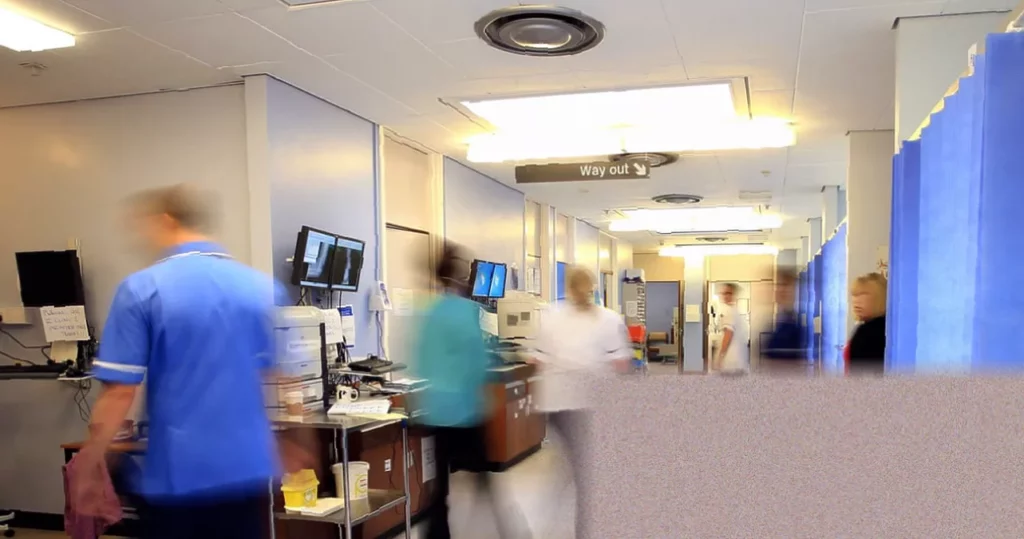
England’s hospitals have met a key 18-week treatment target for the first time since November 2021, with new figures from NHS England showing that 65.3% of patients were treated within that timeframe in March 2026.
The achievement marks a notable improvement on the 62.6% recorded in February 2026 and the 59.8% seen a year earlier in March 2025. The total number of patients waiting for treatment has fallen to 7.11 million – the lowest in three and a half years – representing a reduction of more than half a million (515,000) since July 2024, when Labour took office. The waiting list has now fallen for five consecutive months.
Political reaction: ‘Our plan for the NHS is working’
Health and Social Care Secretary Wes Streeting described the milestone as evidence that Labour’s approach was delivering. “This is the biggest cut in waiting lists in a single month in 17 years,” he said. “It means we are right on track to deliver the fastest reduction in waiting times in the history of the NHS.” He credited government investment, modernisation and “the remarkable efforts of staff right across the board”.
Sir Jim Mackey, NHS England’s chief executive, called it “a huge moment for the NHS”. Sarah Woolnough, chief executive of The King’s Fund, said the target was “a significant achievement” that meant “fewer long waits for treatment and some relief from the anxiety extended delays cause”.
The 65% interim target was set as a stepping stone towards the government’s ultimate pledge to restore the constitutional standard of 92% of patients being seen within 18 weeks by March 2029. That standard was last met in September 2015.
How the target was met: £120m funding and validation sprints
Experts say the rapid improvement was driven largely by a targeted injection of funding from NHS England. An additional £120 million was made available to hospitals from January to March 2026 to support a “sprint” towards meeting the 65% target.
Hospitals used the money to increase patient throughput and to “clean” their waiting lists through a process known as a validation sprint. This involves contacting patients to confirm whether they still require appointments. Those who do not respond, have moved, sought private treatment, or whose treatment is no longer necessary are removed from the list.
The scale of the exercise is illustrated by Shrewsbury and Telford Hospital NHS Trust, which removed 14,148 patients from its waiting list after being offered £33 per removal. The trust earned more than £460,000 in the process. The same trust had already shown marked improvement: between April and September 2025 it achieved a 14% improvement in its 18-week RTT performance, making it the most improved trust nationally during that period, and cut the proportion of patients waiting over 52 weeks by 92%.
Bea Taylor, a fellow at the Nuffield Trust health thinktank, noted that “70% of the progress towards this target since April 2025 has happened during the final two months leading up to the deadline”. She described the jump in performance as striking given that the RTT rate had been below 60% for much of recent years.
However, the methods used to clean the waiting lists have attracted criticism. The Conservative Party claimed the process amounted to “fiddling the figures”. Experts also cautioned that the pace of improvement may be difficult to sustain. Taylor said “huge waves of patients are flowing on to waiting lists each month, making it difficult for the NHS to work fast enough to keep up”.
The achievement came despite three rounds of industrial action in 2025-26, which NHS analysis showed led to an estimated loss of 171,776 appointments and procedures.
Other targets missed
While the 18-week target was met, the NHS missed several other key performance standards for the 2025-26 financial year. The A&E target of 78% of patients being seen within four hours was not reached; performance in March 2026 stood at 76.9%. The cancer treatment target – for 75% of patients to begin their first definitive treatment within 62 days of an urgent referral – was also missed, with a figure of 72.8%. Category 2 ambulance response times averaged 26 minutes and 18 seconds in March, below the 30-minute target.
Wes Streeting acknowledged the mixed picture, saying: “Lots done, lots to do.”
Broader context and longer-term trends
The median wait time from referral to treatment has dropped to 11.3 weeks in March 2026, down from 13.2 weeks in February, though it remains well above the pre-pandemic median of 6.9 weeks in March 2019. The number of patients waiting over a year for treatment has fallen by almost half (48%) in the last 12 months and by more than 69% (208,000) since July 2024. In March, 1.3% of patients had been waiting more than 52 weeks, down from 1.7% the previous month, but above the target of less than 1%.
On elective care, the NHS recorded its best year on record, with more than 506,000 extra people starting or completing treatment compared with the previous year, bringing the total to over 18.6 million in the last 12 months. A record 29.9 million diagnostic procedures were carried out in the same period.
Historical funding context shows that under the Blair and Brown Labour governments, UK public spending on health grew at an average real rate of 6% per year. After the 2008 financial crisis, growth slowed sharply: from 2009-10 to 2019-20, real-terms annual increases averaged just 1.6%. Theresa May’s government later announced a five-year deal aiming for 3.4% annual growth, and Boris Johnson’s government set increases at 3.9% a year until 2025.
The number of people covered by private medical insurance has reached its highest level in over 25 years, a trend some analysts link to continued pressure on NHS capacity.
Sarah Woolnough and Bea Taylor both cautioned that the current rate of progress would be hard to sustain towards the 2029 target of 92%. Taylor said demand remains intense, with “huge waves of patients” still joining waiting lists, while the pre-pandemic waiting list stood at 4.57 million cases in February 2020 compared with today’s 7.11 million.