

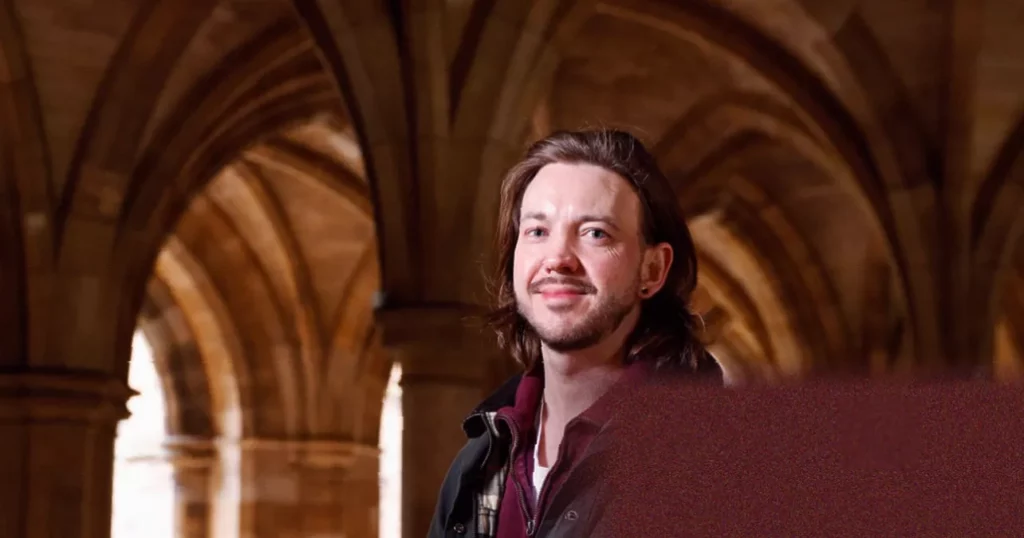
Thomas Delaney survived childhood suicidal thoughts and a ketamine addiction that ravaged his body, reducing him to just 38kg. Today, he works to prevent others from following the same path, as the drug that nearly killed him surges in popularity across the UK.
Delaney’s journey began with a profound sense of unworthiness forged in a turbulent childhood. The son of Irish parents, he spent his first two years in Nenagh, County Tipperary, before the family moved to Hackney, east London. He internalised the hurt from his parents’ fractured relationship, believing their arguments were his fault. “I thought I was useless… I even thought that my mum and dad didn’t love each other because of me,” he recalls. This led to suicidal ideation from a very young age. The family split permanently on 31 August 1997—a date etched in his memory as it was also the day Diana, Princess of Wales, died—when his mother moved with 11-year-old Thomas and his two younger brothers to Barnsley.
As a teenager, he sought escape through army cadets, friends’ houses, and a call centre job, but the need to numb his feelings grew. At 17, he first tried cocaine “behind a Greggs in Barnsley town centre,” immediately drawn to the artificial sense of connection it offered. A promising start in sales ended when he collapsed at work at a water filtration company, white powder around his nose, and was fired. A brief, healthier period in Ireland was followed by a return to London and another sales job, but the pressures mounted. By 21, feeling lonely and lacking direction, he returned to Barnsley, where the local drug scene had shifted. Ketamine, a dissociative anaesthetic, had become the drug of choice.
He initially “despised” the drug, which made users seem like “zombies.” But living with friends, one a dealer, he began a dangerous cycle: using cocaine to pick himself up and ketamine to take him down. He believes its rise is due to affordability and its appeal as an escape for both partygoers and those seeking solitude, a trend exacerbated by the stresses of the COVID-19 lockdowns. “It certainly hasn’t helped,” he says of the pandemic. His addiction cost him another job after he swore at a customer while high, and he turned to dealing, finding a distorted sense of validation in a constantly ringing phone.
The Physical Ruin of a Ketamine Addiction
The toll was catastrophic. Delaney’s addiction escalated to the point where he was consuming up to 36 grams of ketamine in a single day. He was “in and out of hospital” as chronic use caused severe damage to his bladder, leaving him “peeing the lining out, peeing blood constantly.” At his nadir, he weighed a mere 38kg (6 stone). His life was further traumatised when a man with a gun raided his home, stealing all drugs and money. Despite attempts to break the cycle, including an 18-month stint in Ireland, he relapsed instantly upon returning to England at 24.
Remarkably, he secured a corporate job in the education sector, but exploited a loophole after discovering their drug tests did not screen for ketamine. When made redundant in 2018, his life imploded. He lived in his car, then sold it for a drug debt, and ended up homeless in a field. Following several suicide attempts, he finally confessed to a doctor: “I’m a drug addict.” The final catalyst was an argument with his mother, during which his addiction was so advanced he had to urinate in a bucket at her home because he could not reach the bathroom in time.
On 2 November 2018, aged 32, he entered a rehabilitation centre in Glasgow, chosen partly because it had en-suite rooms to accommodate his debilitating bladder issues. The facility did not typically treat ketamine addiction, and some staff dismissed him as “not a proper junkie” because ketamine is a Class B drug. His six-and-a-half months there were “one of the hardest parts of my life,” but with support from “amazing” staff, he achieved lasting abstinence. He has now been free from drugs for over seven years, a milestone marked as of April 2026.
A National Crisis Mirrored in Personal Recovery
Delaney’s story is a microcosm of a worsening national health crisis. Recent data shows a dramatic surge in recreational ketamine use across England and Wales, with Barnsley identified as a particular hotspot by consultant urologist Alison Downey in South Yorkshire. She states the problem is “worse than she has ever seen,” with local A&E attendances for ketamine-related issues rocketing from 11 in 2021 to 50 between just January and May of the current year.
Government statistics reveal the scale: in 2024-25, 5,365 people entered treatment for ketamine issues, a twelve-fold increase from a decade prior. Urology departments are straining under an influx of young adults and teenagers—some as young as 12—with irreversible bladder and urinary tract damage. Dr. Downey suggests many young people turned to the drug as a coping mechanism during lockdowns. The situation has grown so severe that the Home Office is considering reclassifying ketamine from Class B to Class A.
After rehab, an article Delaney wrote went viral, leading to a video feature by the digital publisher LADbible and launching a public speaking career. He has since been featured in various publications, spoken in Parliament, and in 2021 met the late Queen Elizabeth II while volunteering. He now collaborates with the police, the NHS, and the National Crime Agency, aiming to “normalise that people can get better.” He graduated with a first-class degree in Community Education from the University of Glasgow—where his research focused on media framing of addiction—and is now studying for a master’s.
He became a father three years ago, building a life with his partner, Kirsty, which he calls his “most important thing.” Yet he is keen to stress he is “not special,” and that recovery requires immense strength and courage, noting that many who went through the same service have died. He argues that tackling drug abuse requires lifting people out of poverty, not just providing rehab. “Unless the environment is changing, what’s the point?” he asks. While he admits he still struggles to believe he is deserving of love, being a father gives him purpose: to show his son that no matter how dire things seem, “you can always change it.”