

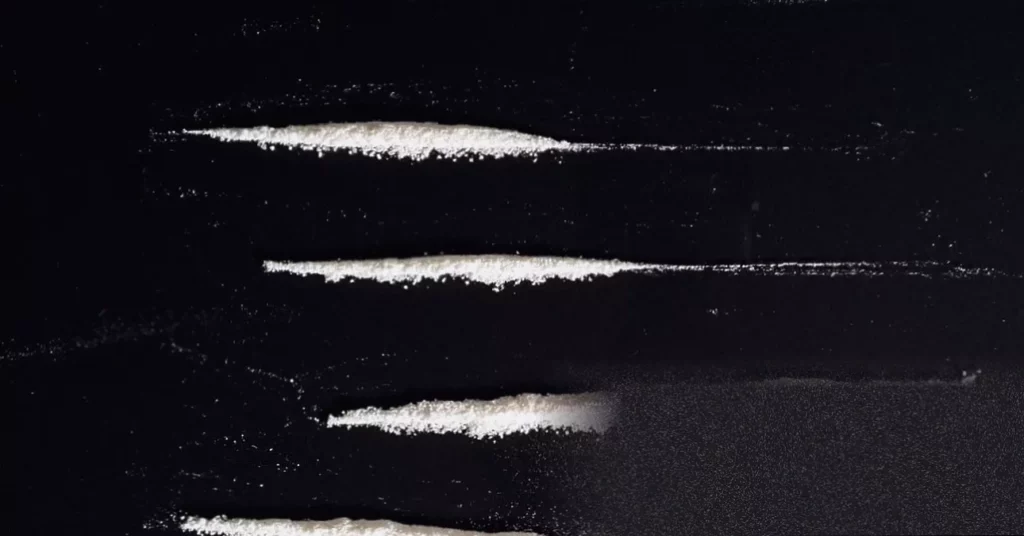
Cocaine use in the United States has fallen to historic lows, a quiet cultural shift occurring even as global production of the drug hits record levels. This paradox, revealed in federal health data, signals a fundamental change in American recreational habits, with a younger generation turning its back on the stimulant that once defined decades of excess.
A Marked Decline in Use
According to the latest National Survey on Drug Use and Health (NSDUH), just 1.5% of Americans aged 12 and older reported using cocaine in the past year in 2024, a drop from 1.7% in 2021. This translates to roughly 4.3 million adults, down significantly from 5.9 million in 2017. The trend is even more pronounced among young adults. For those aged 18 to 25, past-year use has plummeted from 2.1 million individuals in 2017 to 811,000 in 2024. This decline is stark when viewed historically; at the drug’s 1980s peak, popularised by films like Scarface, annual use stood at 6.7% of the population.
Generation Z Turns Away
The driving force behind this downturn is Generation Z. For them, cocaine is increasingly seen as an ethically problematic relic of a different era. “There’s a presumption that cocaine use is booming in America like it is in many parts of the world,” says Max Daly, former global drugs editor at Vice. “But the data shows a marked decline… For [Gen Z], it’s ethically very dodgy and associated with heavy drinking and nightlife culture, something that gen Z is turning its back on.”
This disinterest is part of a broader cultural pivot towards health and mental wellness. Joel Brierre, an entrepreneur who once sold and used cocaine extensively in the 1990s and now runs a legal psychedelic retreat company, observes a fundamental shift. “People are becoming acutely aware of their health and mental wellness, and the side effects of a coke binge,” he says. “The world is changing, and many people are realising that the juice ain’t worth the squeeze.”
Research indicates that high levels of anxiety and depression among Gen Z are leading some to self-medicate, but not with cocaine. Instead, they are embracing cannabis, prescription stimulants like Adderall, and psychedelics, which are perceived as more controllable or therapeutic. This generation is also notably drinking less alcohol. Furthermore, a significant deterrent is the widespread fear of fentanyl contamination, however statistically limited it may be. Andrew Yockey, an assistant professor of public health at the University of Mississippi, notes this has made even occasional use feel “unpredictable.”
The New Chemical Landscape
As cocaine fades, a complex array of alternative substances is filling the void, creating what Professor Yockey calls a “messier, mixed-drug environment.” Ketamine has surged in popularity; among club-going young adults, past-year use soared from 5.9% to 15.3% between 2016 and 2019. A long-time raver in the US north-east, who asked not to be named, explains the appeal: “Cocaine can double down on people’s anxiety and depression. Ketamine, even when you’re not doing it ‘right’, often leaves a more positive mark.”
Psychedelics are also on the rise. LSD use among young adults jumped from 9.9% to 16.6% in the same 2016-2019 period, supported by a burgeoning, if legally grey, psychedelic retreat industry. Other substances like GHB and synthetic cathinones such as 3-MMC are gaining ground in specific scenes. Ed Sisco, a research chemist at the federal National Institute of Standards and Technology, told NPR in April that his team regularly detects novel drugs with no history of use in the US.
This shift is not without its own severe risks. GHB-related hospitalisations and deaths have increased in recent years. The synthetic drug 3-MMC, often sold online as a “research chemical,” has been detected in products marketed as other substances, leading to unintentional exposure.
Overdose Paradox and Government Policy
Despite falling use, overdose deaths involving cocaine have risen steeply, from 10,475 in 2016 to 22,174 in 2024 according to the Centers for Disease Control and Prevention. This complex picture involves the increased potency of the drug—the average purity of seized cocaine was 88% last year, up from 54% in 2020—and the deadly intersection with the opioid crisis.
While some attribute the rise in deaths to fentanyl contamination, experts are cautious. Travis Wendel, a scholar of illegal drug markets, argues it would be commercially “foolish” for dealers to add fentanyl to cocaine, as it creates opposite effects. He suggests the deaths are “almost certainly due to deliberate, knowing injection of ‘speedballs'”—a mix of heroin or fentanyl and cocaine. However, other data contradicts the notion that contamination is rare. A 2023 study found fentanyl in 12-15% of tested powder cocaine samples, and a 2018 DEA report from Florida indicated widespread adulteration of cocaine with fentanyl and the even more potent carfentanil.
Amidst these domestic trends, US counter-narcotics policy continues to focus on foreign supply. Earlier this year, former President Donald Trump attempted to justify his campaign against Venezuela on the alleged role of its ruling figures in cocaine trafficking. The US has also continued an extrajudicial campaign involving lethal strikes against small boats off the southern coast, which officials have claimed, without evidence, are ferrying drugs from the Caribbean. These operations have killed at least 177 people.
The enduring image of America’s “war on drugs” thus persists, even as its most famous target loses favour at home. As Max Daly notes, “America turning away from cocaine could signal a downward shift in the use of the drug globally, at a time when it’s never been so abundant.”