

A British mother of sound mind but broken by grief has ended her life at a Swiss assisted dying clinic after years of therapy and antidepressants failed to lift the weight of losing her son. Wendy Duffy, 56, a former care worker from the West Midlands, paid £10,000 to die at the Pegasos clinic in Basel, citing the “unfairness” of UK laws that she said left her no choice but to travel abroad.
Mother spoke of ‘unfair’ laws before death
Days before her death, Duffy recorded a statement intended to contribute to the UK’s fraught assisted dying debate. “I won’t change my mind,” she said. “I know it’s hard for you, sweetheart. It will be hard for everyone. But I want to die, and that’s what I’m going to do. And I’ll have a smile on my face when I do, so please be happy for me. My life, my choice – I can’t wait.”
She informed her six siblings of her intention to travel to Switzerland but withheld the precise timing from all family members. She did so, she said, to shield them from potential criminal investigation or prosecution under UK law should they accompany or assist her. She planned to call them from the clinic to say goodbye.
Duffy, who is physically well and mentally sound, had already attempted suicide once before. Nine months after her son’s death she took a meticulously planned overdose. A friend raised the alarm, police found her, and she spent two weeks on a ventilator. The attempt left her with temporary loss of use of her right arm and persistent numbness in her little finger.
Loss of son triggered spiral of grief
Duffy’s son Marcus died at the age of 23 in an accident that she has described as the event from which she never recovered. He choked on a sandwich she had made for him – a sandwich that included cherry tomatoes cut in half – after falling asleep, hungover, on the living room sofa. While unconscious he was deprived of oxygen for too long and was rushed to hospital. Duffy stayed at his bedside for five days before life support was switched off.
The experience unleashed what she has called a mental health spiral. Despite years of therapy and antidepressants, she was unable to find any sense of recovery. “Nothing could be more tragic than losing your own child in unexpected circumstances,” said Labour MP Rachael Maskell, who voted against the Terminally Ill Adults (End of Life) Bill. Maskell chairs the Dying Well all-party parliamentary group, which opposes assisted dying, and argued that Duffy’s case “highlights why far more needs to be invested into trauma management.”
In her final preparations, Duffy chose to wear a t‑shirt belonging to her son. She asked that the clinic’s windows be left open so that her spirit could be free. Her belongings will be donated to an animal charity. She will be cremated in Switzerland, and her ashes are to be scattered alongside Marcus’s at a park bench dedicated to him. She selected the song “Die With A Smile” by Lady Gaga and Bruno Mars.
Case reignites assisted dying debate
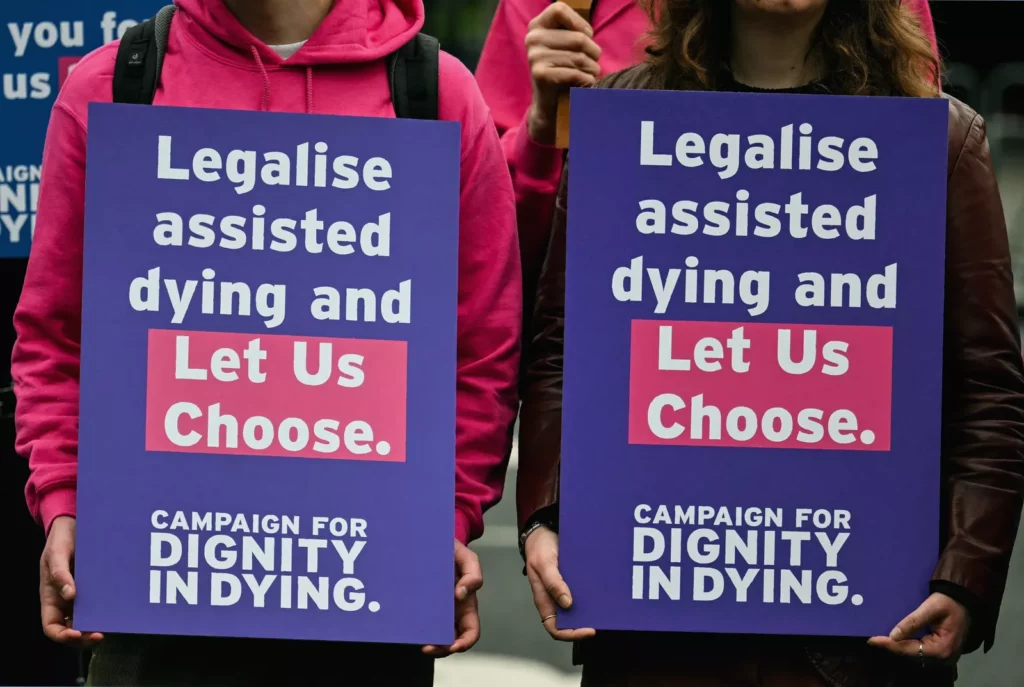
Duffy’s decision has become a flashpoint in the UK’s long‑running argument over whether to legalise assisted dying. The Terminally Ill Adults (End of Life) Bill, a Private Member’s Bill introduced by Labour MP Kim Leadbeater in October 2024, would permit assisted dying for terminally ill, mentally competent adults in England and Wales. It passed the House of Commons on two occasions – the second with a slimmer majority of 23 votes – but ran into significant opposition in the House of Lords, where more than 1,000 amendments were tabled.
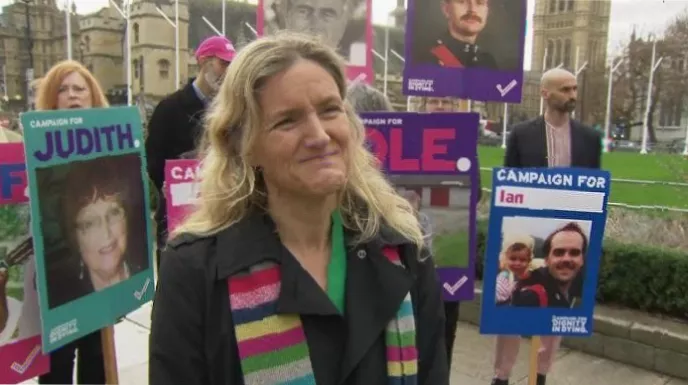
The Bill is expected to fall at the end of the current parliamentary session, having failed to complete the necessary revising stages in the Lords by a Friday deadline. Leadbeater told demonstrators it was “wrong, democratically and morally, that the House of Lords have talked the Bill out and allowed it to fall.” Lord Falconer of Thoroton KC has been steering the legislation through the upper chamber. The UK government has said it remains neutral on the substantive policy questions but is responsible for ensuring that any legislation is workable and enforceable.

Opponents of legalisation have pointed to Duffy’s case as evidence of the dangers they warn against. Alistair Thompson, spokesman for the alliance Care Not Killing, called her situation “tragic” and said it illustrated “the real dangers of legalising assisted suicide and euthanasia.” He cited international examples – individuals with diabetes, eating disorders, concerns about ageing, and a Canadian case involving a homeless man – to argue that “once you legalise assisted killing, it is only a matter of who is eligible, when they are eligible, and you end up with tragic and heartbreaking cases like this.”
Duffy’s application to Pegasos underwent months of rigorous assessment by a panel that included psychiatrists, who reviewed her complete medical records before determining that her suffering met the clinic’s criteria. Pegasos, a non‑profit organisation founded in 2019 by Ruedi Habegger, operates under Swiss law which prohibits profiting from assisted death. Clients cover the cost of medication, medical fees and funeral expenses. Crucially, Pegasos accepts what it calls “psychiatric‑only” cases – individuals without a terminal physical illness – provided their condition is severe, long‑standing and treatment‑resistant. This distinguishes it from other Swiss clinics such as Dignitas, which may refuse such cases.
The clinic’s founder, Ruedi Habegger, confirmed that Duffy had passed her final psychiatric assessment and was “very decided.” He said: “There is a red line that we cannot cross, otherwise it is not assisted suicide – you could actually call it murder.” Pegasos has faced controversy in the past, including the death of a 47‑year‑old UK citizen, Alastair Hamilton, who told his family he was going to Paris, and the case of a 51‑year‑old British woman, Anne, who died at the clinic without her family’s knowledge, prompting a police investigation.
For more information or assistance on this topic, contact Samaritans, day or night, 365 days a year, for free on 116 123, email them at [email protected], or visit www.samaritans.org to find your nearest branch.