

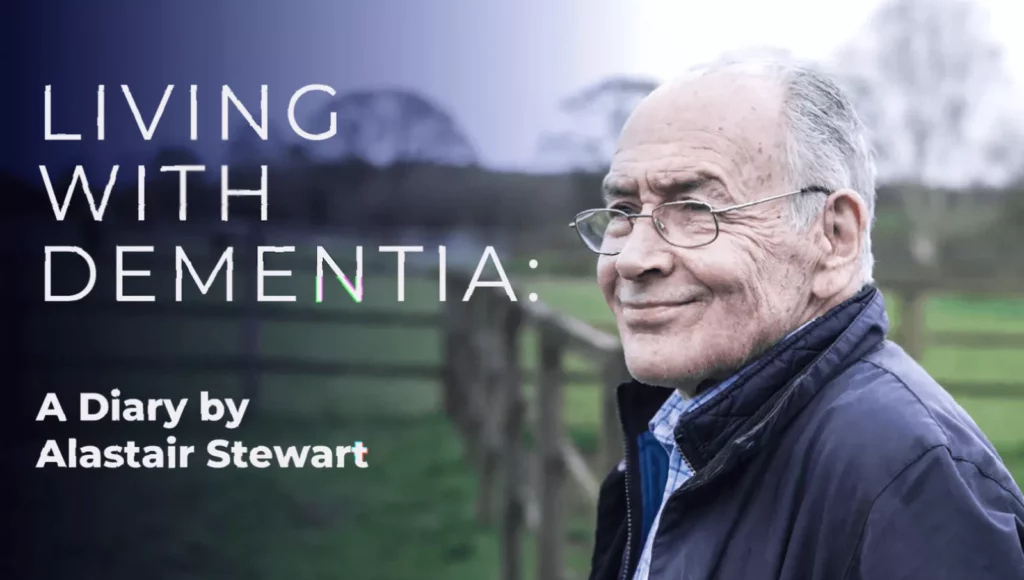
An unexpected call from his GP to schedule blood tests and a check-up on his dementia was, Alastair Stewart reveals, a most welcome intervention. For the veteran broadcaster, who disclosed a diagnosis of early-onset vascular dementia in 2023, such professional diligence is a cornerstone of managing a condition that now shapes his daily life. Yet it was another call, of a very different kind, that underscored a equally vital form of medicine: the out-of-the-blue text from an old friend.
“It was even more meaningful because of her kindness and the memories of the good times we had,” Stewart says of hearing from former ITN colleague Finola Miles. The contact, and a planned lunch with another friend hoping to bring Stewart’s godson, served as a potent reminder. “If you have a friend or relative with dementia, please do keep in touch regularly—or even just out of the blue. It means so much and really helps to fire up the memory banks.”
A diagnosis and the detail of daily life
Stewart, now 73, was 71 when he received his diagnosis from the NHS following a scan that revealed he had experienced a series of ‘infarct’ strokes. He has spoken of the initial warning signs: difficulty with tasks like tying shoelaces, telling the time on an analogue clock, and uncharacteristic errors in his writing. The diagnosis led to him stepping back from his broadcasting career, which spanned nearly five decades and included anchoring ITV News for over 35 years, covering events from the Challenger disaster to the first Gulf War.
The condition has brought profound change. He no longer drives and relies more on his wife, Sally, who first noticed the subtle shifts. His experience is shared by an estimated 70,800 people in the UK living with early-onset dementia, part of a total of approximately 982,000 people nationwide—a figure projected by health bodies to rise to 1.4 million by 2040. Dementia is the leading cause of death in the UK.
From lunar memories to global unease
These personal reflections are juxtaposed against a backdrop of global events, both past and present. Watching the successful launch of NASA’s Artemis II mission on 1 April 2026—a crewed lunar flyby test flight—vividly recalled for him the moment he watched Apollo 11 land on the Moon in 1969. He watched that historic event poolside at Maxwell Air Force Base in Alabama, where his father was serving on an exchange tour during what he describes as “the days of a stronger and more mature US/NATO relationship.”
That relationship is now a source of deep concern for him. He views former US President Donald Trump’s renewed threat to leave the North Atlantic Treaty Organisation as “profoundly worrying.” Stewart reflects that NATO was formed after the Second World War to bind the USA into the project of European peace. He notes that after the collapse of the Soviet Union and its Warsaw Pact alliance—which officially disbanded in 1991—many former Eastern bloc nations, like Poland, joined NATO as steadfast members.
“I seriously don’t think Trump realises what he is playing with—or perhaps he simply doesn’t care,” Stewart writes. He also references a comment by former Foreign Secretary Douglas Hurd that “when the EEC wants its own army, we have real problems,” suggesting that a unified EU military force would fundamentally challenge the post-war NATO settlement Trump seems ready to undermine.
Ground-level pressures: travel, heating, and elections
The ripple effects of international tensions feel immediate and personal. Friends preparing to return to Saudi Arabia found airfares had “rocketed” with very few flights available, eventually securing a route with an 11-hour layover. “Thanks, Donald,” Stewart notes wryly.
Closer to home, domestic concerns mount. Ordering heating oil for his home, he found supply was not a problem but prices were “much higher”—a reflection of a UK average price hovering around 127 pence per litre in early April 2026. Securing agricultural fertiliser was “trickier and even more inflated in price,” a necessity after a tough winter and summer. Industry reports confirm fertiliser prices have surged by 13-36% due to the Middle East conflict, increased gas costs, and supply chain disruptions, with urea prices more than doubling—a pressure expected to feed into UK food inflation.
Meanwhile, the clock ticks down to the local elections on 7 May 2026, where over 5,000 council seats across 136 English authorities are contested. Stewart observes that in his area, only the Conservative candidate has been leafleting and canvassing, despite placards for other parties being visible. He suggests the result will be “an interesting judgement on [Labour leader Keir] Starmer.”
Ultimately, the narrative returns to the personal, to the management of memory and the importance of connection in the face of a progressive condition. The call from his GP is a formal pillar of support. But the spontaneous message from a friend, the effort to arrange a lunch, the shared recollection of watching a spacecraft climb into the sky—these, for Alastair Stewart, are the touches that actively fire up the memory banks and affirm a life fully lived.