

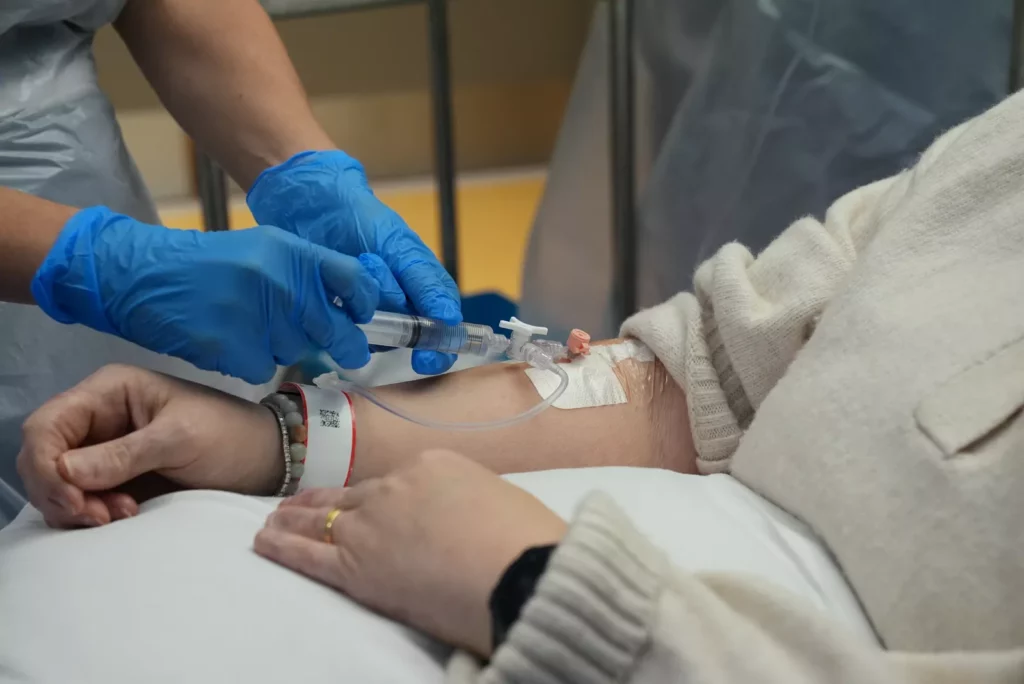
A cell therapy, more commonly deployed in the fight against cancer, has achieved what its creators describe as a “remarkable” recovery for a patient suffering from three distinct and life-threatening autoimmune diseases simultaneously. The case, described by doctors as groundbreaking, offers compelling evidence that the treatment can effectively reset a malfunctioning immune system.
A Decade of Suffering Ends in Swift Remission
The patient, a 47-year-old woman treated at University Hospital Erlangen in Germany, had endured her conditions for more than a decade. She suffered from autoimmune haemolytic anaemia (AIHA), where the immune system destroys red blood cells; immune thrombocytopenia (ITP), which attacks platelets and increases bleeding risk; and antiphospholipid antibody syndrome (APS), a disorder that conversely raises the danger of dangerous blood clots. According to the team at Erlangen, nine different treatments had failed to make a lasting impact, leaving her reliant on daily blood transfusions and permanent blood-thinning medication.
After receiving the CAR-T cell therapy last year, her recovery was swift. Details published in the journal *Med* show that within a week she had her final transfusion. After three weeks, her haemoglobin levels had doubled and returned to normal, indicating her immune system had stopped attacking her red blood cells. At the same time, her levels of clot-linked antiphospholipid antibodies fell and her platelet counts stabilised. For just over a year now, she has been in treatment-free remission, which doctors say has “significantly improved her quality of life”.
How a ‘Living Drug’ Resets the Immune System
The treatment that facilitated this recovery is Chimeric Antigen Receptor T-cell (CAR-T) therapy, often termed a “living drug”. Originally developed for cancers like leukaemia and lymphoma, its application to autoimmune diseases represents a significant shift in medical thinking. “The treatment was extremely efficient in getting rid of all three autoimmune conditions at once,” said corresponding author Dr Fabian Müller, head of the CAR-T unit at University Hospital Erlangen.
The process involves extracting a patient’s own T-cells—the immune system’s scouts and destroyers of abnormal cells. These cells are then genetically engineered in a laboratory to recognise a specific protein called CD19, which is found on the surface of B-cells. B-cells are the part of the immune system responsible for producing antibodies; in autoimmune diseases, they produce “rogue” antibodies that attack the body’s own tissues.
Once re-infused into the patient, these reprogrammed CAR-T cells seek out and destroy the CD19-carrying B-cells. This wholesale elimination effectively “resets” the immune system. The body can then replenish its B-cell population from precursor cells, potentially leading to a long-term remission where the new B-cells no longer launch the same mistaken attacks. In this case, the therapy worked rapidly to eliminate the rogue B-cells driving all three of the woman’s complex conditions.
Broader Implications and Future Directions
This case is the first documented instance of CAR-T therapy simultaneously tackling three separate autoimmune diseases in one patient, and it adds to a growing body of evidence for its use beyond oncology. The therapy is now being studied globally for a range of autoimmune conditions including lupus, multiple sclerosis, rheumatoid arthritis, and myasthenia gravis. A significant international study, the CASTLE trial, is investigating its use in severe refractory autoimmune diseases.
Dr Müller believes the success argues for earlier intervention. “We believe that using CAR-T therapy earlier for patients with severe autoimmune disease could help prevent complications from years of ineffective treatments,” he said. “If we can intervene sooner, we may be able to stop the disease process, avoid organ damage, and give patients their lives back.”
The UK is actively involved in this research frontier, with numerous clinical trials recruiting patients for CAR-T therapy across conditions like lupus, systemic sclerosis, and vasculitis. Pioneering work at University College London has also seen a UK patient become the first to trial CAR-T for multiple sclerosis. Researchers are also progressing work on “off-the-shelf” CAR-T therapies, which would not require custom manufacturing for each patient, potentially improving accessibility.
While the patient experienced only mild side effects, such as lower white blood cell counts and slight liver enzyme elevations—which doctors attribute to her prior treatments—the therapy does carry known risks like cytokine release syndrome and neurotoxicity. Furthermore, its use raises ethical considerations around cost and accessibility. However, the profound recovery in Erlangen provides a powerful proof of concept. “The speed and depth of the response was remarkable,” Dr Müller concluded.