
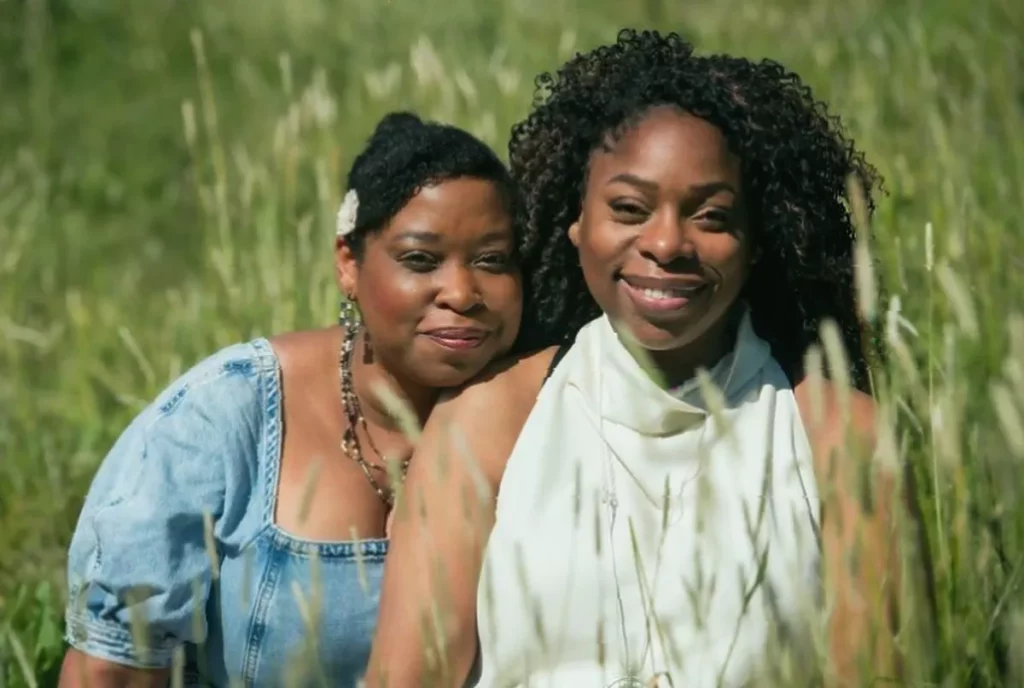
Twins Michelle and Lavinia Osbourne, 49, from Nottingham, have made British medical history after at-home DNA tests revealed they have different biological fathers – a phenomenon so rare that only around 20 cases are known worldwide.
The discovery began in late 2021 when Michelle bought a DNA testing kit, having long harboured doubts about James, the man their mother had always identified as their father. Her results arrived on 14 February 2022 – the same day their mother died from early-onset dementia. The test confirmed that James was not Michelle’s biological father. Further investigation led her to Alex, the brother of one of their mother’s friends, who has struggled with addiction and homelessness.
Lavinia, however, felt no connection to Alex’s family when Michelle showed her photographs. “I just wanted confirmation,” she said, and took her own DNA test. The results were even more unexpected: James was not her father, but neither was Alex. Michelle’s own DNA results had inadvertently identified Arthur, a different man entirely, as Lavinia’s biological father. The twins shared a womb and were born minutes apart – yet they were only half-sisters.
“I was angry with Michelle for having me go through this, because I just didn’t want this reality,” Lavinia admitted. Michelle, by contrast, said: “I wasn’t surprised. I’m still in amazement that this can actually happen, it’s super weird, super odd, super rare, but it makes sense.”
The Rare Biological Phenomenon
Michelle and Lavinia represent the only documented case in the United Kingdom of heteropaternal superfecundation, an extraordinarily rare condition. Around 20 instances have been recorded globally, partly because cases only come to light when DNA testing is performed; many may go unnoticed.
The biological mechanism requires a woman to release two eggs during a single menstrual cycle – a process called hyperovulation – and to have sexual intercourse with two different men within a short timeframe, typically during her ovulation period. Sperm from each man must then fertilise one of the released eggs, and both embryos must survive to birth.
The phenomenon is more common in animals, such as cats and dogs, where litters can have offspring from multiple sires. In humans, documented cases have occasionally appeared in legal contexts – for example, a 2015 New Jersey judge issued a child-support ruling for twins with different fathers. Some experts speculate that the incidence of heteropaternal superfecundation might increase because of fertility treatments, which can trigger the release of multiple eggs, and changing social behaviours. Other rare twin scenarios – such as twins born days or weeks apart, or “super twins” conceived weeks apart – are distinct from this condition.
A Childhood of Instability
The twins’ early years were marked by upheaval. Their mother was just 19 and vulnerable when she gave birth to them in 1976 in Nottingham. She had suffered abuse from her stepfather and spent time in foster care and children’s homes throughout her own childhood.
When the girls turned five, their mother left for university in London, leaving them in Nottingham with a woman they called “Grandma”. “Grandma was strict, not very emotional, not very cuddly. The one constant I had was Michelle,” Lavinia recalled. At age 10, they reunited with their mother in London, only to be sent within a few years to live in one of her former foster homes. “It was her and I against the world,” Michelle said of their bond.
Meeting the Biological Fathers
Despite the shocking revelation, Michelle was determined to find Lavinia’s biological father. Searching through her twin’s DNA results, she identified Arthur, and the pair drove to meet him at his West London home. “He was a little bit nervous, but he’s got an exuberant character – like me,” said Lavinia. The two have grown close, seeing each other several times a month, and Arthur has told Michelle she can call him Dad, too.
Michelle also met Alex, her own biological father. “He’s mine, I’m his, but I didn’t feel like he’s someone I need to take forward in my future with me,” she said.
The twins remain inseparable. “We’re miracles,” Lavinia said. “We’re always going to have a closeness that can’t be broken.” Their story has been documented in the BBC Radio 4 series The Gift, presented by Jenny Kleeman, which explores the impact of at-home DNA tests. The full box set is available on BBC Sounds.