

Close Menu
    Useful
    • About Us
    • Contact Us
    • Advertise With Us
    • Health Explainers
    • Our Editorial Team
    Facebook
    HealthNewsDaily.co.uk
    • Home
    • NHS

      Muslim NHS worker in line for £25,000 after trans women permitted in women’s toilets

      14 May 2026

      South Sudan hospital, bustling on Monday morning, reduced to rubble by Tuesday night

      13 May 2026

      Mother outraged as NHS uses dead person’s bone in daughter’s mouth without consent

      12 May 2026

      Over 6,000 children in England seen at obesity clinics, new figures indicate

      12 May 2026

      Cancer diagnosis via NHS app and phone call denounced as major duty of care failure

      10 May 2026
    • Health Policy

      Families back comprehensive and wide-ranging review of Sussex maternity failings

      13 May 2026

      Father takes legal action against NHS in High Court over transgender teen’s hormone treatment

      13 May 2026

      Health records: a powerful boon for medicine but also a grave risk

      13 May 2026

      Marty Makary leaves FDA following dispute with Trump on fruit-flavoured vapes

      12 May 2026

      More than 10 million Britons off sick as UK absence crisis hits

      12 May 2026
    • Mental Health

      Woman sectioned after suspecting mother-in-law of poisoning her

      13 May 2026

      Pudsey Bear to speak out for Children In Need mental health campaign

      11 May 2026

      Woman’s eating disorders aggravated by husband’s weight loss, Annalisa Barbieri column

      10 May 2026

      Tuppence Middleton admits watching Naked Attraction in partner’s absence

      9 May 2026

      Many who thought cannabis could not cause dependence discover they were wrong

      9 May 2026
    • Wellness & Lifestyle

      Fibre supplement could bring gut back to normal for constipation sufferers

      14 May 2026

      Doctors reveal the optimal time of day to go to the loo

      12 May 2026

      Sound baths’ claimed ability to calm the nervous system questioned

      12 May 2026

      Mother insists chemical pregnancy is a real baby

      12 May 2026

      Pull-ups: challenging yet impressive – a guide to starting

      11 May 2026
    • Disease & Prevention

      Norovirus outbreak detains hundreds of UK passengers aboard berthed cruise ship

      13 May 2026

      Mother diagnosed with condition after baby daughter dies 48 hours after birth

      13 May 2026

      Passenger offers inside view of quarantine unit after cruise ship hantavirus outbreak

      13 May 2026

      Student nurse, 21, describes immediate impact of cancer diagnosis on her life

      12 May 2026

      Hundreds of thousands of infants to undergo SMA checks under new study

      12 May 2026
    • Treatment & Research

      After Jesy Nelson campaign, NHS expands SMA treatments to hundreds more children

      14 May 2026

      59,000-year-old tooth shows Neanderthals performed dental drilling with stone implements

      13 May 2026

      2025 marks third consecutive decrease in US overdose fatalities

      13 May 2026

      Some nations see obesity rates flatten or decline, study suggests

      13 May 2026

      UK lifts can no longer accommodate heavier Britons

      13 May 2026
    HealthNewsDaily.co.uk
    • NHS
    • Health Policy
    • Mental Health
    • Wellness & Lifestyle
    • Disease & Prevention
    • Treatment & Research
    Home » Treatment & Research » Transplant patient uses donor skin graft to monitor lung rejection
    Treatment & Research

    Transplant patient uses donor skin graft to monitor lung rejection

    Sophie HargreavesBy Sophie Hargreaves8 April 2026
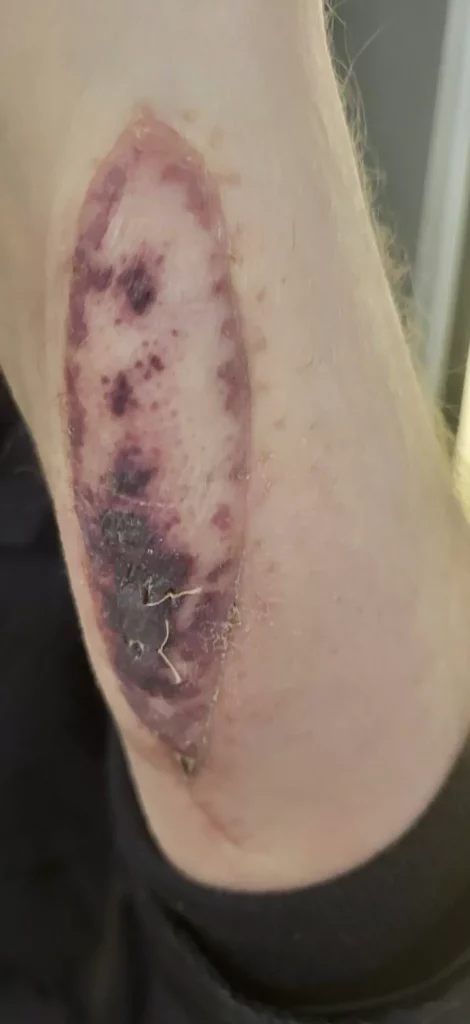
    A patient's forearm showing a skin graft used for medical monitoring.

    A patch of skin from an organ donor, grafted onto the forearm of a lung transplant patient, is being trialled in the UK as a revolutionary early warning system that could dramatically improve survival rates. Darren White, a 53-year-old former bus driver from Stockton-on-Tees, is among the first in the country to have the procedure, and credits it with protecting his new lung.

    The Visible Warning

    Three months after receiving a lung transplant in late 2024, Mr. White noticed a purple rash appearing on a small patch of skin on his arm. This was no ordinary rash; the skin had come from his lung donor. He sent photographs to his medical team, a biopsy was swiftly arranged, and it confirmed his body was beginning to reject the transplanted organ. “Anything that might help to avoid rejection was worth a try,” Mr. White said of his decision to join the trial.

    The swift diagnosis allowed medics to treat him with steroids immediately. More than a year on, he is doing well and revels in the simple freedoms his transplant has restored. “I can be more of a dad,” he said, highlighting the joy of being able to take his three-year-old son, Daniel, to the park and push him on a swing.

    The ‘Sentinel’ Science

    Mr. White is a participant in the SENTINEL trial, a £2 million study led by the University of Oxford’s Surgical Intervention Trials Unit (SITU) in collaboration with NHS Blood and Transplant (NHSBT) and five UK transplant centres. The trial, which began in April 2024 and aims to recruit 152 patients, is funded by a partnership between the Medical Research Council (MRC) and the National Institute for Health and Care Research (NIHR).

    The science hinges on the principle that skin acts as a more sensitive and visible “window” into the body’s immune response. Scientists believe skin rejects earlier and more observably than internal organs. A reaction on the so-called “sentinel skin flap” grafted to the arm can therefore raise an alarm before the transplanted lung itself is significantly damaged.

    “The skin patch acts as a window into the body’s response to the transplant,” explained Professor Henk Giele, the trial’s chief investigator and Associate Professor of Plastic, Reconstructive, Transplant and Hand Surgery at the University of Oxford. Early detection enables quicker, more personalised treatment, which can help the organ function for longer and may allow for lower doses of powerful immunosuppressant drugs, which carry risks including cancer and diabetes.

    If successful, the approach could cut lung transplant rejection rates by up to 50%, according to the trial team. Previous studies using similar sentinel skin grafts for intestinal transplants showed a reduction in rejection of approximately half.

    Contrast with Current Challenges

    The trial addresses a critical weakness in post-transplant care. Current methods for detecting lung rejection – including lung function tests, blood tests, and X-rays – can be difficult to interpret until rejection is advanced. The most definitive test, a lung biopsy, is invasive and carries risks such as pulmonary haemorrhage, pneumothorax, and even death.
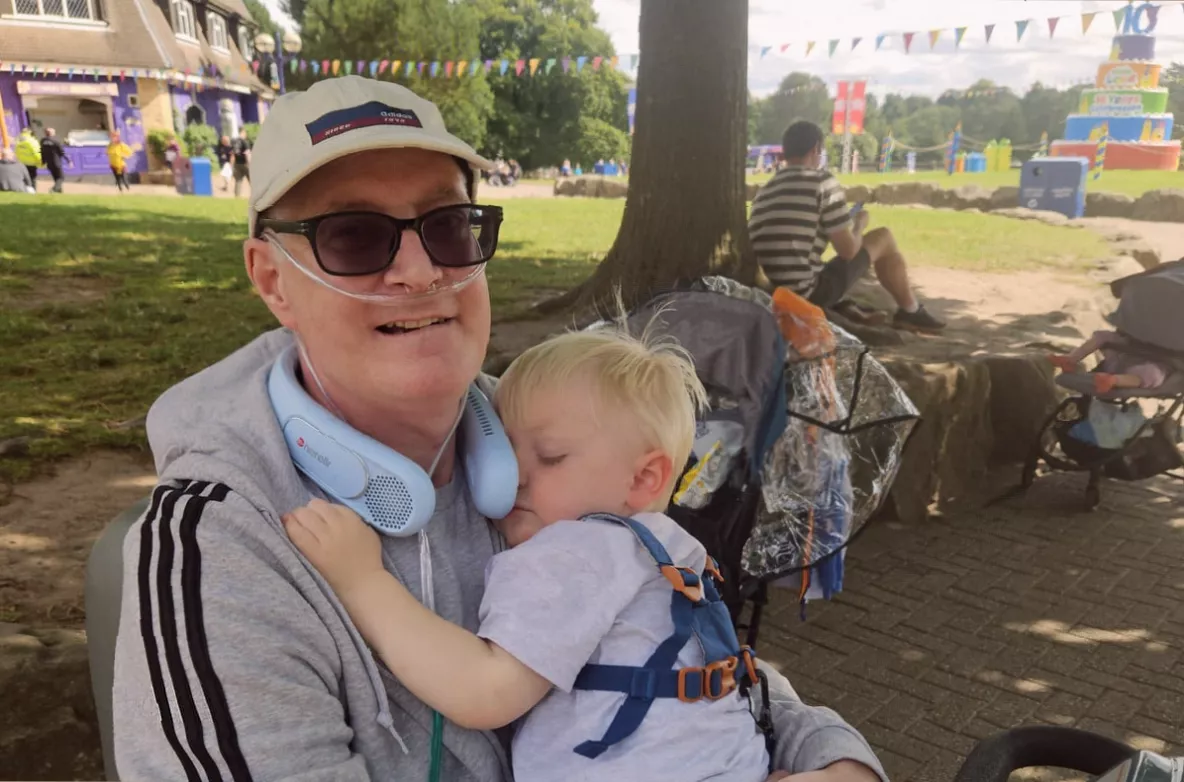
    A doctor in a clinic examining a patient's arm after a transplant.

    Early symptoms like increasing shortness of breath, fatigue, or cough can also be subtle and mimic infections. “Rejection is a primary concern for transplant recipients,” said Emma Lawson, Organ Donation Innovation and Research Lead at NHSBT. This method offers a tangible, visual tool for proactive monitoring.

    The concept is not entirely new; sentinel skin grafts have been used in studies for intestinal and pancreatic transplants with promise. Other research avenues for lung rejection include blood tests measuring donor DNA and ultrasound monitoring.

    A Future Built on Consent and Hope

    The pioneering trial relies on the generosity of donor families, who must give additional consent for the small skin graft to be taken. NHSBT specialist nurses facilitate these sensitive conversations. The lung transplants themselves are carried out by specialist Cardiothoracic Centre teams at Freeman Hospital, Harefield Hospital, Queen Elizabeth Hospital, Royal Papworth, and Wythenshawe Hospital.

    The potential impact is significant against a sobering backdrop: around 55% of lung transplant patients are alive after five years, with chronic lung allograft dysfunction (CLAD) affecting half of all recipients and limiting average survival to about six years.

    For patients, the psychological benefit of a visible monitoring system is profound. Helen Roper, who faces a potential lung transplant, finds the concept “extremely encouraging”. Adam Alderson, who received a skin graft during a multi-organ transplant in 2015, reported it helped identify rejection three times, leading to prompt treatment.

    For Darren White, the proof is in his daily life, free from the shadow of undetected rejection. His experience offers a compelling glimpse into a future where transplant care is less reactive, less invasive, and more secure for the thousands of patients who depend on these life-saving procedures.

    Cancer Diabetes
    Share. Facebook Twitter LinkedIn WhatsApp Telegram
    Sophie Hargreaves
    Sophie Hargreaves

    Health Correspondent
    Sophie Hargreaves covers medical research, new treatments, disease outbreaks and prevention for Health News Daily. She holds a Master's degree in Health Sciences from the University of Leeds and has spent several years translating complex medical science into clear, accessible reporting for a general audience. Sophie focuses on the latest clinical trials, NICE and MHRA approvals, vaccination programmes and emerging health threats, always with an eye on what these developments mean for people in the UK.
    · MSc Health Sciences (University of Leeds), science communication volunteer, medical research literacy
    · Clinical trials and drug approvals (NICE, MHRA), cancer screening programmes, vaccination and outbreak response, women's health (endometriosis, PCOS, menopause), weight management treatments, AI in diagnostics

    Related Posts

    Treatment & Research

    After Jesy Nelson campaign, NHS expands SMA treatments to hundreds more children

    14 May 2026
    Treatment & Research

    59,000-year-old tooth shows Neanderthals performed dental drilling with stone implements

    13 May 2026
    Treatment & Research

    2025 marks third consecutive decrease in US overdose fatalities

    13 May 2026
    Treatment & Research

    Some nations see obesity rates flatten or decline, study suggests

    13 May 2026
    Join Our Community & Win

    Each month we select one lucky follower to receive a prize from our partners. Follow us on our social channels for your chance to win.

    • Facebook
    Latest
    NHS

    Muslim NHS worker in line for £25,000 after trans women permitted in women’s toilets

    14 May 2026
    Wellness & Lifestyle

    Fibre supplement could bring gut back to normal for constipation sufferers

    14 May 2026
    Treatment & Research

    After Jesy Nelson campaign, NHS expands SMA treatments to hundreds more children

    14 May 2026
    Health Policy

    Families back comprehensive and wide-ranging review of Sussex maternity failings

    13 May 2026
    Treatment & Research

    59,000-year-old tooth shows Neanderthals performed dental drilling with stone implements

    13 May 2026
    Health Policy

    Father takes legal action against NHS in High Court over transgender teen’s hormone treatment

    13 May 2026
    News Categories
    • NHS
    • Health Policy
    • Mental Health
    • Wellness & Lifestyle
    • Disease & Prevention
    • Treatment & Research
    Help
    • About Us
    • Contact Us
    • Advertise With Us
    • Health Explainers
    • Our Editorial Team
    About Us
    About Us

    Health News Daily provides trusted UK health news, covering NHS updates, medical research, public health and wellbeing with clear and reliable reporting.

    Facebook
    • Cookie Policy
    • Privacy Policy
    • Complaints Policy
    • Corrections Policy
    • AI Disclosure Policy
    • Editorial Policy & Ethics
    • Accessibility Statement
    • Medical Disclaimer
    • Terms & Conditions
    • Sponsored Content Disclosure
    • Copyright Notice
    © 2026 Healthnewsdaily.co.uk. All rights reserved.

    Type above and press Enter to search. Press Esc to cancel.