

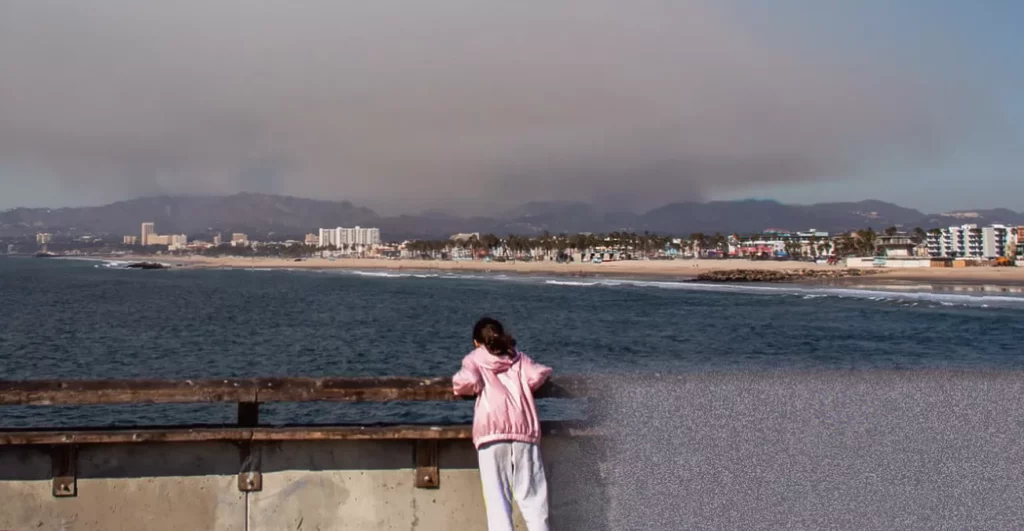
Nearly half of all children in the United States are breathing air deemed dangerous to human health, according to a major new public health assessment, with experts warning that a sweeping programme of environmental deregulation is set to exacerbate the crisis.
The stark finding, from the American Lung Association’s (ALA) 27th annual “State of the Air” report, means 33.5 million Americans under the age of 18 – 46% of the child population – live in counties that received a failing grade for at least one key measure of air pollution. For 7 million children, the situation is even more severe, residing in communities that failed across all three pollution metrics examined.
Lasting Harm to Developing Lungs
The health implications for this exposure are profound and long-lasting. Will Barrett, assistant vice-president of the ALA’s Nationwide Clean Air Policy, explained that children are uniquely vulnerable. Their lungs are still developing, they breathe more air per pound of body weight, and they are typically more active outdoors. “Air pollution exposure in children can contribute to long-term developmental harm to their lungs, new cases of asthma, increased risks of respiratory illness and other health considerations later in life,” he said. The global scale of the threat is underscored by World Health Organization data identifying air pollution as a leading cause of death for children under five, accounting for 700,000 deaths in 2021.
The burden is not borne equally. The ALA report details that communities of color are disproportionately exposed. While people of color make up 42.1% of the US population, they represent 54.2% of those living in counties with at least one failing grade. A person of color is 2.42 times more likely than a white person to live in a community that fails all three pollution measures, with Latinos more than three times as likely.
The Pollutants and Their Sources
The report evaluates two primary categories of pollution. The first is ground-level ozone, commonly known as smog, which forms when pollutants from vehicles, power plants, and industrial facilities react in sunlight and heat. It remains the most widespread pollutant, with 129.1 million people—38% of the population—exposed to unhealthy levels between 2022 and 2024, the highest number recorded by the ALA in six years.
The second is particulate matter, or soot: microscopic particles that can penetrate deep into the lungs and bloodstream. The report found 61.5 million people lived in counties with failing grades for short-term particle pollution spikes, and 75.9 million in counties failing for year-round particle pollution.
Climate change is acting as a dangerous accelerant. The report notes that extreme heat, drought, and wildfires—exacerbated by a warming planet—have exposed a growing share of the population to harmful pollution. Smoke from Canada’s 2023 wildfires, combined with high temperatures and stagnant weather patterns, drove particularly high ozone levels in southwestern states from California to Texas and across much of the midwest.
A modern and rapidly growing source of pollution is also coming into focus: datacenters. These facilities now consume roughly 4.4% of total US electricity, a figure projected to potentially reach 12% within a decade. Their impact stems from reliance on regional grids still powered significantly by methane gas and coal, and from the use of dozens of large diesel-powered backup generators at individual sites, which emit carcinogenic particulate matter.
A Policy Landscape in Reverse
Public health experts warn that hard-won progress is being systematically undone. Since returning to office, the Trump administration has initiated at least 70 actions to roll back environmental and climate protections, directly impacting air quality.
Will Barrett of the ALA accused the current Environmental Protection Agency of “devaluing children’s health” by “weakening, delaying and repealing critical health protection.” He cited a series of specific reversals, including missing legal deadlines for updating particle pollution standards and allowing increased emissions from oil and gas facilities.
The regulatory retreat is broad and technical. A cornerstone change was the EPA’s rescission of the “endangerment finding,” the legal determination that greenhouse gases harm human health, which effectively repealed the agency’s mandate to regulate climate pollution. In transportation, the administration has rolled back more stringent vehicle emissions and fuel efficiency standards, a move the EPA projects will save over $1.3 trillion in regulatory costs but is also estimated to result in an additional billion tons of carbon dioxide emissions.
For industrial pollution, the EPA has loosened regulations on power plants limiting mercury and other hazardous air toxics, repealing more stringent Biden-era rules. The agency has also asked a federal court to vacate the rule limiting fine particulate matter (soot) from power plants and factories, and weakened standards for volatile organic compounds from oil and gas facilities.
Internally, the EPA has disbanded advisory committees on air quality and ended the practice of estimating the monetary value of lives saved by limiting pollution while still calculating costs to companies. In response to criticism, the EPA has stated that protecting human health and the environment remain its central goals and that it continues to regulate air pollution, while also suggesting the ALA receives funding from “left-wing foundations” and calling claims of unchecked pollution “grossly irresponsible.”
The ALA report, analyzing data from 2022 to 2024, serves as a snapshot of a deteriorating situation that predates the most recent deregulatory push. Public health groups argue it provides a baseline from which air quality is now likely to decline further, placing millions of children at increased risk for a lifetime of health consequences.