

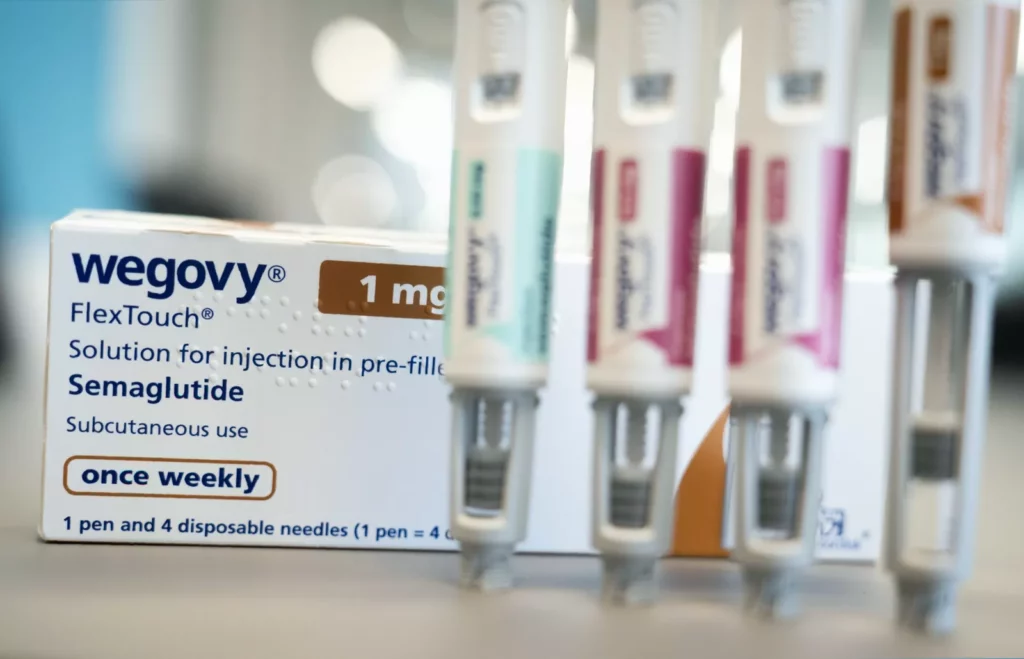
Weight loss drug Wegovy significantly reduces heavy drinking days, according to a new clinical trial that has raised hopes of a novel treatment for alcohol addiction.
The study, published in The Lancet, found that obese patients with alcohol use disorder given weekly injections of semaglutide – sold as Wegovy for weight loss and Ozempic for diabetes – saw their heavy drinking days fall from an average of 17 in the month before the trial to roughly five after six months of treatment. By comparison, those who received a placebo reported a drop to nine heavy drinking days over the same period.
Overall alcohol consumption also fell markedly. At the start of the trial participants consumed around 2,200g of alcohol over the previous 30 days. After six months, the semaglutide group averaged 650g, while the placebo group averaged 1,175g.
The trial, conducted at a Danish health centre, involved 108 obese individuals seeking help for alcohol use disorder. All participants received talking therapy throughout the 26‑week study. Half were given a 2.4mg dose of semaglutide each week; the other half received a placebo. The research team was led by experts from the Mental Health Centre Copenhagen and Frederiksberg Hospital.
How semaglutide may curb alcohol cravings
Professor Anders Fink-Jensen, the principal investigator, said the results suggested the drug does more than suppress appetite. “Semaglutide not only affects appetite but also influences the biological mechanisms underlying addiction,” he said. “This opens the door to complementing existing treatments for alcohol use disorder with a GLP‑1 receptor‑targeted approach.”
Scientists believe GLP‑1 receptor agonists like semaglutide act on the brain’s reward circuitry, dampening the dopamine release that makes alcohol consumption reinforcing. Some research also indicates the drugs may slow the rate at which alcohol enters the bloodstream, blunting its intoxicating effects and potentially leading to less drinking. Experts stress, however, that alcohol use disorder is a complex condition and semaglutide should not be viewed as a simple cure. A multi‑modal treatment approach combining medication with psychosocial support remains essential.
First author Dr Mette Kruse Klausen highlighted the patient group’s vulnerability. “This is a patient group with a high disease burden and a substantial risk of both physical and mental complications,” she said. “Reducing the most harmful drinking patterns could make a meaningful difference for patients.”

In a linked commentary also published in The Lancet, academics from the United States were unequivocal about the potential. “The importance of evaluating GLP‑1 therapies as new therapeutic options for alcohol use disorder cannot be overstated,” they wrote. “Should forthcoming studies confirm efficacy of GLP‑1 therapies for alcohol use disorder across a broad range of populations and settings, public health implications could be substantial – a possibility that deserves celebration.”
Dr Marie Spreckley, research programme manager at the University of Cambridge, described the findings as “encouraging early evidence” for people with co‑occurring obesity and alcohol use disorder. But she cautioned that “larger and longer‑term trials in more diverse populations are needed before this can inform routine clinical practice.”
Professor Matt Field, professor of psychology at the University of Sheffield, said the trial provided “some of the strongest evidence yet” that these medications may help reduce alcohol consumption, going beyond previous observational studies. However, he pointed to significant gaps in knowledge. “There was no follow‑up after semaglutide treatment had finished,” he noted. “This means that we do not know if people reverted to their previous heavy drinking behaviour once they stopped taking the medication, something that may be a real risk because other studies have shown that when people stop taking GLP‑1 agonists, they regain a lot of the weight that they have lost.”
Professor Field added: “Another key question is whether beneficial effects of these drugs extend to all patients with alcohol use disorders and other addictions, a significant minority of whom are underweight.”
In the UK, semaglutide is currently licensed only for type 2 diabetes and obesity management. It is not approved or recommended by the National Institute for Health and Care Excellence (NICE) for treating alcohol use disorder, meaning any such use would be off‑label and typically confined to clinical trials. Established first‑line pharmacological options for alcohol dependence in the UK include acamprosate, naltrexone, disulfiram and nalmefene. Several further trials are already under way to assess the effectiveness of semaglutide and other GLP‑1 agonists in reducing alcohol consumption.
Common side effects of GLP‑1 agonists include nausea, vomiting and diarrhoea, while rare but serious risks include pancreatitis and gallbladder disease. Without long‑term data on sustained use for addiction, experts caution that the drug’s benefits and risks in this population remain to be fully established.