

Cases of Valley Fever, a potentially fatal fungal infection, have more than tripled in El Paso, Texas, as intensifying dust storms whip up the pathogen from the soil. Researchers at the University of Texas at El Paso have linked the surge directly to the region’s increasingly frequent and severe dust storms, which are themselves fuelled by human-caused climate change.
Rising Cases in El Paso
Between 2013 and 2022, El Paso recorded 246 cases of Valley Fever, a sharp increase from the fewer than ten cases reported annually at the start of that decade. The highest numbers occur in the summer months, particularly July and August, when triple-digit temperature days are most common. “Our work shows that Valley Fever risk can be anticipated based on environmental signals,” said Gabriel Ibarra-Mejia, an associate professor of public health sciences at the university. “By recognising the conditions that precede increases in cases, health officials and clinicians can be better prepared to detect, diagnose and respond to this disease.”
Dust Storms and Climate Change
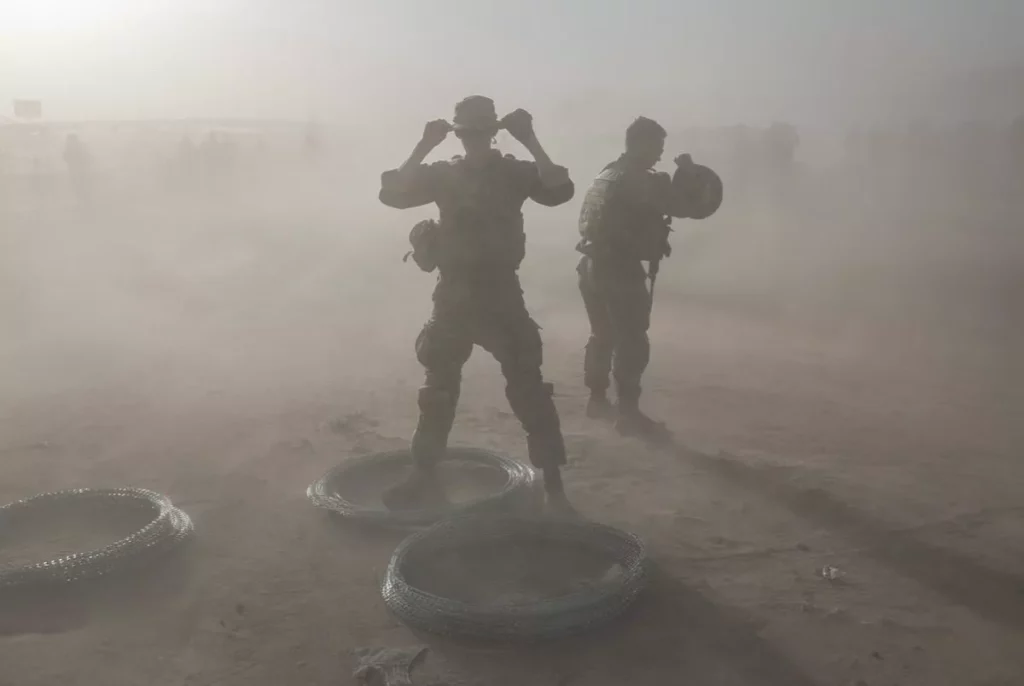
The fungus responsible for Valley Fever, Coccidioides, lives in the soil. Strong winds from dust storms lift its spores into the air, where they are inhaled by people. The El Paso region has seen a dramatic increase in such events. In 2025 alone, the city experienced ten dust storms — a figure not seen since the Dust Bowl years of 1935 and 1936, and well above the average of 1.8 storms per year. In total, 2025 saw 34 days with dust events, the highest tally since 1970-71. March 2023 was particularly intense, with eight dust storm days, quadruple the typical two to three for that early part of the year.
Scientists link this surge to human-caused climate change. Warmer global temperatures and prolonged drought dry out soil and kill vegetation, leaving the ground more vulnerable to wind erosion. Warmer air near the Earth’s surface also strengthens the upward motion — known as convection — that helps storms form and grow. “Understanding the connection between climate and disease is no longer optional,” said Thomas Gill, a professor at the University of Texas at El Paso. “It’s essential for building resilient communities in regions like ours.”
The geography of the area further amplifies the problem. El Paso lies in the Chihuahuan Desert, a known dust “hotspot” in North America that features flat, dry valleys and White Sands National Park. Flat terrain allows wind to build up momentum, and dust storms can create walls of dust that stretch for miles and rise several thousand feet high, according to the National Oceanic and Atmospheric Administration. “Extreme wind and dust events may disturb soils in ways that release larger amounts of the fungus into the air,” added Gill.
The impact on air quality is severe. During dust storms, levels of fine particulate matter (PM2.5) can rocket past Environmental Protection Agency limits. On 3 March 2025, PM2.5 levels exceeded 1,000 µg/m³ for two hours at one El Paso monitoring station. Hourly PM10 levels — particles ten micrometres or smaller, which can carry fungal spores deep into the lungs — have exceeded 1,500 µg/m³ on 19 days in 2025, ten times the daily limit. Maximum PM10 readings above approximately 2,000 µg/m³ are a strong indicator of heightened Valley Fever risk.
Predictive Factors and Public Health
Researchers have identified specific environmental signals that can foretell outbreaks. Temperatures exceeding 102°F (38.9°C) in the month before a dust storm, peak wind gusts above 64 mph (about 28.6 metres per second) four months earlier, and unusually high concentrations of PM10 one month prior are all predictive factors. These signals, the researchers say, can help health officials across the West plan their response and communicate risks to residents. In El Paso, for example, a windy Sunday forecast with blowing dust could signal a day of heightened exposure.
Valley Fever is caused by inhaling the spores of Coccidioides. It is not spread from person to person or between people and animals. Symptoms — fever, cough, tiredness, shortness of breath, chest pain, night sweats, headache, joint pain and rash — typically appear one to three weeks after exposure. About 60% of those infected show no symptoms, but in 5% to 10% of symptomatic cases the disease leads to serious or long-term lung problems. In roughly 1% of cases, the infection spreads from the lungs to other parts of the body — a condition known as disseminated disease — affecting the skin, bones, joints or brain. This can cause meningitis, which is fatal if untreated.
The disease is often underdiagnosed and misdiagnosed, leading to delays in treatment. A study by the US Centers for Disease Control and Prevention estimates that the true number of symptomatic cases could be 10 to 18 times higher than reported, with roughly 273,000 symptomatic cases in 2019 alone. In Texas, reporting of Valley Fever is not mandatory except in El Paso County, a gap that hinders surveillance, medical training and public awareness. Certain groups are at higher risk of severe illness: people of Asian descent — particularly Filipino — African Americans, infants under one year old, pregnant women in their third trimester, and those with weakened immune systems due to HIV/AIDS, diabetes, chronic pulmonary disease or cancer treatment.
Researchers are now developing predictive models that incorporate climate factors, soil moisture and even ecological interactions with wildlife to improve forecasting. Public health campaigns such as Arizona’s annual Valley Fever Awareness Week aim to educate the public; anyone experiencing prolonged symptoms after being in endemic areas is advised to ask their healthcare provider about testing.
Broader climate science shows that human-caused warming is increasing the frequency and intensity of extreme weather events globally. In the American Southwest, changes in Pacific Ocean sea surface temperatures have been linked to drier soil conditions and more dust storms. The field of “extreme event attribution” has quantified how much climate change makes such events more likely or severe. As the region continues to dry, the conditions that release the fungus into the air are projected to become more common — a trend that, as Thomas Gill put it, means “extreme wind and dust events may disturb soils in ways that release larger amounts of the fungus into the air.”