

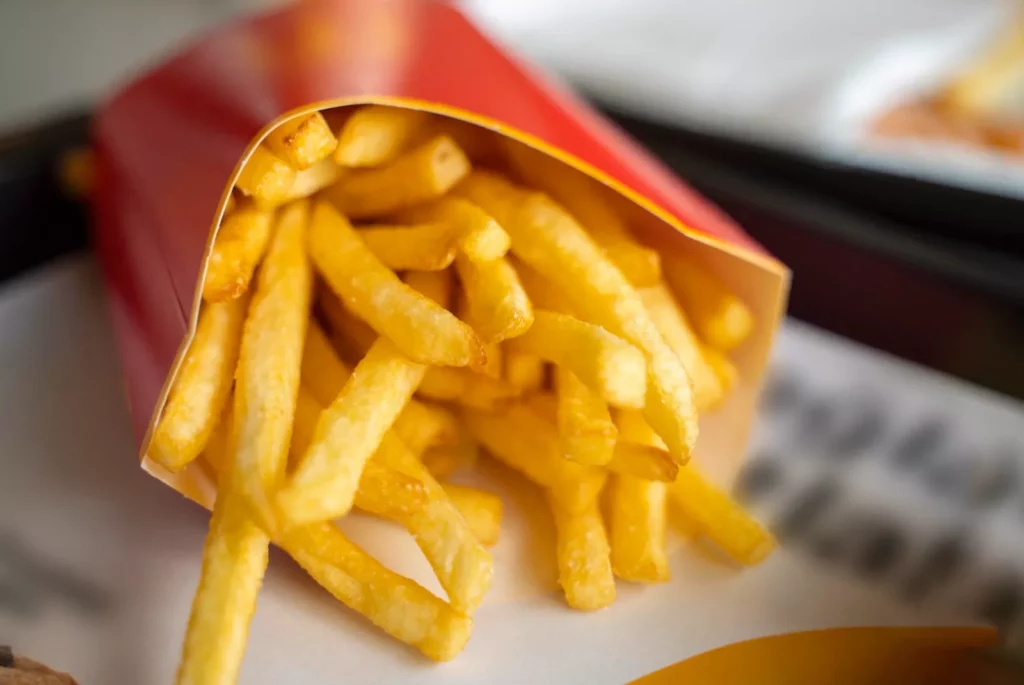
You soon may be able to enjoy french fries with a little less guilt about your health.
Researchers at the University of Illinois have developed a method for cooking fries that maintains their crispiness and taste while using less oil.
The answer, according to the team led by Pawan Singh Takhar and Dr. J. P. Harner, is to use a microwave alongside frying.
A Two-Stage Cooking Process
The core innovation lies in a two-stage cooking process. Initially, the fries are heated conventionally, just enough to achieve the desired crispy exterior. They are then moved into a custom-built microwave to complete the cooking from the inside out.
The research, published in the journals Current Research in Food Science and The Journal of Food Science, proposes combining the two methods in the same device. “Traditional heating maintains crispiness, while microwave heating reduces oil consumption,” the study states.
The Science of a Less Oily Fry
The method works by leveraging the different cooking mechanisms of frying and microwaving to minimise oil absorption, a key factor in reducing fat content.
Frying cooks food from the outside in. Early in the process, the water in the pores of the potato acts as a barrier, keeping the oil out. However, as cooking continues, this water evaporates, creating an entry point for the oil to seep into the fry.
Microwaving, conversely, cooks from the inside out. By using it to finish the cooking after initial crisping, the researchers aim to limit the time and opportunity for oil to penetrate. This approach tackles the fundamental drawback of frying, which typically doesn’t stop fats from frying oils from entering the food.
Pawan Singh Takhar, the lead author on one of the studies, explained the limitations of each method alone. “If only microwaving is used, the food turns out mushy,” he noted. Frying alone, while creating crispiness, leads to higher oil absorption as the cooking progresses.
Balancing Health and Craving
The research is driven by a common consumer dilemma. “Consumers want healthy foods, but at the time of purchase, cravings often prevail,” Takhar said. “The high oil content adds flavor, but it also contains a lot of energy and calories.”
Recognising that people are going to eat french fries despite their high fat levels, the team sought a practical compromise. The goal is to produce a fry that tastes familiar, maintains its texture, but has absorbed significantly less oil and fat.
A Future Kitchen Appliance?
For now, replicating the experiment at home is not feasible. The specialised equipment used—a custom-built microwave fryer—is not currently available for consumer kitchen use.
This suggests that widespread adoption of this healthier frying method by the public may be some time away, pending the commercial development and availability of the necessary technology.