

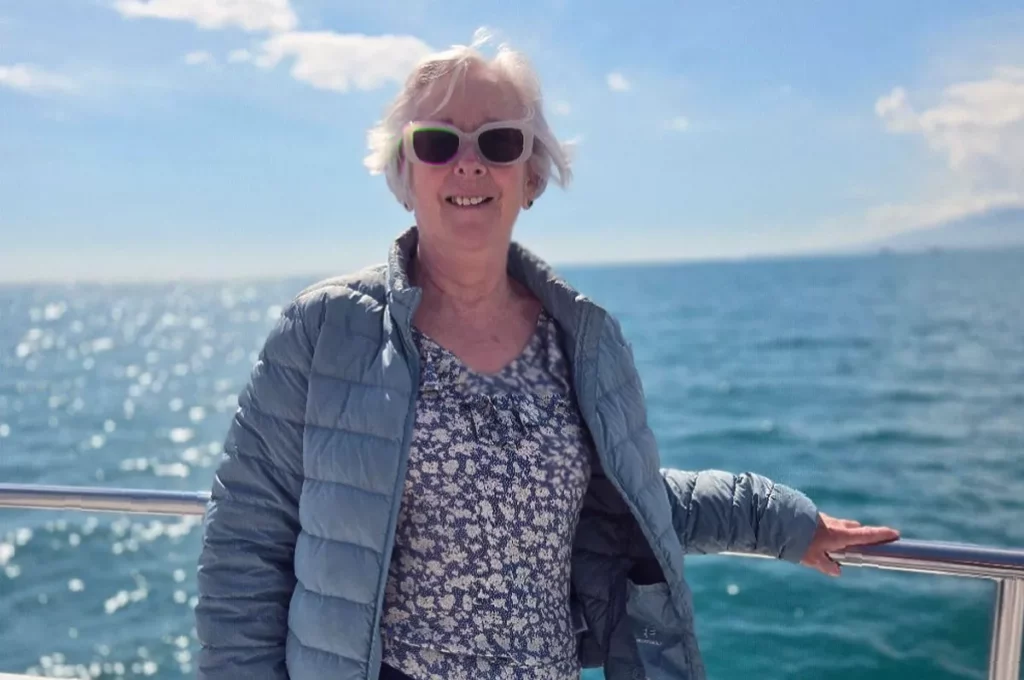
A retired teacher who has endured four major surgeries for Crohn’s disease says new research into the scarring it causes could offer a “complete game-changer” for future patients.
Maureen Dalgleish, 65, from Edinburgh, was first diagnosed with the inflammatory bowel condition in 1988 at the age of 28. In the nearly four decades since, her life has been repeatedly interrupted by the disease’s severe complications, leading to operations in 2001, 2006, 2013 and again last year. The surgeries aimed to manage painful and dangerous fibrosis—excess scar tissue—that built up in her bowel, narrowing it and causing blockages.
Her experience has involved long periods on liquid or heavily restricted diets and, prior to her most recent surgery, episodes of terrible abdominal pain, spasms, nausea, fever, dizziness and even loss of consciousness. “It can feel like your life is on hold,” she said. Despite this, Ms Dalgleish donated tissue from her 2025 operation to aid research, driven by the hope of helping others. “The idea of having medication to control or stop the fibrosis would be amazing,” she added.
Her story underscores a critical failure in current treatment. While surgery can remove a scarred, blocked section of bowel, it does not halt the underlying disease process. According to experts, after each operation, the disease re-starts and the tissue eventually becomes scarred again, leading to further blockages. For the nearly 1% of the UK population—around 120,000 people—living with Crohn’s, there are currently no specific anti-fibrotic drugs available to treat these intestinal strictures.
The cellular engine driving scarring
This cycle of repeated surgery may now face a challenge from new scientific understanding. Research led by the University of Edinburgh, published in The Journal of Pathology, has identified the precise cellular mechanisms that drive fibrosis in Crohn’s patients.
The six-year study, involving pathologists, gastroenterologists and scientists from Heriot-Watt University, the Earlham Institute and the Sanger Institute, found that clusters of immune cells in the gut, known as Crohn’s lymphoid aggregates (CLAs), act as hubs for scarring. The research revealed an unusual clustering of endothelial cells—which line blood vessels—around these immune cell groups. These endothelial cells then send signals to nearby scar-building cells called fibroblasts, instructing them to produce excessive collagen, the main component of scar tissue.
Dr Michael Glinka, a research fellow at the University of Edinburgh and a key contributor to the findings, explained that the signalling interactions between these cell types actively promote fibrosis. The study also indicated that the submucosa, a deeper layer of the bowel wall, shows particularly high levels of scarring, suggesting it may be an early site for the development of strictures.
This breakthrough offers a new target for therapies. “Our findings show a clear pathway that leads to scarring,” said Dr Shahida Din, a consultant gastroenterologist at NHS Lothian and honorary senior clinical lecturer at the University of Edinburgh. “By understanding this mechanism, we can start looking for ways to interrupt it with drugs, which could prevent or slow down fibrosis progression.”
Researchers are optimistic that this could lead to treatments capable of not just slowing but potentially reversing fibrosis, a prospect that would transform patient care.
This core research is complemented by broader efforts. The University of Edinburgh is also leading the “Investigating fibrosis activity in Crohn’s disease (FATE CD)” study, a three-year project aiming to better quantify fibrosis to identify therapies and trial endpoints. Separately, the university has received a $2.3 million grant from the Helmsley Charitable Trust to explore diagnostic tools focused on mitochondria, aiming to develop simple blood or stool tests to monitor disease.
While significant advances in diagnosis and treatment have occurred over the decades Ms Dalgleish has lived with Crohn’s—she expressed gratitude to her “marvellous” team at Edinburgh’s Western General Hospital—the fight against fibrosis has remained stagnant. The new research provides a tangible hope that the next major advance is within sight, shifting the focus from repeatedly cutting out scarred tissue to preventing it from forming in the first place.