

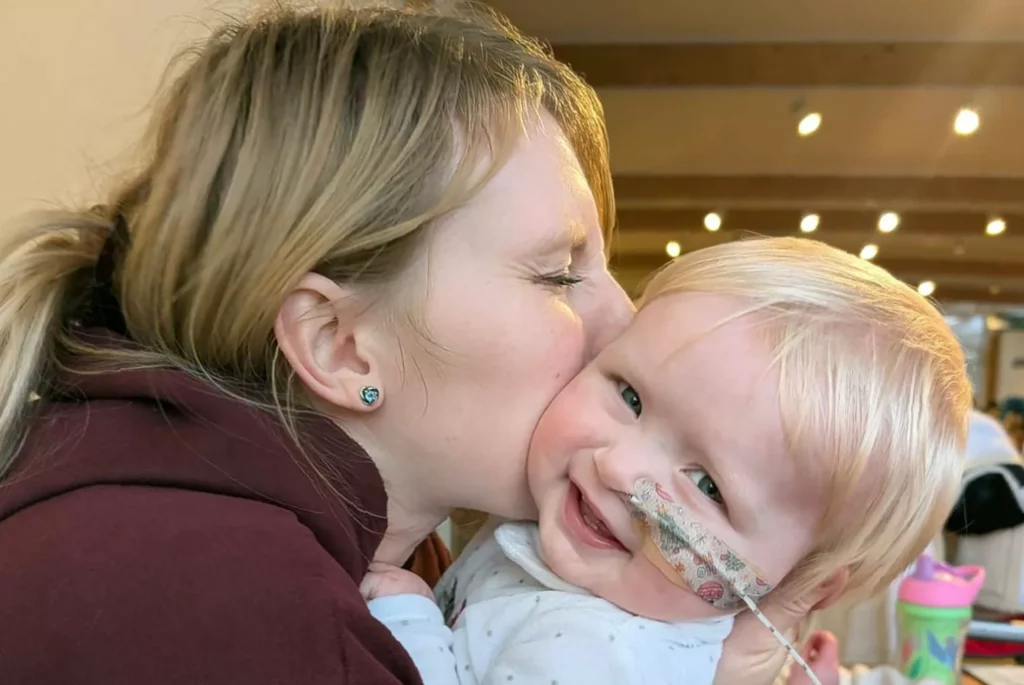
For the vast majority of her young life, 14-month-old Elyza Whittington has been in hospital, her body battling an illness that doctors have yet to name. Since she was just two months old, her family has been locked in a gruelling quest for answers, facing the profound strain of caring for a child with a complex, undiagnosed condition.
Her mother, Yasmin Whittington, 30, from Brechin in Angus, describes the early signs that something was wrong. “She began being sick, she wasn’t feeding right and she was very floppy,” she said. “Her muscle tone was almost non-existent, and she would sleep around 21 hours a day.” The symptoms—persistent sickness, an inability to feed properly, critically low muscle tone, and chronic fatigue—have defined Elyza’s infancy.
Developmentally, she is closer to a five or six-month-old, having only just begun to sit. She cannot feed orally and receives nutrition through a tube, struggling to gain weight. Her serious gastrointestinal problems may soon necessitate a feeding tube directly into her stomach, a common challenge in paediatric neuromuscular disorders.
The Protsearch for a Diagnosis
For over a year, Elyza has undergone a battery of tests during multiple hospital admissions, totalling more than three months of her life. Medical professionals initially identified her condition as “floppy infant syndrome,” clinically known as hypotonia. However, this is a descriptor of reduced muscle tone, not a diagnosis itself; it is a symptom that can point to a wide array of underlying genetic, neurological, or metabolic disorders.
“Almost a year on we’re still waiting for a diagnosis,” Ms Whittington said. “It’s still something doctors are working hard to understand.” Her case illustrates a distressing reality for many families: diagnosing rare diseases can be a protracted odyssey. According to research into rare conditions, over a third of families wait more than five years between symptom onset and diagnosis, with approximately 75% of rare diseases affecting children.
The UK’s Rare Diseases Framework aims to speed up this process and improve care coordination. For the Whittingtons, the ongoing uncertainty is a daily burden. “I’ve gone from mum to nurse quite quickly,” Ms Whittington explained. “I live and breathe everything about her care now. You just adapt because you have to.” This adaptation came at a significant cost, as she was forced to give up her job to provide full-time care for her daughter.
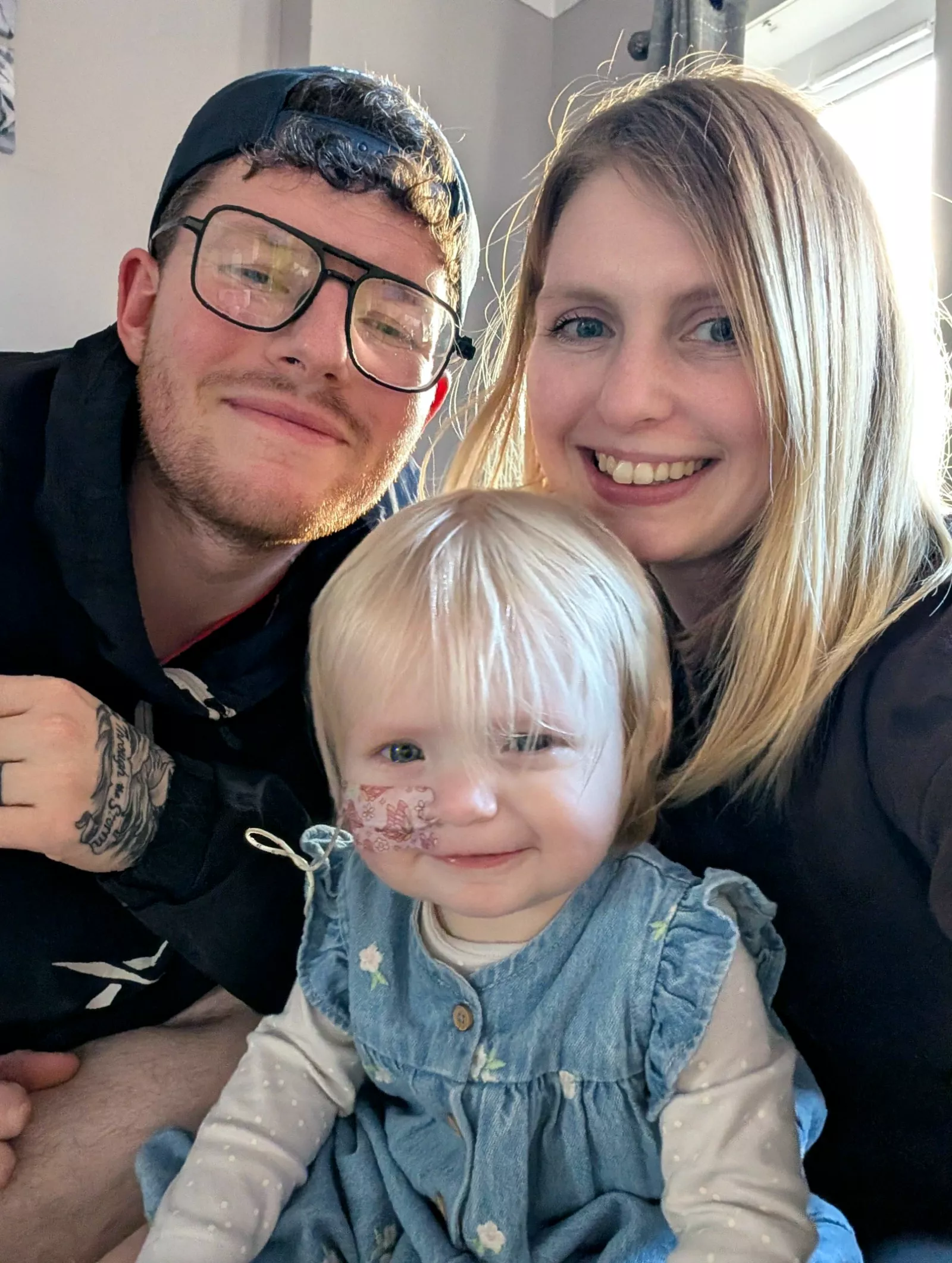
The impact resonates through the whole family, which includes Elyza’s father, Charles, 31, and her three siblings: Isaac, seven, Alfie, five, and Isla, two. The constant focus on hospital visits and medical management inevitably reshapes family life.

“A Huge Financial Burden Lifted”
Amid the strain, support from The Archie Foundation, a charity dedicated to improving healthcare for children, has been transformative. The charity provided a specialist car seat designed to support Elyza’s low muscle tone, a piece of equipment her mother calls “a life changer.”
“They helped us get the car seat organised within two weeks,” Ms Whittington said. “It’s so expensive when you’re travelling back and forward and spending time in hospital. They’ve lifted a huge financial burden for us during a really tough time. When everything felt overwhelming, Archie’s support reminded us that we weren’t alone.”
In gratitude, Ms Whittington is taking on the Glasgow Kiltwalk on 28 April to raise funds for the charity, and plans to do the same at the Dundee Kiltwalk on 11 August. “I’m not a great runner so I thought the Kiltwalk would be a nice way to say thanks,” she said, noting that training is difficult while managing hospital appointments.
Reti Turner, senior fundraising officer at The Archie Foundation, said the charity was proud to support families like Elyza’s. “Caring for a child with complex needs can be overwhelming, and no family should have to face it alone,” Mr Turner said.
For now, the Whittingtons continue to navigate their “new normal,” as Yasmin describes it, sustained by charity support and their own resilience. “Whatever happens, we’re just learning what our new normal looks like,” she said, “and doing everything we can to give her the best life possible.”