

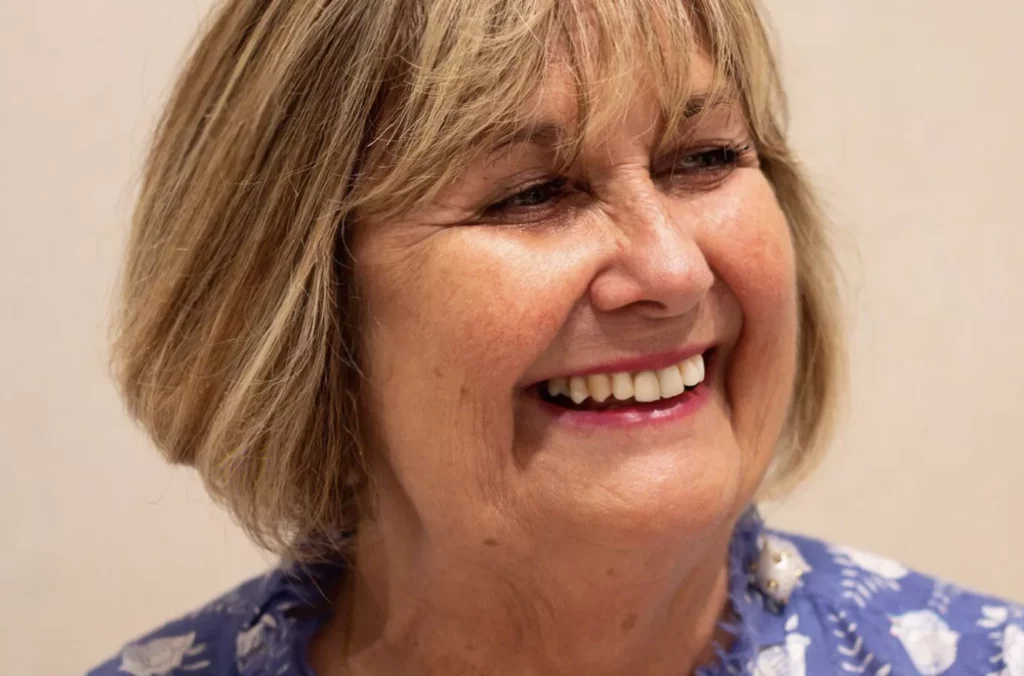
An opera singer who concealed her deafness for more than three decades has spoken of the “life‑changing” moment she underwent surgery to receive two cochlear implants – a procedure now being trialled nationwide that could become the standard for thousands of NHS patients.
Janine Roebuck, 72, from London, suffers from sensorineural hearing loss, an inherited condition that accounts for around 70 per cent of all genetic hearing loss cases and has affected generations of her family. Her father “dealt with it graciously and bravely”, she said, and her grandfather and his brothers and sisters also struggled. Despite her deteriorating hearing, Ms Roebuck continued to work as a mezzo‑soprano, performing in operas, operettas and musicals, including at the Royal Opera House, until her retirement.
For more than 30 years she hid her deafness. Then, in 2019, she received a cochlear implant on one ear through the NHS, in line with current guidelines. However, she chose to pay privately for a second implant in her other ear at the same time.
The difference, she said, has been extraordinary. “Having two implants is light years away from just one,” she told the Press Association. “Sound quality is so much better, sounds are fuller, clearer, louder and more natural. It’s much easier to tell where sounds are coming from, especially in busy spaces. If you’re out in public, it can be hard to follow who is speaking, making joining in with conversations almost impossible. As a result, you have debilitating concentration fatigue at the end of every day.”
With bilateral implants, Ms Roebuck said she no longer considers herself deaf. “They have been utterly life‑changing and, for me, have broken a generational curse. They reconnect you to the world and, most importantly, people. I also feel safer and more secure having the two implants. And, if anything goes wrong with one of the implants, I’m not suddenly plunged into a world of total silence.”
Her speech perception in her right ear alone improved from 4 per cent to 92 per cent within three months of the implant being activated, according to data from the trial team. She recalls the emotional moment she first heard the sound of rain on leaves through an open kitchen door: “I didn’t even know that was a sound.”
Ms Roebuck now gives inspirational talks on coping with hearing loss and following dreams.
National trial aims to make two implants the norm for adults
Her experience is at the heart of a major new government‑backed study that could transform care for adults with severe to profound hearing loss. The trial, named LUCIA (Listening with Unilateral versus bilateral Cochlear Implants in Adults), is co‑led by Addenbrooke’s Hospital and the University of Cambridge and funded by the National Institute for Health and Care Research (NIHR). It involves more than 250 adult participants across 14 hospitals in the UK.
Participants must have become deaf later in life and not already have an implant. They will be randomly assigned to receive either one (unilateral) or two (bilateral) cochlear implants and will be monitored for 12 months after surgery. Key outcomes being measured include wellbeing, the ability to hear speech in noisy environments, quality of life, and the economic benefits and cost‑effectiveness for the NHS.
Currently, the vast majority of deaf adults in England are only eligible for a single cochlear implant under guidelines from the National Institute for Health and Care Excellence (NICE). The guidance (TA566, updated in 2019) defines severe to profound deafness as hearing sounds only at or above 80 dBHL at two or more frequencies without hearing aids, and for adults a phoneme score of 50 per cent or less on the Arthur Boothroyd word test. NICE’s decision to restrict adults to one implant was based on analysis suggesting that providing two is not cost‑effective for the NHS and a lack of evidence for their benefit in adults. Unilateral cochlear implants for adults are considered cost‑effective, with an estimated cost per quality‑adjusted life year (QALY) of £11,946 compared with hearing aids and £10,499 compared with no hearing aids. The cost of a cochlear implant, including surgery and rehabilitation, is estimated at around £20,000 to £30,000 per ear, which the NHS typically covers for qualifying individuals.
The benefits of bilateral implants – and why adults are being left behind
Children in the UK routinely receive bilateral cochlear implants, which can provide three‑dimensional hearing, enabling them to hear more naturally, with improved access to sound and better engagement with society. Adults, however, have historically been limited to a single implant unless they have additional conditions that increase their reliance on auditory stimuli.
Matthew Smith, an ear, nose and throat surgeon at Addenbrooke’s Hospital and co‑leader of the LUCIA study, said: “We know from giving bilateral implants to children that it can have a transformative effect on their quality of life and interactions with other people. Through this study, we can offer the same opportunity to adults who have become deaf, and understand the potential added value of bilateral cochlear implants, not just in terms of hearing, but also how they enrich quality of life.”
Professor Debi Vickers, a speech and hearing scientist in the department of clinical neurosciences at the University of Cambridge and co‑leader of the study, added: “Children routinely receive bilateral cochlear implants. These can provide three‑dimensional hearing, enabling them to hear more naturally than unilateral, with improved access to sound and better engagement with society. Adults tell us, and I agree, that they should be given the same hearing opportunities as children. In turn, these will result in reduced social isolation, enriched communication, improved mental health, and better overall quality of life.”
The trial also includes co‑investigators Professor Nicci Campbell and Professor Helen Cullington from the University of Southampton Auditory Implant Service.

The researchers hope the evidence gathered will allow NICE to revise its guidelines. Professor Anthony Gordon, programme director for the NIHR Health Technology Assessment programme, which funded the trial, said: “This study offers real hope to people with severe hearing loss and the chance of a significant improvement in their quality of life.”
Once the trial finishes, the results will be submitted to NICE for review.
A widespread and often hidden problem
Hearing loss is far from rare. According to the RNID, more than 18 million adults in the UK are deaf, have hearing loss, or tinnitus – roughly one in three adults. The prevalence rises sharply with age, affecting over half of adults aged 55 and above, and around 80 per cent of those over 70. Untreated hearing loss is linked to social isolation, loneliness, anxiety, depression and cognitive decline, with research suggesting that addressing hearing loss may be a crucial step in reducing dementia risk.
Ralph Holme, director of research at the RNID, said: “It’s wonderful to hear just how life‑changing this experience has been for Janine, and the impact it’s had on her quality of life. Cochlear implants can be truly transformative for people with hearing loss, helping them reconnect with the world around them, and with friends, family and colleagues. The added benefits bilateral implants could bring are particularly exciting, and this study will play a vital role in building the evidence needed so that many more people can benefit, just as Janine has.”
Ms Roebuck’s speech perception in her right ear alone improved from 4 per cent to 92 per cent within three months of her implant being activated. She no longer considers herself deaf.