

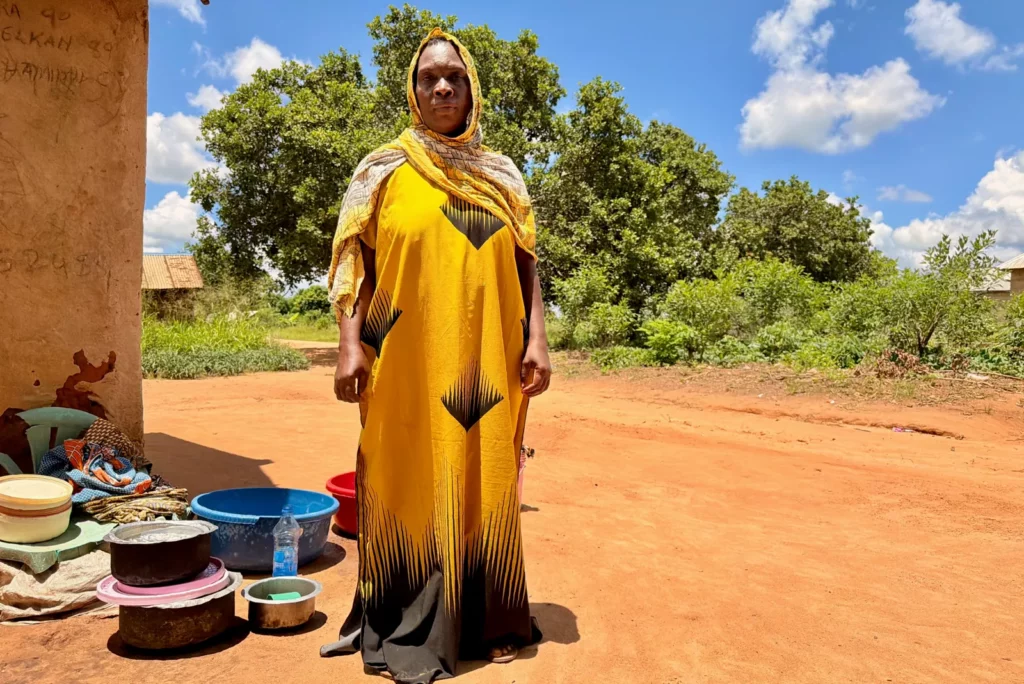
In the small farming village of Mwavi, in Tanzania’s Bagamoyo district, the number of malaria cases has fallen by an estimated 90 per cent over the past five years. Residents attribute the dramatic shift to a single intervention: a vaccine trial that has all but eliminated the disease among local children and, by breaking the cycle of transmission, protected adults too. The vaccine, known as R21, was developed by Oxford University’s Jenner Institute and received World Health Organization (WHO) prequalification in December 2023. In clinical trials it has demonstrated 75 per cent efficacy over 12 months in seasonal transmission areas and 68 per cent in perennial zones. Now, as the field trial in Bagamoyo draws to a close, the results are being prepared for submission to medical authorities – and the scientists leading the work are clear about what the village’s experience proves.
“In terms of safety, I can 100 per cent testify as the lead clinician of the study that the vaccine is safe,” says Dr Angela Gwakisa, who oversees the trial across Bagamoyo district. She points to data showing that as booster doses have been administered, malaria has continued to decline. The vaccine works by stopping the malaria parasite from multiplying in the human body; when a mosquito bites a vaccinated person, it cannot pick up the parasite and therefore cannot pass it on. This herd effect means that even villagers who were not in the trial have benefited. Mgeni, a mother of five whose six-year-old daughter participated, says she has seen the difference. “I would say the number of people infected with malaria has fallen maybe 90 per cent over the past five years,” she explains. Another resident, Amina, whose youngest child was in the trial, echoes the sentiment: “This is something we truly appreciate because malaria was such a big problem here.” Such has been the community’s gratitude that one mother presented Dr Gwakisa with 21 pineapples – the main crop grown by smallholder farmers around Bagamoyo.
The vaccine’s promise is all the more striking given the human cost of the disease in Tanzania. According to the WHO, the country accounted for roughly 4.3 per cent of global malaria deaths in 2024, with an estimated 26,000 fatalities – a slight increase from 25,540 the year before. Approximately 93 per cent of Tanzanians live in malaria-endemic areas. Across the world, the WHO reports 282 million cases and 610,000 deaths in 2024, with the African region bearing 95 per cent of that burden. Children under five remain the most vulnerable, representing around three-quarters of all malaria deaths globally. Factors such as climate change, the spread of new mosquito species and growing resistance to both drugs and insecticides are pushing outcomes in the wrong direction.
The R21 vaccine, manufactured by the Serum Institute of India, offers a low-cost solution: it is priced at under $5 per injection, and plans exist to produce up to 200 million doses annually. It has already been licensed for use in Ghana, Nigeria and Burkina Faso. A second malaria vaccine, RTS,S (Mosquirix), developed by GlaxoSmithKline, received WHO recommendation for widespread use in children in October 2021 after Phase 3 trials involving more than 15,000 infants across seven African countries, including Tanzania, showed a reduction in malaria episodes by over half in the first year. Dr Maxmillian Mpina, a Tanzanian research scientist overseeing a trial of RTS,S, notes that if Tanzania’s government can afford to include either vaccine in the routine childhood immunisation programme, the impact could be transformative – but that is a very big “if”.
Aid cuts threaten decades of progress
The success story of the R21 trial in Mwavi is tempered by a stark reality: the health system that would need to deliver any new vaccine or maintain existing malaria control measures has been severely weakened by foreign aid cuts. The closure of the US Agency for International Development (USAID) resulted in a loss of $216 million in aid to Tanzania alone, according to one analysis. An estimated 5,000 healthcare workers involved in HIV and malaria prevention programmes lost their jobs. Both Mgeni and Amina report that the USAID-branded vehicles that used to drive through Mwavi distributing mosquito nets no longer come, and that some malaria medication previously available at the local dispensary is now frequently out of stock.
The cuts have not been limited to the United States. The UK government has pledged additional support for malaria vaccine deployment, including matching private sector pledges to Gavi, the Vaccine Alliance, and an extra £10 million for research into vaccine deployment strategies. However, reports indicate that the UK also cut its contribution to the Global Fund to Fight AIDS, Tuberculosis and Malaria by £150 million, raising concerns about the net direction of British support. The combined effect, scientists say, is a funding crisis that is unravelling years of hard-won gains.
Dr Gwakisa and Dr Mpina both work under the auspices of Tanzania’s Ifakara Health Institute, one of Africa’s leading disease research organisations, with programmes spanning tuberculosis, rabies, HIV and malaria. Like similar bodies in the global North, Ifakara relies on a mix of philanthropic and public funding. The termination of a USAID programme worth $15 million per year at the institute, which had employed around 800 people, has had a cascading effect. “There was a trickle-down effect from USAID ending their funding, because foundation money from other projects was redeployed, which meant that some research streams that were never funded have been put on hold,” says Dr Brian Tarimo, a research scientist working on Transmission Zero, a project producing genetically engineered mosquitoes that cannot pass on the malaria parasite. The Bill & Melinda Gates Foundation has partnered with Oxitec to develop similar “self-limiting” mosquitoes, but such high-tech solutions still require sustained investment.
Dr Sarah Moore, who evaluates mosquito-control products such as bed nets and repellents, says research funding across the institute has been “decimated”. “I have sat in on meetings with the Tanzanian government where we have been trying to figure out how to get enough bed nets to cover the population,” she explains. “I have halved my consultancy fee for the WHO, and I have taken on fewer PhD students because there just isn’t any money any more.” The strain is visible across the entire malaria control ecosystem. Globally, the $3.9 billion invested in malaria eradication in 2024 was less than half the $9.3 billion the WHO says is needed to put the world on track for elimination. The funding gap is projected to widen to $5.4 billion, and all evidence points to that number increasing as donor countries retrench.
Dr Mpina adds that the government of Tanzania “messed up its budget in order to cover the sudden loss of funding from the aid cuts”. He warns: “We expect to see impacts continuing in the years to come because the government has just started reorganising its finances to respond to that hit, and the country is struggling with the impacts of this reorganisation.”
The search for solutions beyond vaccines
Even if the R21 vaccine is approved for routine use in Tanzania, it will not be a silver bullet. Dr Moore stresses that risk factors including population growth, climate change – which increases standing water where mosquitoes breed – and growing insecticide resistance mean that consistent, high levels of funding are needed across multiple research areas. “Even if a major technological breakthrough happens, we still need a lot of money to invest in production and have the boots on the ground to actually implement it,” she says. “Look at polio: we have a vaccine that is lifelong, yet we still have not managed to do the last mile because of how challenging this is.”
Beyond vaccines, another crucial front in the malaria fight is the development of new medicines to treat the disease as the parasite evolves resistance to older drugs. Artemisinin partial resistance has already been confirmed in four African countries, including Tanzania. The Medicines for Malaria Venture (MMV), a non-profit public-private partnership founded in 1999, has developed 19 antimalarial drugs that have treated or protected an estimated 1.3 billion people worldwide. A study published in The Lancet Global Health found that every $1 invested in MMV between 2000 and 2023 yielded $13 in monetised health benefits. MMV relies on donations from philanthropic foundations, national governments – including the UK’s Foreign, Commonwealth and Development Office – and partnerships with pharmaceutical companies that would otherwise have no incentive to produce drugs for low-income markets.
MMV CEO Martin Fitchet underscores the interdependence of research, manufacturing and delivery. “We rely on partnership with the pharmaceutical industry because their expertise is essential, and on donors to ensure the medicines we co-develop are affordable for the communities they serve,” he says. “But it’s not just about developing new medicines; health systems also need sustained financing to deliver them. If you stop funding the health systems, people will die today, and if you stop funding the R&D, people will die tomorrow. And that’s not a choice we should be making.”
The story of Mwavi’s transformation offers a tantalising glimpse of what could be possible with adequate resources. The motorbike mechanic who was a keystone of the community died after falling ill with malaria – a death that may have been preventable if the vaccine had been available sooner. The children now protected by the R21 trial are growing up in a village where malaria, once a constant threat, has become a rarity. Yet that progress hangs in the balance. As the Bagamoyo trial concludes and its results are sent for assessment, the question for Tanzania’s government is not just whether the vaccine works – that has been proven – but whether, in the wake of devastating aid cuts, the country can afford to bring it to every remote village that needs it. Dr Gwakisa puts it plainly: “The question that is hanging over us is how ambitious the government will be in terms of their aim to eliminate the disease, and how much they are prepared to budget in order to reach all the remote parts of the country.”