

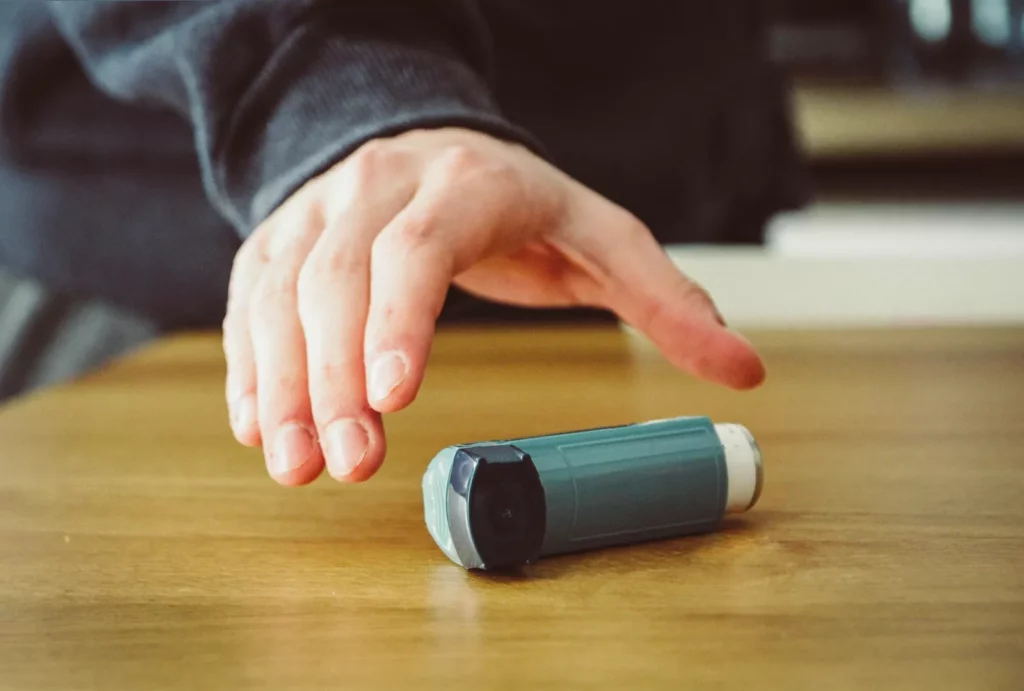
More than one million Britons now rely on modern dual-action inhalers, overtaking the number of patients who still depend on traditional blue devices for the first time. The milestone marks a fundamental shift in how asthma is managed across England, driven by updated guidance from the National Institute for Health and Care Excellence (NICE) issued jointly with the British Thoracic Society and the Scottish Intercollegiate Guidelines Network in 2024.
Patient numbers show accelerating change
Data from October to December 2025 shows that 1.09 million people in England used a combination anti-inflammatory reliever treatment — a 63 per cent increase compared with the same period the previous year. Over the same timeframe, the number of patients still using only a blue short-acting beta-agonist (SABA) inhaler fell to approximately 800,000, a 16 per cent drop. For the first time, the newer devices now outnumber the traditional blue inhalers in regular use.
Nearly half of all blue inhaler users — 48 per cent — received more than two prescriptions during 2024/25, a level that specialists consider a warning sign of poorly controlled asthma. Sunil Gupta, GP clinical adviser at NICE, described the trend as encouraging. “This guideline marks a real turning point for asthma care in England,” he said. “Seeing more than a million people already using these new inhalers is genuinely encouraging. We know change takes time, but the direction of travel is right.”
The new approach: dual-action inhalers
The new generation of inhalers combine an inhaled corticosteroid (ICS) with formoterol, a long-acting beta-agonist. Depending on the severity of a patient’s asthma, they are prescribed in two main ways. For patients with milder symptoms, the combination inhaler is used only when needed — known as Anti-inflammatory Reliever (AIR) therapy. Those with more frequent or severe symptoms are offered Maintenance and Reliever Therapy (MART), which involves daily use of the inhaler as well as extra doses when symptoms appear.
Unlike the old blue devices, which only relax the airways temporarily, these dual-action inhalers treat the underlying inflammation that drives asthma attacks while also providing immediate symptom relief. Donna Peat, an advanced respiratory practitioner at Lancashire Teaching Hospitals NHS Trust, said the shift represents more than a simple guideline update. “Moving away from SABA towards anti-inflammatory therapy is not just a guideline update; it is a life-saving cultural shift,” she said. “This simple intervention can be life-changing and, in some cases, literally save a life.” Professor Richard Russell, chair of the British Thoracic Society, echoed the description, calling it a “life-saving cultural shift in asthma care” and adding that with continued support, preventable attacks can be reduced further.
Why blue inhalers have become a ‘dangerous sign’
Medical concern over the traditional blue inhaler has grown steadily as evidence has accumulated that it can make asthma worse when used repeatedly on its own. Amina al-Yassin, a GP and clinical lead for children and young people’s services at Brent Integrated Care Partnership, was blunt. “They make people feel better, but only briefly,” she said. “We now know that over time they are likely to make asthma worse. Seeing a blue inhaler used alone is now a dangerous sign to me.”
The danger lies in the way short-acting beta-agonists work. They act as a bronchodilator, quickly opening the airways to ease breathlessness — but they do nothing to suppress the airway inflammation that is the root cause of asthma. Overuse can lead to the airways becoming hyperresponsive, triggering more frequent and severe attacks and raising the risk of asthma-related death. Research has found that patients who use three or more blue reliever inhalers in a year experience more than twice as many severe attacks and are four times as likely to have major asthma symptoms. The Medicines and Healthcare products Regulatory Agency reminds patients not to rely on a blue inhaler alone and to seek medical advice if they need it more than twice a week.
Emma Rubach, head of health advice at Asthma + Lung UK, emphasised the urgency. She said those who require their reliever inhaler three or more times a week may face a heightened risk of a life-threatening attack and should request a medication review promptly. The charity advocates for patients to switch to combination inhalers where appropriate and stresses the importance of collaborative care, including training on proper inhaler technique.
The human cost of poor control is illustrated by patients like Lee Newton-Proctor. The 41-year-old had lived with asthma since early childhood and endured 18 hospital admissions by his late thirties, relying on up to 18 blue inhalers each year. In the twelve months before switching treatments, he missed more than five weeks of work due to his condition. Since moving to a dual-action inhaler, his experience has been transformed. “I no longer feel asthmatic,” he said. “I can do what I want, when I want.”
Wider context and NHS benefits
Asthma affects approximately 7.2 million people in the UK — roughly eight in every 100 people — and is the most common long-term condition among children, with an estimated one in 11 affected. According to data cited by Asthma + Lung UK, four people die every day in the United Kingdom because of asthma attacks, and two out of three of these deaths are considered preventable. The condition is more prevalent in urban centres and among lower-income communities.
The shift to dual-action inhalers is expected to deliver significant savings to the NHS as well as improving outcomes. NICE calculated that for every 10,000 patients who switch to a MART inhaler, there would be 1,133 fewer GP appointments, 144 fewer A&E visits and 80 fewer hospital admissions each year. “The benefits to the NHS from this transition are substantial,” the original guidance noted.
Challenges remain. Misinformation — particularly on social media about the long-term use of steroid inhalers — has kept some patients on older devices. A small number of people may not tolerate the new combination inhalers and require alternative support. For younger children, the situation is more complex: as of November 2024, only certain ICS/formoterol inhalers are licensed for AIR therapy, and using MART in children under 12 would be considered off-label. New technologies such as smart inhalers with sensors that track usage are being explored in UK studies, including a trial using Hailie® devices for children, to improve adherence and identify high-risk individuals.
Dr al-Yassin said the NICE guidance had given clinicians the confidence to recommend the change. “Seeing a blue inhaler used alone is now a dangerous sign to me.”