

An armed man attempted to storm the White House Correspondents’ Dinner at the Washington Hilton Hotel, in an incident that drew immediate comparisons to the 1981 assassination attempt on President Ronald Reagan at the same venue. A Secret Service agent was shot and wounded, his life saved by a bulletproof vest, according to authorities.
The attacker, identified by federal prosecutors as Cole Tomas Allen, a 31-year-old educator and computer engineer from Torrance, California, was apprehended at the scene after trying to rush a security checkpoint. He was carrying firearms and knives, and investigators said he left behind a manifesto stating his intention to target Trump administration officials. Anti-Trump and anti-Christian rhetoric was found on his social media accounts. Allen had legally purchased a pistol in October 2023 and a shotgun in August 2025. He now faces federal charges including attempting to assassinate the president.
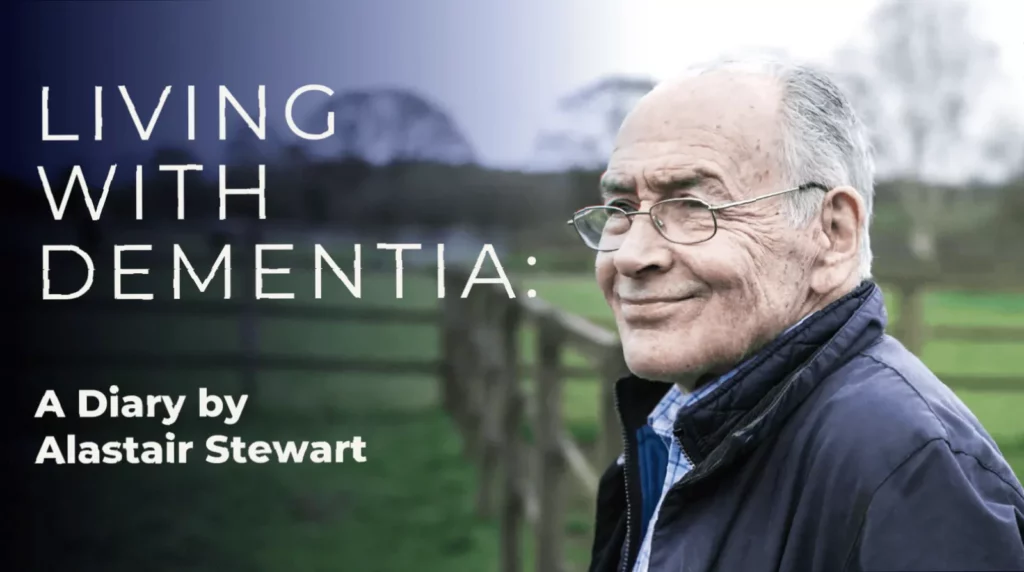
The Washington Hilton has long been the traditional venue for the annual dinner. On the pavement outside, on Connecticut Avenue, John Hinckley Jr. fired six shots at Ronald Reagan and his entourage in March 1981. Alastair Stewart, a former ITN Washington correspondent who covered that shooting and has since been diagnosed with early-onset vascular dementia, recalled the vivid parallel. Hinckley, now 70, himself remarked that it was “spooky” the recent attack occurred at the same hotel.
Echoes of 1981
The 1981 assassination attempt had immediate and far-reaching political consequences. Reagan was wounded by a ricocheted bullet that grazed a rib and lodged in his lung, narrowly missing his heart. White House Press Secretary James S. Brady was shot in the head and permanently disabled; he later became a prominent advocate for gun control and died in 2014 from injuries sustained in the shooting, which was ruled a homicide. Secret Service agent Timothy McCarthy was shot in the chest while shielding the president, and D.C. police officer Thomas Delahanty was shot in the neck. Brady’s advocacy led directly to the Brady Handgun Violence Prevention Act of 1993, which mandated federal background checks for firearm purchasers.
In the chaos that followed the shooting, then-Secretary of State Alexander Haig declared at a White House gathering: “I’m in control here.” The assertion was widely seen as bizarre because neither protocol nor the constitutional line of succession gave him that authority. Emergency power lay with Vice President George Bush and the Speaker of the House, both of whom ranked ahead of Haig. Haig later appeared during the Falklands War, where he proved less than helpful and was no match for the formidable Lord Peter Carrington, who ultimately took the blame for failing to prevent the conflict and resigned as Foreign Secretary in April 1982. Haig also spoke loosely about nuclear weapons, a man history has not judged kindly.

UK on Alert
The week in which the Washington dinner was attacked also saw a heightened terrorism alert in Britain. On Thursday, 1 May 2026, the UK’s national threat level was raised from “substantial” to “severe,” meaning an attack is considered highly likely. The increase followed a stabbing attack on Wednesday, 29 April, in Golders Green, North London, in which two Jewish men were wounded. The incident was declared a terrorist attack. Essa Suleiman, 45, a British national born in Somalia, has been charged with attempted murder. Officials cited the increasing threat of Islamist and extreme right-wing terrorism, with a particular focus on Jewish and Israeli individuals and institutions amid the conflict in the Middle East. The fear among Jewish communities was palpable, Stewart noted, and a message of solidarity was sent by his wife, Sally, to an orthodox Jewish friend in north London.
Meanwhile, the political landscape in Britain was dominated by the approaching general election, scheduled for Thursday, 7 May 2026. The “Mandelson affair” continued: the European Union decided to investigate, while the House of Commons rejected calls for Prime Minister Keir Starmer to face a further inquiry. Starmer pledged to carry on and lead Labour into the next general election, though recent polling and local election results suggest potential challenges for the party. The issue of antisemitism within Labour also resurfaced. The Equality and Human Rights Commission had found in October 2020 that the party had committed unlawful acts of antisemitism due to political interference in complaints and a failure to provide adequate training. Starmer responded by ordering an independent inquiry, calling the report a “day of shame” and pledging zero tolerance. Jeremy Corbyn’s claim that the scale of antisemitism had been “dramatically overstated for political reasons” led to the suspension of the Labour whip. Stewart observed that some find it difficult to hear Labour taking the high ground against antisemitism.
A Charity’s New Chapter
Amid these dramatic events, a quieter but deeply personal moment took place in the UK. Naomi House, a hospice for children, and Jack’s Place, a specialist centre for young adults aged 16 to 35, have completed a major consultation with staff, families, and supporters. The decision was made to rebrand as “Naomi and Jack’s,” moving away from the word “hospice” because research indicated it created misconceptions and barriers that prevented some families from seeking support. The consultation involved more than 9,000 people. The new strapline is “Full lives, however short.” The charity provides palliative care, short breaks, bereavement support, and community outreach, relying heavily on public generosity and donations with very limited government support.
Stewart and his wife Sally attended one of the rebranding events, held at the charity’s shop warehouse. They met staff who proudly showed them around. “A hospice for young people is something one hopes never to need, but you are always grateful that it exists,” Stewart wrote. “It offers care at the most difficult times, and it is run with dedication and compassion.”