

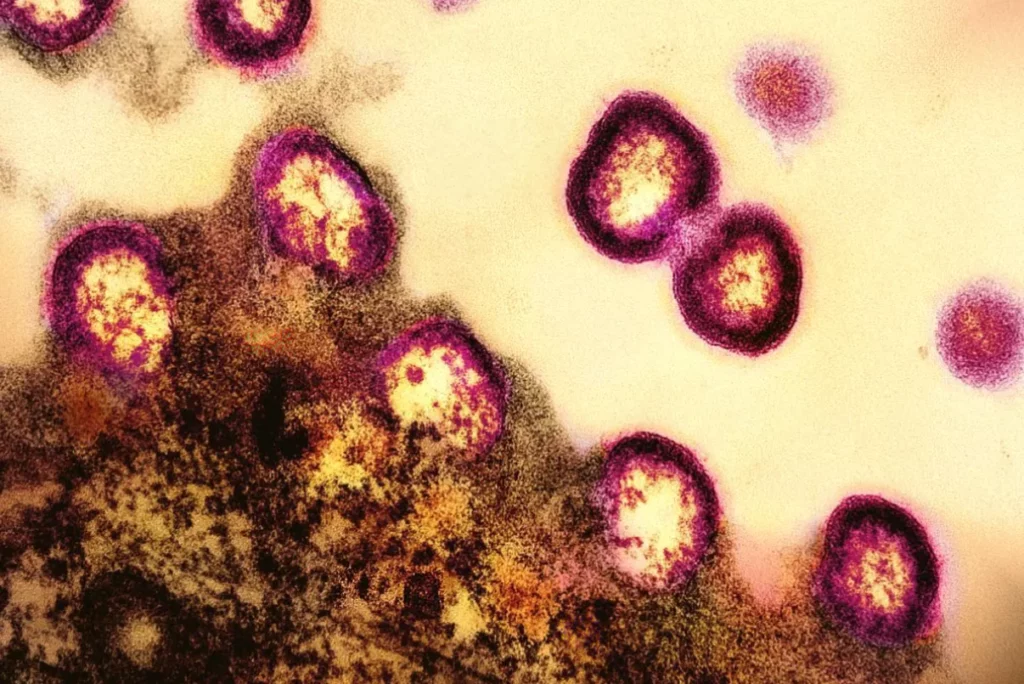
A 64-year-old man in Oslo appears to have been cured of HIV, becoming potentially the tenth person in the world to achieve long-term remission from the virus, thanks to a stem cell transplant he received from his brother to treat cancer.
The patient, who first tested positive for HIV in 2006, underwent the transplant in 2020 after being diagnosed with myelodysplastic syndrome, a form of bone marrow cancer. Five years after the procedure, and three years after stopping his antiretroviral drugs, no trace of the virus capable of reproducing has been found in his body, according to research published in the journal Nature Microbiology.
The Genetic Key: A Missing Lock for HIV
At the heart of this medical breakthrough is a rare genetic anomaly possessed by the patient’s brother. The donor was found to have two copies of a mutation known as CCR5-delta 32 (CCR5Δ32/Δ32). This mutation disables the CCR5 receptor, a protein that sits on the surface of white blood cells and acts as a primary doorway for the most common strain of HIV to enter and infect them.
Individuals who inherit this mutation from both parents—so-called homozygotes—are born with immune cells that largely lack this entry point. They are considered highly resistant, if not immune, to HIV infection. The mutation is ancient, predating HIV by millennia, and scientists believe it may have been selected for in European populations because it offered protection against historical plagues like smallpox.
Its prevalence is crucial to understanding why such cures are so rare. The mutation is most common in people of Northern European descent, where around 1% of the population carry two copies. It is virtually absent in Asian, Sub-Saharan African, and Native American populations.

The Transplant Process and Exhaustive Findings
The transplant was undertaken as a last-resort treatment for the man’s potentially fatal cancer, not his HIV. His brother’s donated stem cells gradually replaced the patient’s entire immune system across his blood, bone marrow, and tissues.
Two years after the transplant, scientists began a meticulous search for any lingering HIV. They analysed tissue specimens from his blood and gut, looking for viral genetic material integrated into his DNA. They examined more than 65 million of his immune cells. The result, the researchers reported, was that “replication-competent virus and HIV-specific T cell responses were absent.”
Furthermore, the tell-tale signs of a past infection also faded. The patient’s HIV antibody responses showed a gradual decline over the four years following the transplant, indicating his body was no longer engaged in a fight against the virus.
Anders Eivind Myhre, a co-author of the study from Oslo University Hospital, underscored the astronomical odds involved. “A sibling has a 25 per cent probability of being a match for a transplant, and the frequency of CCR5Δ32/Δ32 is around one per cent,” he explained.
A Complex History and a Personal Miracle
The “Oslo patient” follows in the footsteps of cases like the “Berlin patient,” Timothy Ray Brown, who in 2006 was the first person cured of HIV via a similar transplant from a donor with the CCR5Δ32/Δ32 mutation. These procedures have historically been seen as relying on this specific genetic shield to block HIV from the new immune system.
However, stem cell transplantation is a high-risk procedure with a mortality rate estimated between 10 and 20%, due to complications like graft-versus-host disease and severe infection. It is considered far too dangerous to be a scalable cure for the millions living with HIV globally.
For the Norwegian man, the outcome has been nothing short of miraculous on two fronts. As his doctor, Marius Trøseid, another study author from Oslo University Hospital, told Live Science: “He feels like he has won the lottery twice… He was cured of his bone marrow disease, which could be fatal, and he’s also now cured of HIV, most likely.”
While the procedure itself is not a realistic path for most, each such case provides scientists with invaluable clues. Studying these patients helps researchers understand the mechanisms of HIV’s persistent reservoirs and informs the development of future strategies, including gene therapies, aimed at achieving a safer, more widely applicable cure.