

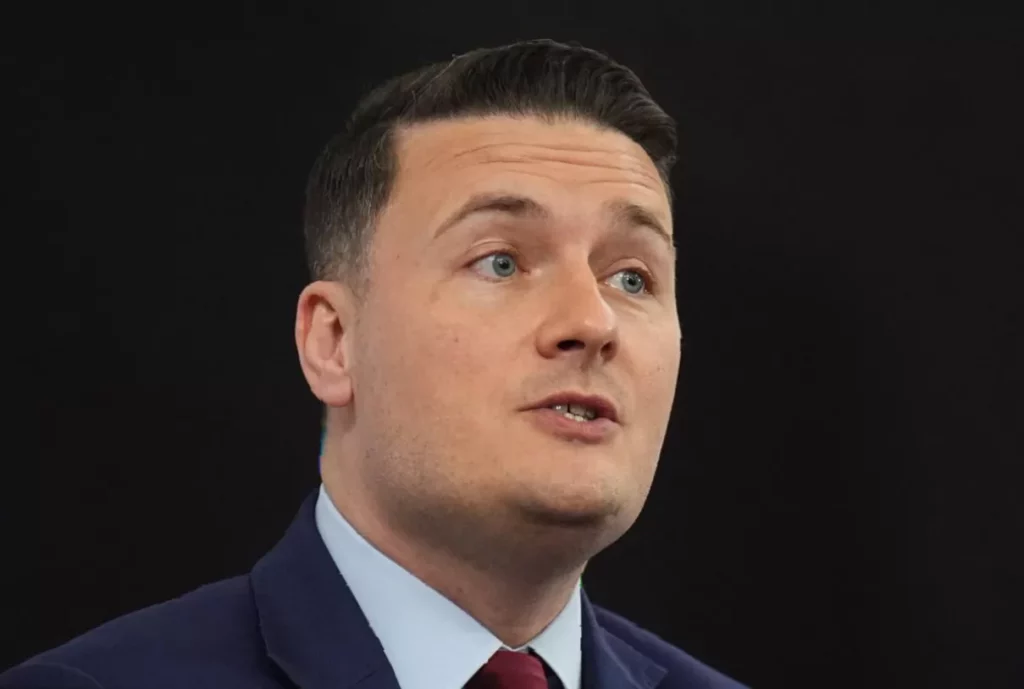
The government has warned that its ability to address industrial disputes is severely constrained by the significant financial pressure on taxpayers, challenges across public services, and global instability.
Health Secretary Wes Streeting stated that, given these circumstances, there is only so much the government can do in a short timeframe. This sentiment underpins the ongoing, bitter stalemate with resident doctors in England, who have just concluded their 15th strike since March 2023—a six-day walkout ending on April 13th, 2026.
Government Reaches Financial and Operational Limits
Mr Streeting maintains his administration has stretched its finances to the limit, presenting what he calls a significant offer to the British Medical Association (BMA). He argues resident doctors have been the “standout winners” of public sector pay increases under the Labour government, receiving a total 29% rise since March 2023. He has urged them to “compromise” and accept the deal, which he says remains on the table.
The government’s position is hardened by the enormous cost of the strikes, which Mr Streeting estimates at £50 million per day. He says the total cost to England’s taxpayer-funded health service over the three-year campaign has reached £3 billion. The BMA’s core demand—a 26% pay rise to restore salaries to 2008 levels—is viewed as untenable. The Health Secretary has warned that meeting it could cost up to £30 billion a year, potentially sparking similar claims from the NHS’s 1.4 million-strong workforce.
In a move highlighting operational constraints, Mr Streeting reportedly threatened in early April 2026 to cut 1,000 training posts from an offer of 4,500 additional places if the strike proceeded. He argued it would not be “operationally or financially possible” to create the posts while the NHS dealt with the strike’s fallout, a decision that has left some doctors facing uncertain futures.
Public Services Struggle Under Strike Impact
The dispute has placed immense strain on the NHS. Since the end of 2022, at least 1.7 million healthcare appointments have been rescheduled due to industrial action, with over 1.3 million cancelled or rescheduled in earlier strikes alone. Despite NHS England’s efforts to maintain services—reporting 95% of planned elective activity went ahead during a recent strike—the disruption is profound.
There are broader concerns about patient welfare. While some studies show minimal immediate impact on admitted patients, others point to negative outcomes for specific groups, such as black patients in hospitals more exposed to strikes. The prolonged action has also shaken public confidence and increased tension within the health service.
The BMA, led by Resident Doctors Committee chair Dr Jack Fletcher, rejects the government’s characterisation. They accuse Mr Streeting of “playing games,” alleging a last-minute withdrawal of funds scuppered weeks of negotiation. The union disputes the government’s pay rise figures, stating their goal is restoration after years of erosion, and points to a recent pay review body recommendation of only a 3.5% uplift for 2026-27 as a “crushing blow.”
Broader Instability Fuels Government Caution
Framing the issue within a wider context of uncertainty, the government points to global instability as a factor necessitating fiscal caution. This backdrop informs its hardened stance. Mr Streeting has not ruled out banning doctors from striking altogether, drawing parallels to other essential public sector workers, an idea the BMA calls “anti-democratic.”
He has also accused the BMA of hypocrisy for reportedly offering its own staff a 2.75% pay rise while rejecting the government’s offer, and of “torpedoing” their own pay rises and training opportunities through industrial action.
With the dispute now in its fourth year—having seen a deal reached in September 2024 before collapsing in April 2025—the human and institutional costs continue to mount. Staff morale suffers from moral distress, and public opinion, which once favoured the doctors, is reported to have shifted. As the BMA also ballots consultants and specialty doctors on industrial action, the government’s message remains one of severe limitation, insisting that in an era of pressed taxpayers and worldwide uncertainty, its capacity for further compromise is exhausted.