

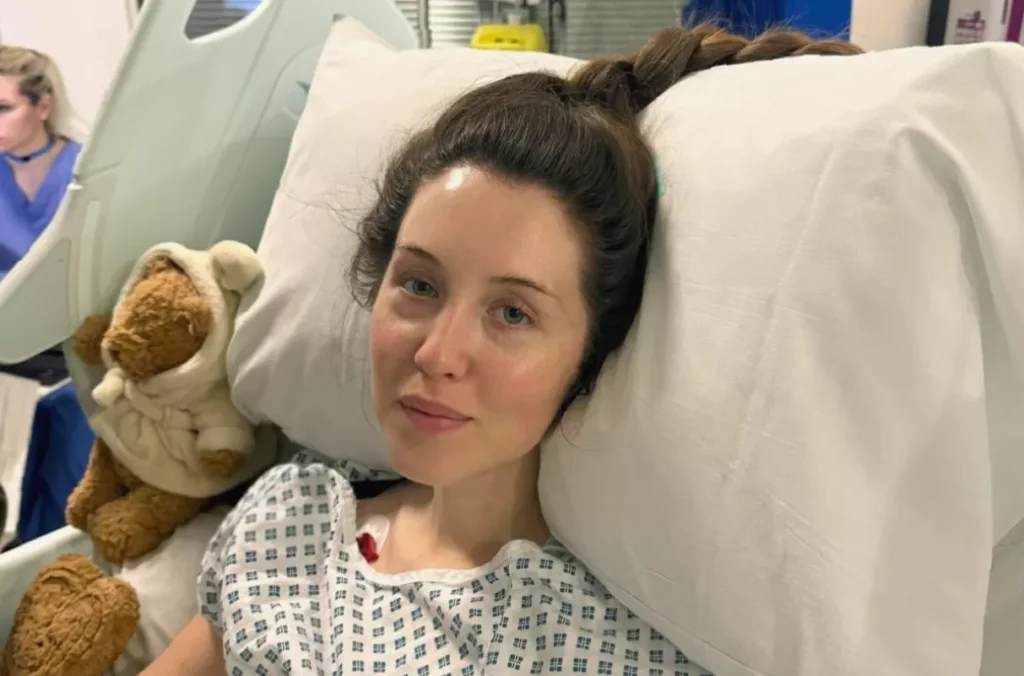
In a matter of hours, the life of 26-year-old Rebecca Waller was irrevocably changed. What began as an immense pressure in her upper back and pins and needles in her arms while working from home one Friday afternoon rapidly escalated into paralysis from the neck down. The recruitment consultant from Paddington, west London, had suffered a spinal stroke—an event so rare it constitutes just 1.25 per cent of all strokes.
A Sudden Collapse and a Critical Misdiagnosis
After finishing her call on 9 January, Ms Waller lay in agony on her bed, a feeling she described as akin to a heart attack. As the pain worsened, she began to lose the ability to move. Her fiancé, James Naylor, called 999, and paramedics arrived within ten minutes. However, confronted with a young, otherwise healthy woman, their initial assessment was that she was having a panic attack.
“I could tell that something was wrong. I thought it was strange that it would be a panic attack, but we never thought that it was a stroke,” Ms Waller said. As the paramedics tried to calm her, her condition deteriorated further; she was unable to hold a glass of water and, after a trip to the bathroom, found she could not move her limbs to get off the floor. Despite being able to move only her neck, the assumption of a panic attack persisted. “I don’t blame them, because who would think that a 26-year-old was having a rare stroke,” she later reflected.
The Rarity and Complexity of a Spinal Stroke
It was only after being taken to Charing Cross Hospital and undergoing MRI scans of her spine, heart, and brain that the true diagnosis was confirmed. Doctors believe a fragment from one of her spinal discs came loose, entered a vein, and blocked the blood flow to her spinal cord.
According to the Brain & Spine Foundation, a spinal stroke is a disruption of the blood supply to the spinal cord, which can damage tissue and block the nerve messages travelling along it. While around 100,000 people have strokes each year in the UK, the vast majority affect the brain. Spinal strokes are exceptionally rare and usually appear suddenly over hours or even minutes.
This rarity is the core reason they are so frequently missed or misdiagnosed. The Brain & Spine Foundation notes that diagnosis involves taking a medical history, a physical examination, and a scan of the spine, primarily to rule out more common causes of spinal pressure like a slipped disc or a tumour. “As spinal strokes are very rare, this may not be the first thought of diagnosis until the scan shows the disruption,” the foundation stated.
The condition can be ischaemic, caused by a blood clot, or haemorrhagic, caused by bleeding. Underlying causes can include atherosclerosis, high blood pressure, aneurysms, or spinal tumours. Symptoms, as in Ms Waller’s case, often involve sudden severe back or neck pain, muscle weakness, numbness, tingling, and can progress to paralysis and loss of bladder or bowel control.
A Long Road to Recovery
The aftermath of a spinal stroke is often devastating. The condition carries a mortality rate of around nine per cent, and fewer than ten per cent of survivors regain the ability to walk. Recovery is a long and uncertain journey, frequently involving permanent paralysis and complications such as chronic pain, breathing problems, and incontinence.
Ms Waller has spent three months in hospital and several weeks in a spinal rehabilitation facility. She is slowly regaining some movement in her arms, fingers, and abdominal muscles, but her limbs are not fully functioning. Her future independence remains uncertain. The day before the stroke, she had been euphoric after securing a wedding venue with her fiancé. Now, her focus is on relearning how to move, holding onto the hope of one day walking down the aisle. “Everything has been put on hold,” she said.
Her case aligns with a concerning broader trend of rising stroke incidence among young and middle-aged adults, a phenomenon medical professionals are investigating.
The Financial and Personal Toll
The intensive, specialised rehabilitation required for a spinal injury comes at a significant cost. The NHS has provided essential emergency care and a six-week rehabilitation programme, but after this, Ms Waller will need to fund private sessions, a carer, and adjustments to her home.
Her family has turned to crowdfunding to meet these expenses. A GoFundMe page set up by her sister, Caroline, has raised approximately £150,000 from around 3,700 donations, including a single anonymous donation of £10,000. The fundraiser highlights the high cost of ongoing spinal injury care and the limits of state provision.
In response to the incident, Dr Fenella Wrigley, chief medical officer at the London Ambulance Service, said: “We’re sorry to learn of Ms Waller’s rare diagnosis. While our crews arrived at the scene quickly, we will be reaching out to Ms Waller to look into the care we provided and ensure any lessons are learnt.”