

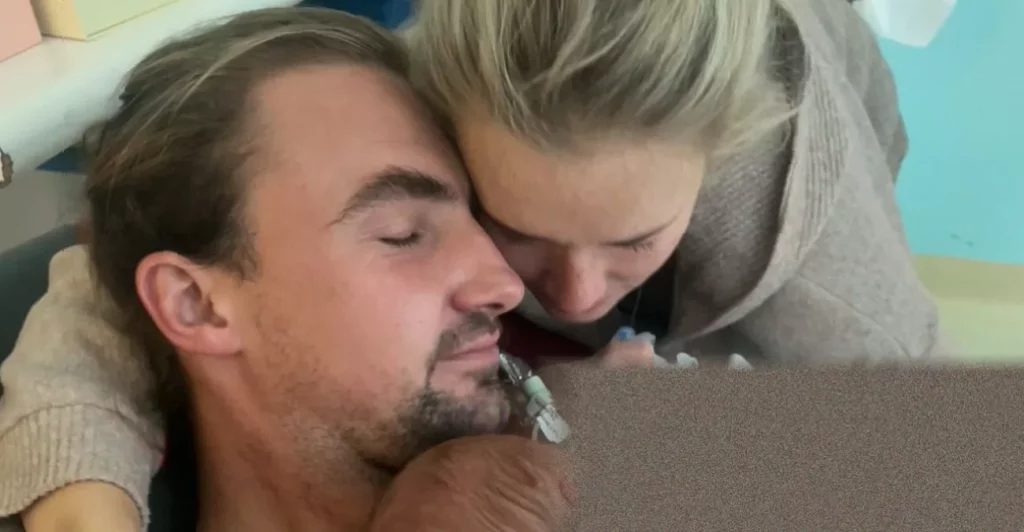
An inquest has found that the NHS failed a mother by supporting an unsafe home birth against medical advice, a decision that led to the death of her newborn daughter. Poppy Hope Lomas died at University College Hospital in London on 26 October 2022, at seven days old, after complications during a home birth that, her mother said, was encouraged by midwives at Barnet Hospital.
The senior coroner for Barnet, Andrew Walker, concluded that Poppy probably died from a severe hypoxic ischaemic brain event – a lack of oxygen reaching her brain in the 30 minutes before she was born. He said the Royal Free London NHS Foundation Trust, which runs Barnet Hospital and Edgware Midwives, had agreed to support an “unsafe home delivery that was against medical advice” and had failed to address “an accumulation of risk factors” during the birth. The trust, he found, did not provide Gemma Lomas, Poppy’s mother, with timely and consistent counselling about vaginal birth after caesarean (VBAC), nor clear communication about the risks, meaning she was not fully supported to make an informed decision about where to give birth.
Ms Lomas had previously given birth to her first daughter, Willow, by caesarean section in 2018. Despite this, she told the inquest that midwives actively encouraged her to have a vaginal birth at home. She said she was not told her pregnancy and planned birth were high-risk. “I was encouraged to do what we did,” she said. “I would have never made decisions to harm myself or my baby in any capacity.” Ms Lomas described Poppy being born “blue and floppy”, with blood coming from her mouth, and the midwives appearing slow to react. She recalled saying, “There’s something wrong,” but being told, “No, she’s fine, the baby’s fine”.
The inquest heard that the home delivery kit did not include a pulse oximeter to monitor the mother’s heart rate. Midwife Sasha Field, who was present at the birth, stated in a written evidence to the court that an ambulance should have been called approximately 90 minutes before Poppy was born, after she heard the baby’s heart rate slow down following a contraction. Instead, an ambulance was not called until two minutes after the birth, when it was clear Poppy showed no signs of life. The coroner described the failure to discuss the decelerations and a decision to return to hospital as a “serious failure to provide basic medical care”.
A report by the Healthcare Safety Investigation Branch (HSIB), published in April 2023, identified multiple failings in Ms Lomas’s care. It found that maternity teams at the Royal Free London NHS Foundation Trust failed to provide timely and consistent VBAC counselling, and that no single clinician took responsibility for her care. Midwives from North Middlesex University Hospital NHS Trust – which also had involvement in Ms Lomas’s care – missed key warning signs during labour, such as abnormal foetal heart patterns and scar pain, which were not properly recognised or acted upon.
Why VBACs and home births carry serious risks
Guidance from the Royal College of Obstetricians and Gynaecologists (RCOG) is clear: vaginal births after caesarean should take place in a “suitably staffed and equipped delivery suite” with resources available for immediate caesarean delivery if complications arise. In England and Wales, about one in 50 births take place at home, but they are recommended only for low-risk pregnancies. The NHS advises that for women who have had a previous baby, a planned home birth is considered as safe as a hospital birth only if the pregnancy is straightforward and there are no additional risk factors. A previous caesarean section significantly increases those risks, particularly the possibility of uterine rupture, which can deprive the baby of oxygen within minutes.
The coroner flagged concerns about the language used when patients choose a birth plan that goes against clinical guidance. He said expressions such as “out of guidance” are favoured over the clearer “against medical advice”, and that this can obscure the true danger. He recommended that when a woman opts for an unsafe home birth, multi-disciplinary meetings involving the parents should be held, and that they should sign a consent form that clearly explains the risks. He also noted that the home delivery kit used in Ms Lomas’s case lacked a pulse oximeter for maternal heart rate monitoring.
The findings come against a broader backdrop of maternity safety concerns within the NHS. Research shows thousands of suspensions or restrictions in home birth services across England between 2024 and 2025 due to staffing shortages and burnout, creating a “postcode lottery” for access. An NHS England directive in late 2025 mandated an urgent safety review of home birth services, citing inconsistent care and staffing pressures. The Royal College of Midwives and the birth rights charity Birthrights have called for strengthened clinical oversight, clearer standards and consistent training to ensure safety.
A spokesperson for the Royal Free London NHS Foundation Trust offered their “heartfelt condolences” to Poppy’s family. They said that, following an investigation, the trust had introduced a number of measures to improve care for women delivering at home, including better communication and ensuring midwives are aware of the guidance on transferring mothers to hospital. The trust added that it would respond to the issues raised by the coroner in due course. The coroner also noted that the failure to call an ambulance earlier, combined with the lack of timely VBAC counselling and the omission of basic monitoring equipment, amounted to a “serious failure to provide basic medical care”.