

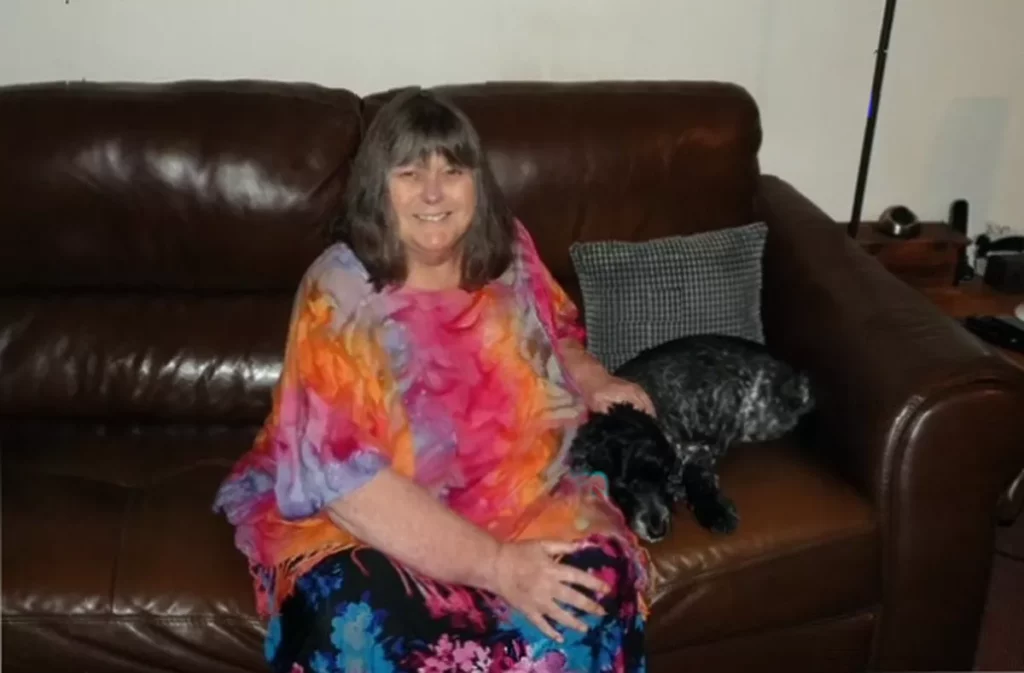
Jan Anson faced the daunting prospect of navigating months of recovery from a stroke without the vital NHS rehabilitation support she desperately needed, a situation experts warn is condemning thousands to preventable, lifelong disability.
The 59-year-old former freelance writer from Cornwall first knew something was wrong when her right side went numb and she collapsed in her kitchen last September. Rushed to North Devon District Hospital and then to Derriford Hospital in Plymouth for a life-saving thrombolysis procedure—a clot-busting treatment—the acute phase of her care was swift. Yet, discharged just four days later against the advice of hospital physiotherapists, she returned home to a void of support. “I had to get up the stairs. I was crawling up the stairs,” she said. Basic tasks like brushing her teeth became monumental cognitive challenges, and she survived on toast because she couldn’t manage soup.
For two months, no community therapist visited. The impact was devastating. “My entire life was shattered… I couldn’t even go into the garden safely because I would fall,” Ms Anson said. Her mental health plummeted into a “very, very dark place,” mirroring the post-stroke depression experienced by around one in three survivors, which can persist for years. In desperation, her husband hired a private speech and language therapist at a cost of £175 per session—a financial strain familiar to many families—but they could afford only a few. Eventually, the local NHS service made contact, offering just four physiotherapy sessions in December 2024, after which support ceased again.
A System in Crisis
Ms Anson’s isolation is not an anomaly but a symptom of a system buckling under severe pressure. A national audit of stroke services in 2025 found that not a single community team in England had the required staffing levels to provide adequate care. In Cornwall and the Isles of Scilly specifically, services fail to meet national staffing standards or the standard for patient access to daily rehabilitation.
The crisis begins even before patients leave hospital. The Sentinel Stroke National Audit Programme (SSNAP) reported that in 2024-25, it took an average of over four hours to get a stroke patient to hospital—more than 90 minutes longer than a decade ago. Once there, only 46.5% were admitted to a specialist stroke unit within four hours, a key target consistently missed. These delays are exacerbated by a critical shortage of stroke consultants; a survey of 100 hospitals revealed 70% of stroke units are short of at least one, with 96 vacant consultant posts across 53 hospitals. Approximately 10% of permanent consultants are due to retire in the next five years.
This staffing shortfall “directly lead to avoidable disability and, in some cases, avoidable death,” according to Dr. Sanjeev Nayak, a senior stroke specialist. Professor David Werring, past president of the British and Irish Association of Stroke Physicians, warns patients are “either dying or living with disability unnecessarily because they’re not getting the correct evaluation and treatment by the right expert at the right time.” The problem radiates through the whole team: audits internationally show severe vacancies in nursing, physiotherapy, occupational therapy, and speech and language therapy.
The consequence is a growing backlog. The NHS community service waiting list hit 1.1 million in January 2025, up from 962,040 a year earlier. For stroke survivors, this means crucial rehabilitation is delayed or absent, despite evidence that starting it on day one of admission is the aim. The Cornwall Partnership NHS Foundation Trust, which runs the Integrated Community Stroke Service Ms Anson waited for, acknowledged that “waiting for therapeutic support is not the experience we want for any of our patients,” pointing to measures aimed at improving referral times.
‘Condemning them to a life of disability’
Experts argue that the pioneering acute treatments that saved Jan Anson’s life are being fundamentally undermined by the subsequent collapse in care. “There’s no point in us giving all these amazing acute treatments, like thrombolysis and thrombectomy, and reducing the number of people dying from stroke, but then condemning them to a life of disability, and a lack of independence by not giving them rehabilitation,” said Professor Deb Lowe, a stroke consultant and Medical Director at the Stroke Association.
Professor Lowe, a former National Clinical Director for Stroke Medicine at NHS England, emphasised that the biggest age group suffering strokes are those aged 50 to 59, with the average age of stroke victims falling. This leaves many of working age unable to return to employment. Her message to the Health Secretary, Wes Streeting, was blunt: “We must prioritise and give parity of esteem for the rehabilitation of people affected by brain injury from stroke. There is no point in doing some of the hospital care improvements if you are then condemning people to live with a life of disability.”
The Department of Health and Social Care has pointed to an upcoming workforce plan to address having “the right people in the right places.” However, with nearly two-thirds of stroke survivors leaving hospital with a disability, the call is for action to match the scale of the need. For Jan Anson, the four sessions of physiotherapy were a brief lifeline in a long, solitary recovery, highlighting the chasm between the NHS’s life-saving capabilities and its capacity to support life after survival.