

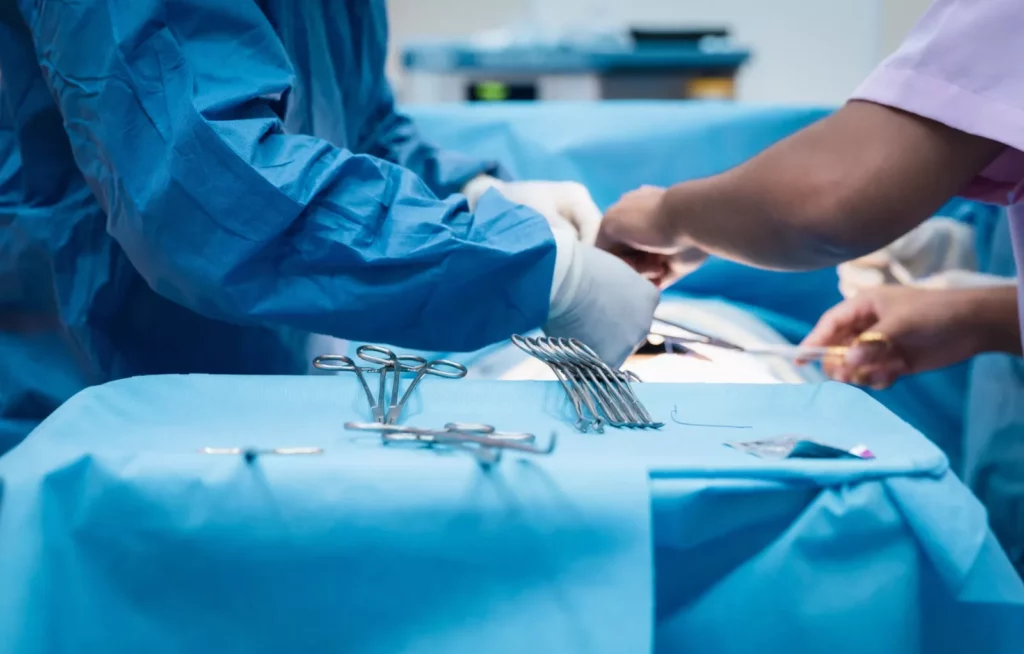
New data reveals that surgeons in English hospitals performed surgery on the wrong patient or the wrong part of the body 661 times between 2020 and 2025, marking a 46 per cent rise in such incidents over the five-year period. These so-called ‘never events’—deemed entirely preventable by the NHS—resulted in serious harm to patients in 7 per cent of cases, with campaigners warning that trust in the health service is at stake.
Scale of the problem and rising trend
The figures, obtained by Medical Negligence Assist via Freedom of Information requests, show incidents climbed from 69 in the 2020 reporting period to 101 in 2025. The true total is believed to be higher, as only 72 of 117 NHS trusts provided full data, with some citing patient confidentiality. The incidents are part of a broader category of ‘never events’, which also include retained surgical items and wrong implants. Provisional NHS data for April to November 2025 alone shows 274 reported never events, with wrong-site surgery being the most frequent at 116 incidents.
The harm caused to patients spanned a wide spectrum. Of the 661 wrong-site surgeries, 46 were classed as causing serious harm, 236 moderate harm, and 292 low harm. The NHS defines serious harm as incidents that result in permanent or long-term harm, with moderate harm requiring a moderate increase in treatment and low harm requiring extra observation or minor treatment.
Catastrophic errors and repeated offenders
Among the most severe cases was the mistaken removal of both ovaries from a patient at the Great Western Hospitals NHS Foundation Trust in October 2024, recorded as causing “severe harm”. For premenopausal patients, such an error induces immediate surgical menopause, with consequences including infertility, disrupted hormone levels, and increased long-term risks of osteoporosis and cardiovascular disease.
At least five incidents involved operating on the wrong patient entirely, including procedures such as a bronchoscopy—where a tube is inserted into the lungs—and a biopsy. Other errors included injections in the wrong eye, removal of the wrong thyroid lobe, and incisions on the wrong finger. Moderate harm incidents featured wrong tooth extractions, incorrect scar removals, and Botox being injected into the neck instead of the mouth.
Several trusts emerged with notably high numbers over the five years. Newcastle-upon-Tyne Hospitals NHS Foundation Trust recorded the highest figure, with 44 wrong-site surgeries, and reported 6 never events between April and November 2025. Manchester University NHS Foundation Trust reported 22 cases over five years and has frequently been identified as having high never event rates, logging 9 between April and November 2025. University Hospitals of Morecambe Bay NHS Foundation Trust reported 23 cases, two involving serious harm, while North West Anglia NHS Foundation Trust reported 20 cases, with a striking 13 involving serious harm.
Why ‘never events’ keep happening
The NHS framework states that while human error is often involved, underlying systemic failures are what allow mistakes to reach patients. Investigations frequently cite a failure to follow safety checklists and protocols, issues with communication and organisation, and environmental factors like poor lighting or inadequate equipment. Experts point to ‘checklist fatigue’ and complacency under intense time pressures and heavy workloads, where vital safety steps can become mere tick-box exercises.
The health service has several national initiatives designed to combat these errors. The National Safety Standards for Invasive Procedures (NatSSIPS) provide guidance to reduce incidents, while the Learn from Patient Safety Events service is the central reporting tool. The NHS Patient Safety Strategy, launched in 2019, aims to improve safety culture, and the newer Patient Safety Incident Response Framework shifts the focus towards system-based learning rather than blaming individuals.
Paul Whiteing, chief executive of the charity Action against Medical Accidents, said: “It is very concerning that we continue to see an increase in some never events. Behind every one of these events is a patient who will suffer harm, sometimes serious and life-changing and possibly life-threatening.”
Institutional response and apology
An NHS spokesperson said: “While these kinds of incidents are very rare, they are completely unacceptable – and the NHS has robust procedures in place to ensure they are fully investigated, with effective action taken to improve care for future patients.” They added that the service is supporting frontline teams to strengthen safety through better incident recording and a national staff training programme.
Individual trusts implicated in serious cases have apologised. A spokesperson for Great Western Hospitals NHS Foundation Trust said: “We are so very sorry for the pain and long-term impact caused… We are committed to learning from any mistakes.” Dr Lucia Pareja-Cebrian, joint medical director at Newcastle Hospitals, said the trust encouraged open reporting and thorough investigation to prevent recurrence.
Gareth Lloyd of Medical Negligence Assist warned that the increasing numbers show these events are becoming common. “These ‘never events’ can be avoided and more needs to be done to tackle the issue,” he said, “especially in those trusts that have seen the highest numbers.”