

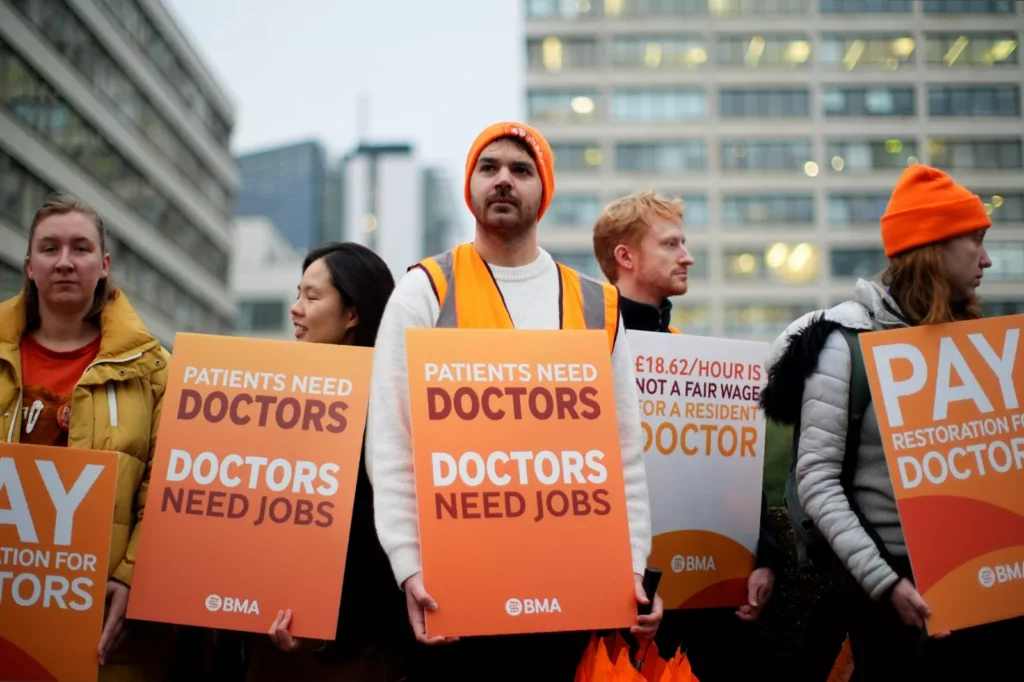
NHS England is drawing up plans for a fundamental shift in how the nation’s hospitals are staffed, aiming to significantly reduce reliance on resident doctors in the wake of repeated and crippling strikes, senior health service figures have confirmed.
The proposed overhaul, driven by what NHS Chief Executive Sir Jim Mackey has described as the unsustainable unreliability of a “transient training workforce”, would see care redesigned around a more permanent mix of clinical roles. According to a source close to Sir Jim, this new model would involve a greater dependence on doctors recruited from overseas and a major expansion of less-qualified roles, such as physician associates and advanced clinical practitioners.
A ‘Blended’ Workforce and the Strikes Forcing Change
Sir Jim’s comments, made to the Health Service Journal, signal that the ongoing industrial dispute is acting as a catalyst for a profound re-evaluation of workforce structure. He suggested the health service must explore building a more stable, “blended clinical family” that is less vulnerable to the disruption caused by the withdrawal of junior doctor labour. This strategic shift aligns with the broader goals of the NHS Long Term Workforce Plan, which focuses on training, retention, and reforming ways of working.
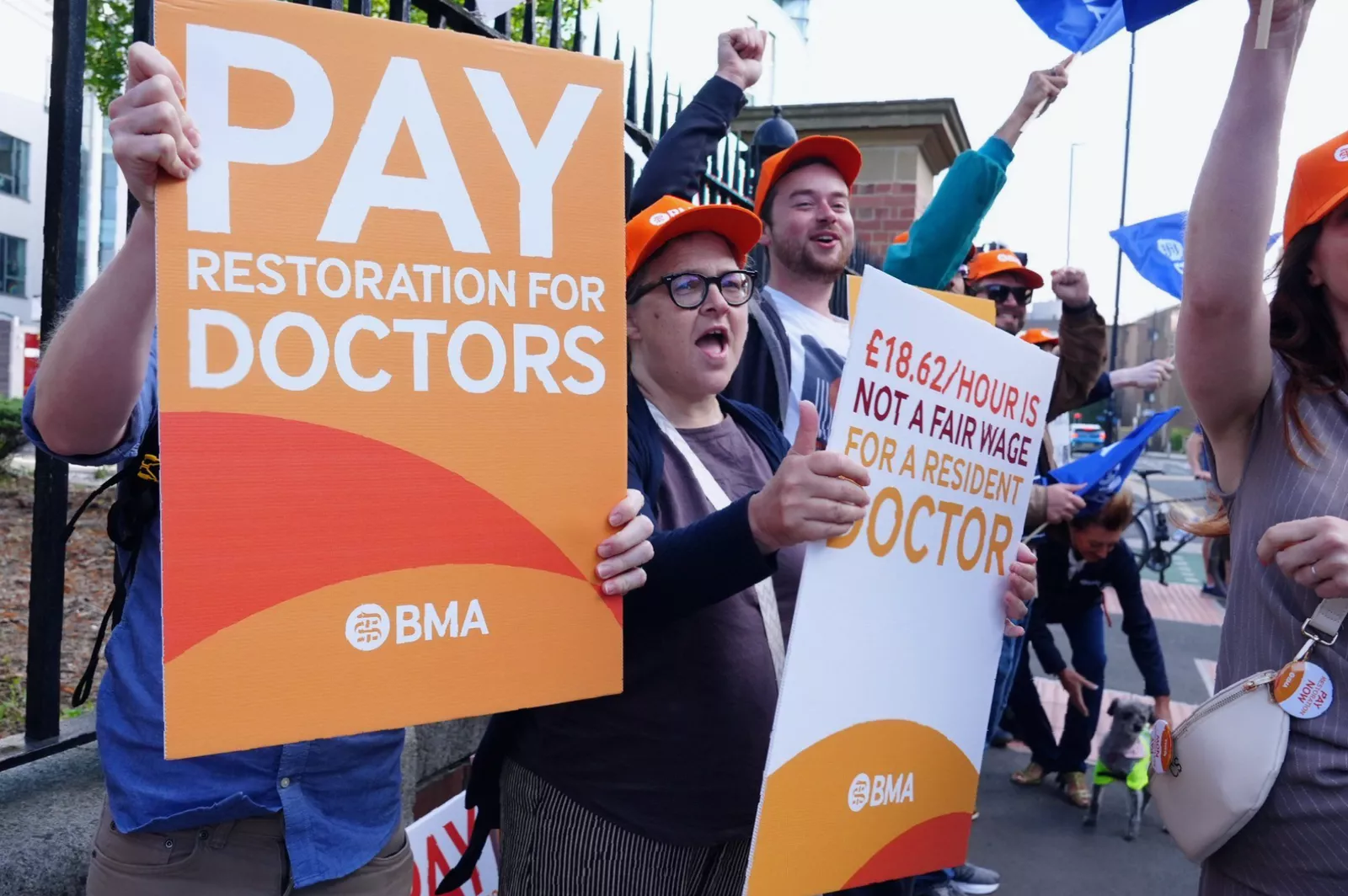
The immediate catalyst is a six-day walkout by resident doctors—the title now used for junior doctors—scheduled to begin on Tuesday, following the Easter bank holiday weekend. This will be the 15th round of strikes since 2023, underlining a bitter dispute over pay that has dragged on for more than two years with no resolution. Health leaders warn the timing risks a perfect storm of reduced staffing, holiday pressures, and rising patient demand.
The financial toll is immense. The overall cost of NHS strikes is estimated in the billions; a recent five-day strike alone was estimated to have cost between £240 million and £300 million. The forthcoming six-day action is expected to pile further strain on a system already grappling with waiting lists and underlying staff shortages.
The Government and Union at Loggerheads
The strike was called after the British Medical Association (BMA) rejected a government pay offer. Ministers argued the deal was worth up to 7.1 per cent this year and would have brought total pay rises over three years to around 35%, potentially lifting some earnings above £100,000. Prime Minister Keir Starmer has accused doctors of having “recklessly” walked away from this deal, while Health Secretary Wes Streeting labelled the planned action “unnecessary and damaging” and “morally reprehensible”.
The BMA disputes the government’s characterisation of the offer. Dr Jack Fletcher, chair of the BMA’s resident doctors’ committee, claimed ministers “effectively moved the goalposts on the deal at the last minute,” and that the phased approach meant pay would “barely tread water” against inflation. The union insists it remains open to talks if a “credible” offer is tabled.
In a significant escalation, the government has withdrawn an offer of 1,000 extra specialist training places, which was conditional on the BMA accepting the pay deal. Mr Starmer has given the union a 48-hour ultimatum to reconsider.
The Implications of a New Workforce Model
The pivot towards physician associates (PAs) and overseas doctors forms a central pillar of the proposed new model, but it is not without controversy or risk. PAs are trained on a medical model to perform tasks like taking histories, conducting examinations, and diagnosing illnesses, but they are not medically qualified doctors. They currently lack formal professional regulation and independent prescribing rights in the UK. Advanced clinical practitioners (ACPs) are usually senior nurses with enhanced skills.
While seen by NHS leaders as a way to provide cost-effective, routine clinical support and increase workforce resilience, critics argue it risks papering over deep-seated staffing shortages rather than solving them. There is an ongoing professional debate about their integration and the potential for role confusion with fully qualified doctors.
Increasing reliance on overseas recruitment also presents challenges. Official data shows the UK already has a higher proportion of foreign-trained doctors than the EU and OECD averages. While this is a vital source of staff, it underscores a failure to train sufficient domestic doctors. Professor Carl Heneghan, Director of Oxford University’s Centre for Evidence Based Medicine, points to data showing the UK has approximately three doctors per 1,000 people, below the EU-15 average of 3.8. He warns the NHS faces a significant shortfall, needing tens of thousands more doctors to reach European levels.
Professor Heneghan has criticised the current rhetoric, stating: “It is wholly unacceptable for ministers and appointed health chiefs to play politics with people’s lives.” Public health expert Dr Tom Jefferson of Oxford University questioned the practicality of the shift, asking: “Tell me how you are going to run a service without juniors?”
Sir Jim Mackey has himself acknowledged the danger, noting that a robust “pipeline” of future consultants is essential, highlighting the long-term risk of undermining medical training and senior recruitment.
Despite the fierce public exchanges and the imminent strike, negotiations are understood to be continuing behind the scenes. Dr Fletcher of the BMA has stated, “We believe there is a deal there to be done,” and that the union is seeking to talk again with the government. The outcome will determine not only the immediate resolution of the pay dispute but potentially the shape of the NHS workforce for a generation.