

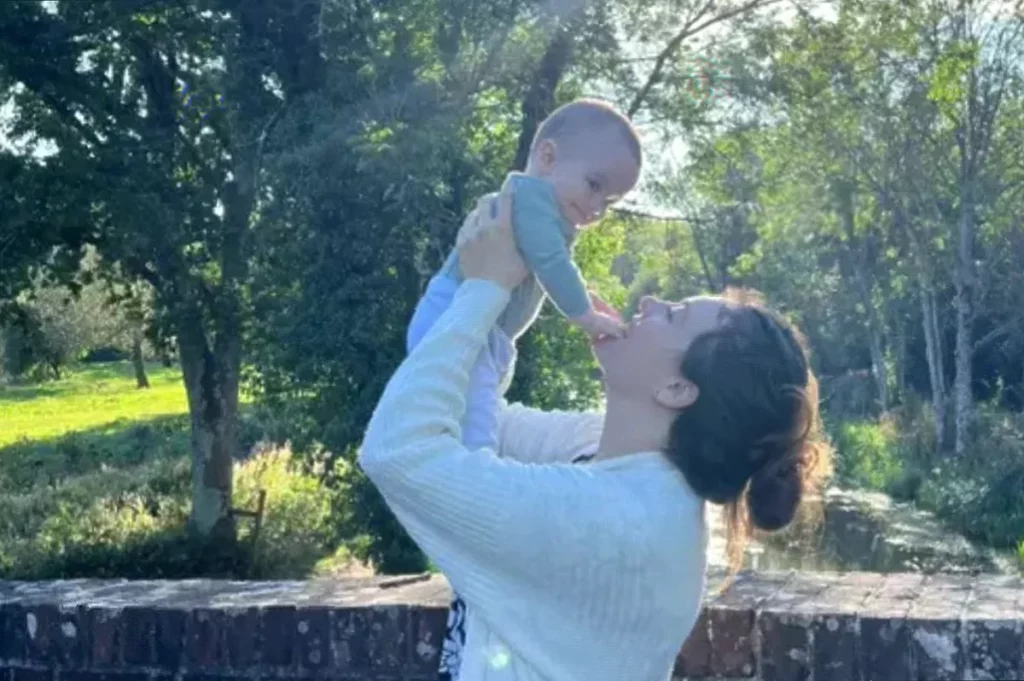
In a landmark case of fetal medicine, a baby boy received a life-saving blood transfusion while still in his mother’s womb, a procedure believed to make him the youngest person in Britain ever to undergo such an intervention.
The patient, Arthur Ransom, was just 16 weeks’ gestation and roughly the size of an avocado when the urgent operation was performed at St George’s Hospital in London in 2024. His mother, Maisie Ransom, a 30-year-old primary school teacher from Cranleigh, Surrey, had contracted parvovirus B19, commonly known as slapped cheek syndrome.
While typically a mild childhood illness, parvovirus poses a serious threat during pregnancy, with a risk of transmission to the fetus. For Arthur, the virus attacked his developing red blood cells, causing severe anaemia. This triggered a dangerous accumulation of fluid around his organs, a condition known as hydrops fetalis, which ultimately led to heart failure.
The Fight for a Life Measured in Millimetres
“The experience was absolutely terrifying,” Maisie Ransom recalled. “The doctor said it was 50/50 whether he would make it or not.” The medical team faced an extraordinary challenge due to Arthur’s minuscule size. “He was so small the doctors were working within millimetres,” she explained. “Without that blood, he would not have made it. His organs were failing, his heart was completely enveloped in fluid and it was struggling to pump.”
The procedure, an intrauterine transfusion (IUT), is one of the most specialised in modern medicine. Under continuous ultrasound guidance, a needle is used to deliver specially prepared donor red blood cells directly into the fetus, typically via the umbilical cord. For Arthur, the transfusion delivered vital oxygen, enabling the fluid to be reabsorbed and restoring his heart function.
Dr Luci Etheridge, consultant paediatrician and chief medical officer at St George’s Hospital, stated: “For babies like Arthur, a blood transfusion while still in the womb can mean the difference between life and loss.” The hospital’s children’s services are rated “Outstanding” by the Care Quality Commission. Survival rates for the procedure are high for fetuses without hydrops, but drop to around 75% for those, like Arthur, who have developed the condition.
The Stringent Search for the Perfect Donor
The blood that saved Arthur’s life did not come from a standard donation. The eligibility criteria for donors whose blood is used in IUTs are exceptionally stringent, due to the profound vulnerability of the unborn patient.
According to NHS Blood and Transplant (NHSBT), donors must be male, to eliminate any risk from antibodies that can develop during female pregnancies. They must have O-negative blood, the universal donor type, to ensure compatibility. Crucially, their blood must also test negative for the Kell antigen—a protein on red blood cells that can cause dangerous immune reactions—and for cytomegalovirus (CMV), a common virus that could be devastating to a fetus with an immature immune system.
This rare combination of traits means only a tiny fraction of the population qualifies. The donated blood is then processed into compact packs of highly concentrated red blood cells for the delicate procedure. NHSBT issues approximately 180 of these specialised units across the country each year.
Dr Anne Kelly, paediatric transfusion and components clinical expert for NHSBT and a consultant haematologist at Great Ormond Street Hospital, emphasized the rarity of these interventions: “Intrauterine transfusions are very rare. They are only done in specialised units when absolutely needed to help save a life.”
This effort is part of a wider NHSBT initiative to secure “precision-matched” blood for vulnerable patients, which includes a large-scale project to DNA-test donors to identify those with rare blood types. The service also manages the International Rare Donor Panel, a global network established in 1965 to source extremely rare blood units when needed.
A Family’s Gratitude and the Donors Behind the Scenes
Arthur was born healthy in January 2025. “Arthur’s doing great now, he’s a really chirpy little boy, reaching all the milestones. He keeps us on our toes,” his mother said. Her family’s experience has led her to partner with NHSBT to thank the unseen donors who make such procedures possible.
“I think every day about how lucky I am,” Mrs Ransom said. “I don’t think there are words to describe how thankful I am to blood donors… I do often wonder who the person to donate was, as I would love to tell them that their decision to give blood gave my boy the chance to be here.”
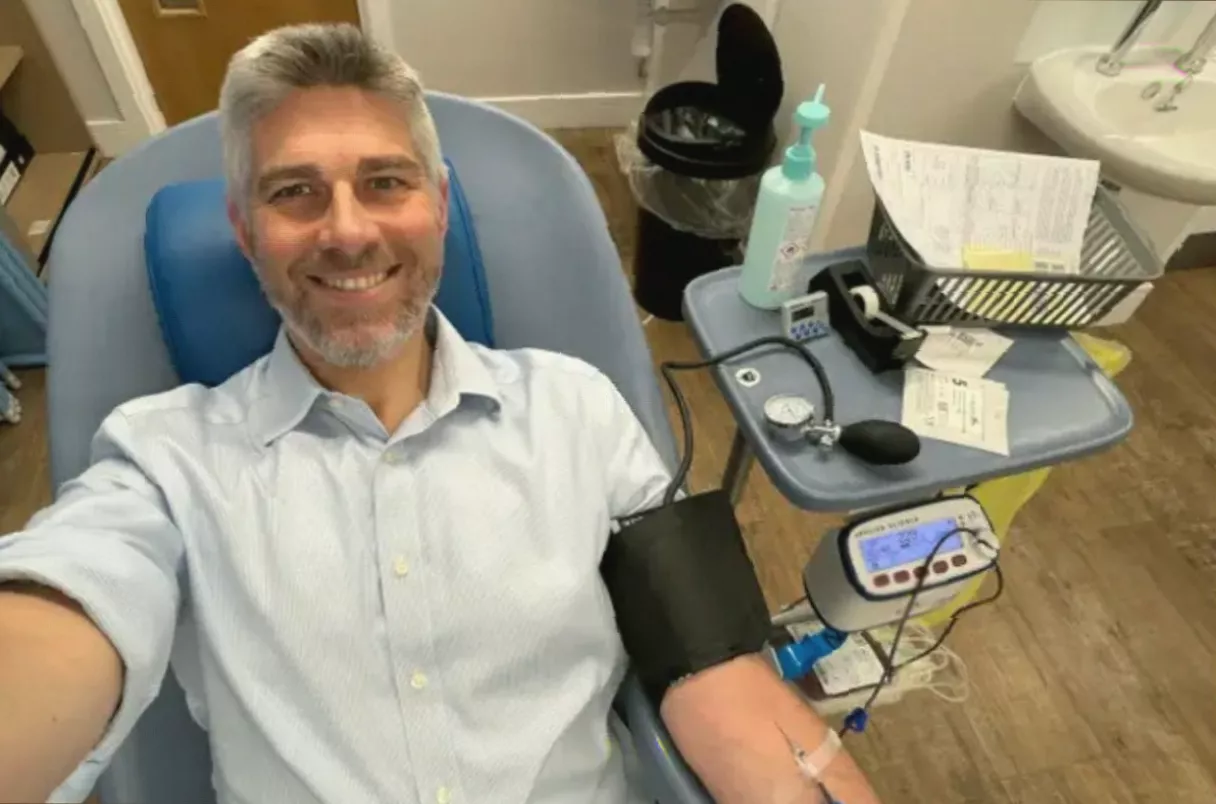
The donation authority has recognised eight individuals whose blood has been most frequently used for these rare IUT procedures. Among them is Paul Bickley, a 45-year-old insurance company vice president from Richmond. “Hearing my blood was used in this way almost made me cry, to think a very small act of kindness on my part could have such a massive impact. It was mind-blowing and miraculous,” he said.
Another, David Smith, a 64-year-old retired heating and ventilation engineer from Westminster who has donated over 80 times, offered a simple rationale for his commitment: “You can’t not do it if you can help babies, you have to.”