

Close Menu
    Useful
    • About Us
    • Contact Us
    • Advertise With Us
    • Health Explainers
    • Our Editorial Team
    Facebook
    HealthNewsDaily.co.uk
    • Home
      • Explainers
    • NHS

      British Medical Association may lay off up to a third of employees amid financial crisis

      4 July 2026

      GB Mums: lenient justice, NHS maternity and child abuse sentences leave children unprotected

      3 July 2026

      Advance heatwave plans needed, not last-minute fixes, Letters say

      3 July 2026

      NHS calls for PMOS checks in women with irregular periods

      1 July 2026

      Months-long neglect of four cancer signs by third of Britons blamed on GP appointment crisis

      30 June 2026
    • Health Policy

      Streeting demands NHS bosses appear before MPs over Nottingham maternity scandal

      4 July 2026

      Hospital waiting list patients to get three weeks’ advance warning under NHS England plans

      3 July 2026

      Britons back morning-after pill sales in corner shops, poll finds

      1 July 2026

      Maternity investigator Ockenden says Amos review offers no fresh insights

      30 June 2026

      Bereaved mother warns England maternity commissioner role poses danger

      30 June 2026
    • Mental Health

      Letter draws attention to parents of adult children neither employed nor studying

      3 July 2026

      England sees one million children seeking help for anxiety and autism

      29 June 2026

      Joanne McNally says bulimia and breakdown in her twenties ultimately transformed her

      27 June 2026

      Dopamine sites become internet’s most dismal craze

      27 June 2026

      Blue Heron film review: a serious, nuanced examination of childhood trauma in 1990s Canada

      25 June 2026
    • Wellness & Lifestyle

      Weight-loss drugs become new battleground after Brexit rows

      4 July 2026

      Hair transplant surgeon champions specific shampoo routine for greater volume and shine

      4 July 2026

      20-minute technique could help England fans stay awake for Mexico World Cup tie

      3 July 2026

      Doctor warns cutting back on fat could sabotage low-cholesterol diet

      3 July 2026

      NHS to cover cost of shopping for 30-minute daily walkers

      3 July 2026
    • Disease & Prevention

      South-east England forecast to reach 34C as week-long heatwave hits

      4 July 2026

      French fatalities jumped 30% during peak week of record June heatwave

      4 July 2026

      Toddler’s tantrums mistaken for typical toddler phase before grave diagnosis

      3 July 2026

      600,000 mosquitos released over Washington DC to exterminate biting pests

      2 July 2026

      Remaining seated for 30 minutes or more raises risk of cancer death

      2 July 2026
    • Treatment & Research

      Woman, 24, had 12 Botox vials injected into face for non-cosmetic reason

      4 July 2026

      Statins: the purpose and risks of cholesterol medication

      3 July 2026

      Extreme fatigue from Long Covid hampers business owner’s ability to run firm

      3 July 2026

      Five-minute habit can cut cancer risk by more than 20%

      2 July 2026

      Over-40s with obesity show cholesterol and blood pressure levels within normal BMI range, research finds

      2 July 2026
    HealthNewsDaily.co.uk
    • NHS
    • Health Policy
    • Mental Health
    • Wellness & Lifestyle
    • Disease & Prevention
    • Treatment & Research
    Home » NHS » NHS advanced practice roles do not threaten patient safety, correspondents argue
    NHS

    NHS advanced practice roles do not threaten patient safety, correspondents argue

    James WhitfieldBy James Whitfield29 April 2026
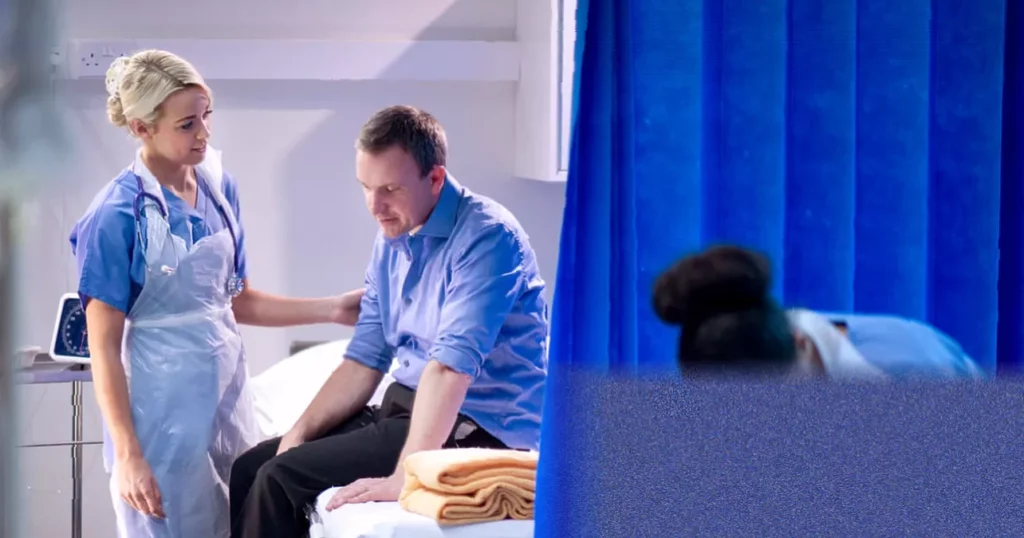
    An advanced clinical practitioner assessing a patient in an NHS hospital ward

    Advanced practitioners are not unsafe substitutes, but vital parts of the NHS workforce – a role backed by evidence and professional governance, yet increasingly caught in a political battle over who should deliver care.

    BMA’s concerns over ‘substitute doctors’

    The British Medical Association, the trade union representing doctors, has claimed that nearly half of NHS trusts (48%) use advanced clinical practitioners (ACPs) to cover rota gaps, characterising such staff as unsafe “substitute doctors”. The BMA has warned that encouraging non-medical clinicians to work outside their competency or without adequate supervision risks patient safety and undermines the training of medical students and junior doctors. It says it supports multidisciplinary working, but argues that the current use of ACPs blurs professional lines in a way that endangers patients.

    These concerns have been amplified by specific cases, including an incident at Rotherham General Hospital and a GP practice, where failures attributed to advanced practitioners were reported.

    Evidence supports advanced practice

    Advanced clinical practitioners and their supporters have pushed back strongly. One letter writer, an advanced clinical practitioner in acute respiratory medicine, told this website that every shift she assesses and manages patients with severe chronic obstructive pulmonary disease exacerbations, pulmonary embolisms, pneumonia and acute respiratory failure. She takes clinical responsibility within a consultant-led multidisciplinary team, underpinned by a master’s-level qualification and more than a decade of specialist experience. “This is not doctor substitution,” she wrote. “This is advanced practice: a distinct, evidence-based clinical role that enhances patient care rather than compromising it.”

    Another letter, from Helena Scott of Dumfries, highlighted what she called a “critical conflict of interest” in the BMA’s position. “The British Medical Association is the trade union for doctors. It has a direct financial and professional interest in limiting the expansion of advanced practitioner roles.” Under the BMA’s own conflict of interest policy, members are required to declare potential conflicts in advance, especially when speaking in debates or making decisions where a secondary interest – such as financial gain or professional reputation – may influence judgment. Critics argue the BMA’s campaign against ACPs amounts to professional boundary protection dressed as patient safety.

    The evidence, Scott continues, does not support the claim of a safety gap. A Cochrane systematic review published in February examined 82 randomised studies involving more than 28,000 patients across 20 countries. It found little to no difference between nurse-led and doctor-led care on critical outcomes including mortality, patient safety events and clinical outcomes. On some measures, nurses performed marginally better. The review noted that patients are likely to have similar or better outcomes and may be slightly more satisfied with their care when treated by nurses. “Context matters,” the review cautioned, but the overall conclusion is clear: nurse-led care is as good as doctor-led care in many settings.

    Advanced practice itself is defined as a level of practice, not a specific role or title, requiring additional post-graduate education – typically a master’s qualification – and experience beyond initial registration. It is built on four pillars: clinical practice, education, research, and leadership or management. ACPs work across nursing, pharmacy, physiotherapy, paramedicine and occupational therapy, and their roles are often tailored to the needs of a specific service. The Nursing and Midwifery Council has set out principles for advanced practice, emphasising that ACPs work alongside doctors, not as substitutes.

    A third letter, from Lynn Malloy of Crouch End, London, described her experience of advanced nurse practitioners in stroke services as “exemplary”. She noted that many doctors acknowledge how much they have learned from other professions, particularly in their formative years, and that the NHS functions best through cooperative, respectful teamwork – “something the BMA seems hesitant to fully acknowledge”.

    Systemic failures behind the safety debate

    The cases at Rotherham General Hospital and the GP practice cited by the BMA are seen by practitioners as failures of organisational governance, not evidence that advanced practitioners are inherently unsafe. Past reports into Rotherham have highlighted governance issues, including inadequate oversight of patient safety and repeated identification of problems without consistent action. “Poorly supervised practice causes harm, regardless of whether the practitioner holds a medical degree,” the respiratory medicine ACP wrote. The real question, according to Helena Scott, is “why clinicians of any background are being deployed in roles without adequate supervision and governance. That is a workforce and management failure.”

    That workforce failure is compounded by the NHS’s chronic staffing crisis. Years of inadequate workforce planning, lack of investment, and difficulties with staff retention have left the health service struggling to fill rotas. The government has promised a refreshed workforce plan to increase staff numbers and improve retention, but meanwhile, industrial action has added to the strain. Since the end of 2022, at least 1.7 million healthcare appointments have been rescheduled due to strikes by doctors and other staff. The ACP letter pointed to the “striking irony” of the BMA raising patient safety concerns while “sustained industrial action has resulted in hundreds of thousands of cancelled appointments and procedures, placing the NHS under extraordinary strain”.

    Missed or delayed diagnoses by doctors are also a significant but largely invisible problem. Estimates suggest diagnostic errors occur in 10% to 15% of all medical cases. Between 2017 and 2021, there were 8,718 claims made to the NHS for failure or delay in diagnosis, costing more than £1.14 billion. Around one-third of UK patients believe they have experienced a misdiagnosis. The conditions most frequently involved include cancer, stroke, sepsis, heart attacks and fractures. Over half (58%) of diagnostic errors in general practice occur during GP consultations. “Missed diagnoses by doctors are endemic and largely invisible,” Scott wrote. “The same clinical failure carries a different narrative weight depending on who commits it.”

    The amplification of advanced practitioner errors, while equivalent failures by doctors pass unremarked, is not a patient safety campaign, she argued. “It is a professional boundary dispute dressed as one.” Attributing systemic workforce and management failures to a single professional group is a convenient distraction – one that the evidence does not support.

    Cancer Junior Doctors Patient Safety Sepsis Stroke
    Share. Facebook Twitter LinkedIn WhatsApp Telegram
    James Whitfield
    James Whitfield

    Editor-in-Chief
    James Whitfield is the Editor-in-Chief of Health News Daily, bringing over 15 years of experience in health journalism. A former health correspondent for regional UK publications, James oversees editorial policy, standards and final approval of all published content. He specialises in NHS policy, healthcare reform and the political decisions that shape the UK's health system. James is committed to delivering accurate, transparent and trustworthy health reporting for UK readers.
    · 15+ years in health journalism, former regional health correspondent, newsroom editorial leadership
    · NHS funding and workforce planning, waiting list policy, primary care access, GP and dentistry shortages, Continuing Healthcare assessments, health legislation and DHSC decisions

    Related Posts

    NHS

    British Medical Association may lay off up to a third of employees amid financial crisis

    4 July 2026
    NHS

    GB Mums: lenient justice, NHS maternity and child abuse sentences leave children unprotected

    3 July 2026
    NHS

    Advance heatwave plans needed, not last-minute fixes, Letters say

    3 July 2026
    NHS

    NHS calls for PMOS checks in women with irregular periods

    1 July 2026
    Join Our Community & Win

    Each month we select one lucky follower to receive a prize from our partners. Follow us on our social channels for your chance to win.

    • Facebook
    Latest
    Health Policy

    Streeting demands NHS bosses appear before MPs over Nottingham maternity scandal

    4 July 2026
    Disease & Prevention

    South-east England forecast to reach 34C as week-long heatwave hits

    4 July 2026
    Treatment & Research

    Woman, 24, had 12 Botox vials injected into face for non-cosmetic reason

    4 July 2026
    NHS

    British Medical Association may lay off up to a third of employees amid financial crisis

    4 July 2026
    Wellness & Lifestyle

    Weight-loss drugs become new battleground after Brexit rows

    4 July 2026
    Wellness & Lifestyle

    Hair transplant surgeon champions specific shampoo routine for greater volume and shine

    4 July 2026
    News Categories
    • NHS
    • Health Policy
    • Mental Health
    • Wellness & Lifestyle
    • Disease & Prevention
    • Treatment & Research
    Help
    • About Us
    • Contact Us
    • Advertise With Us
    • Health Explainers
    • Our Editorial Team
    About Us
    About Us

    Health News Daily provides trusted UK health news, covering NHS updates, medical research, public health and wellbeing with clear and reliable reporting.

    Facebook
    • Cookie Policy
    • Privacy Policy
    • Complaints Policy
    • Corrections Policy
    • AI Disclosure Policy
    • Editorial Policy & Ethics
    • Accessibility Statement
    • Medical Disclaimer
    • Terms & Conditions
    • Sponsored Content Disclosure
    • Copyright Notice
    © 2026 Healthnewsdaily.co.uk. All rights reserved.

    Type above and press Enter to search. Press Esc to cancel.