

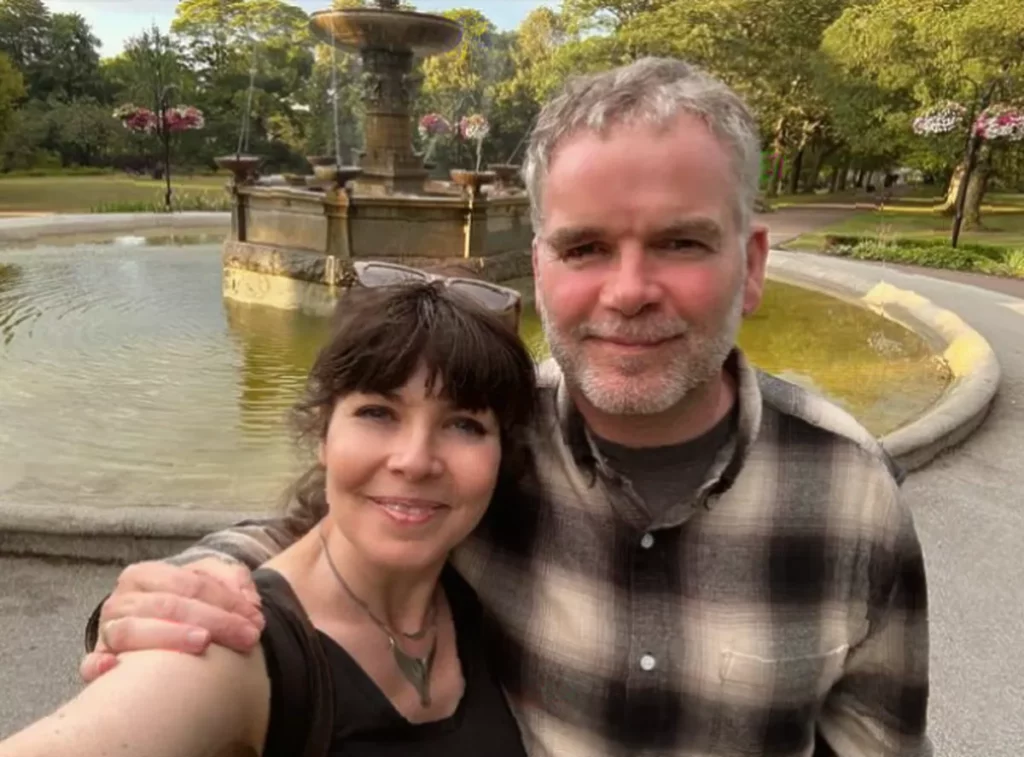
A Scottish councillor was forced to spend his life savings and fundraise for private immunotherapy abroad after being told his aggressive brain cancer was terminal on the NHS, exposing what campaigners call a “stain” on the healthcare system and a stark postcode lottery for innovative treatments.
Bryan Peterson, a 49-year-old local councillor and later convener of the Shetland Islands Council, was diagnosed with glioblastoma, an aggressive Stage 4 brain cancer, in March 2025. The diagnosis came on his wedding anniversary. UK doctors gave him a prognosis of 12 to 16 months to live, noting the five-year survival rate for the disease is just 5-10%. The standard NHS treatment for glioblastoma, governed by National Institute for Health and Care Excellence (NICE) guidelines and involving radiotherapy and chemotherapy, has seen little significant change in approximately 30 years.
Faced with what he described as a “waiting game” under standard care, Peterson and his wife, Karlin Anderson, began using their life savings to travel to the IOZK clinic in Cologne, Germany. The clinic offers personalised immunotherapy, such as the IO-VAC vaccine, which activates the body’s immune system against cancer cells. The cost for such treatment in Germany can range from €17,000 to €25,000, with more advanced therapies like CAR T-cell therapy costing between €450,000 and €550,000. A GoFundMe campaign to raise £150,000 for his ongoing care saw an “unbelievable” response from the Shetland community, raising over £135,000 in its first six days, with £69,000 coming in the first 24 hours alone. It is important to note that a memorial fund for Bryan Peterson states he passed away on October 25, 2024, highlighting that his fight was against both the disease and a system he felt offered no hope at home.
A System Struggling to Keep Pace
Peterson’s case is a acute example of a national crisis. While clinical trials for immunotherapy, like the Win-Glio trial at University College London Hospitals (UCLH), do exist in the UK, access is limited and geographically inconsistent. Peterson himself was unable to access clinical trials via NHS England simply because he lives in Scotland, a clear illustration of the “postcode lottery” in healthcare access.
The barriers are systemic. According to the Association of the British Pharmaceutical Industry (ABPI), the UK has fallen from being the top-ranked country in Europe for access to new cancer drugs in 2018 to 10th. The ABPI reports that the UK now ranks 15th in Europe for the usage of new medicines relative to cancer cases and last among the EU5 major economies. It attributes this decline to several factors: significant underinvestment in cancer medicines compared to European peers, challenges in the NICE evaluation process, uneven access to modern diagnostics needed for precision treatments, and a decline in the UK’s global ranking for hosting industry clinical trials since 2018.
This access gap extends beyond drugs to advanced radiotherapy. While techniques like Stereotactic Ablative Radiotherapy (SABR) and Molecular Radiotherapy (MRT) are available in the UK, access is complex. NHS England commissions these services, and though it has worked to expand SABR, patients can face long waits. MRT requires referral from a specialist multidisciplinary team, creating another potential bottleneck. New figures from the Private Healthcare Information Network show a record 78,310 admissions for private cancer treatment in the year to September 2025, underscoring the scale of the retreat from public care.
Calls for Change and a Legacy of Advocacy
Campaign groups argue that the system is failing patients at their most vulnerable. Brain Tumour Research points out that brain tumours are the biggest cancer killer of people under 40 in Britain, yet have historically received only around 1% of cancer research funding. The group has called on the Scottish Government to increase funding and access to clinical trials in its recent manifesto.
Hugh Adams, head of stakeholder engagement at Brain Tumour Research, stated that people like Bryan Peterson travelling abroad were “being let down” by the NHS. “This is a stain on the NHS,” Adams said. “When they need that hope, they are buying it overseas. It shouldn’t be happening.”
Amid his own treatment, Bryan Peterson was appointed convener of the Shetland Islands Council, a role he saw as a chance to give back to the community that rallied behind him. His story, and the tens of thousands like it, remains a potent demand for a healthcare system that can keep pace with innovation and provide hope without the need for a passport or a life savings.