

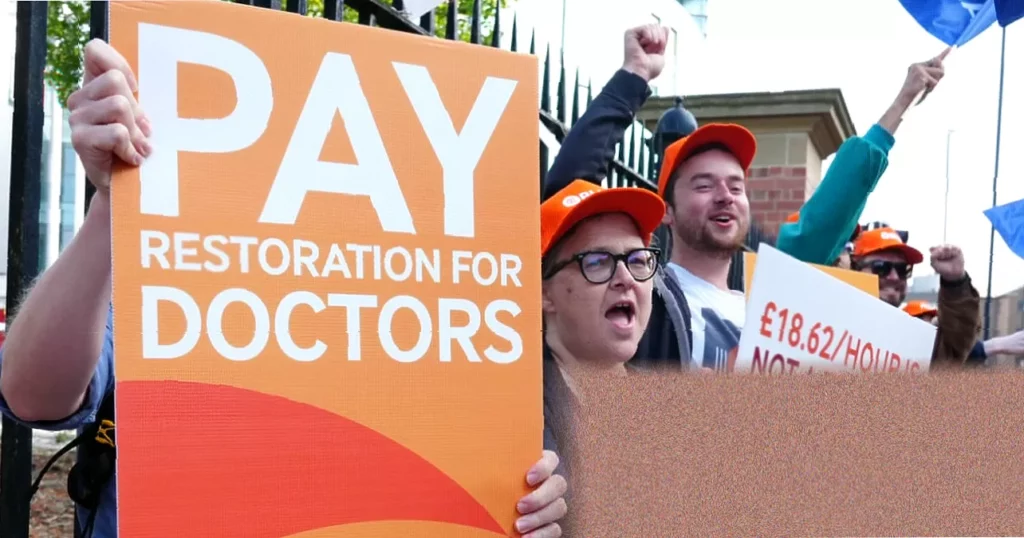
Across the National Health Service, a profound sense of conflict and exhaustion is taking hold among doctors as the cycle of industrial action by resident doctors grinds on. The strikes, driven by a bitter pay dispute, are not just causing external disruption but are creating deep internal divisions, with many medical professionals feeling torn between supporting colleagues and fearing for their patients and the health service itself.
The Personal Toll of Endless Strikes
The human cost of the dispute is felt daily in hospitals. Dr Helen Holt, a consultant physician and chair of the medical staff committee at University Hospitals Dorset, articulates a widespread anxiety about cancelled appointments and procedures. She describes colleagues who are exhausted from covering unfamiliar work and those feeling uncomfortable about the financial impact on the NHS from unwanted overtime payments. This sentiment reflects a significant shift; where many consultants reluctantly supported initial industrial action to back junior colleagues, they now see how divided resident doctors themselves have become and long for a resolution. The skills of communication and diplomacy, so prized in medicine, are now seen as critically needed in politics to end a crisis damaging the NHS.
This division is starkly illustrated by Dr Peter Davis, a BMA member in Bristol, who states he cannot support the latest strike. He observes that in his own area of practice, none of the resident doctors are striking, with some even attending educational sessions run during the action, and that no clinical activity has been cancelled. His comments point to a fracture in the united front often presented during industrial disputes, suggesting support for action may be waning on the ground.
The Historical Pay Argument and a Shifting Landscape
At the heart of the dispute is the British Medical Association’s demand for “full pay restoration,” arguing that resident doctors’ real-terms pay has fallen by 26% since 2008/09. The union chose 2008 as its benchmark, a year when pay was at its highest point. However, critics like Dr Davis contend this comparison is flawed, as working conditions then included far longer hours. He argues that today, many resident doctors work less than 40 hours a week, in part because higher pay and an annual bonus incentivise less than full-time work.
The government, represented by Health Secretary Wes Streeting, has stated that resident doctors have already been given a “generous offer,” highlighting substantial past rises including an average 22.3% increase over two years from a deal accepted in a 2024 referendum. The state’s position is that further offers, like an average 4.9% rise on the table, are fair. Yet, negotiations have repeatedly broken down, with the BMA alleging the government has shifted goalposts and stretched offers, amounting to real-terms cuts. This deadlock led to a six-day strike scheduled for April 2026, showing the dispute’s intractable nature even after a previous settlement.
The financial carnage is immense. Sir Jim Mackey, Chief Executive of NHS England, states the strikes have been “deliberately timed to cause havoc,” with the total cost to the health service estimated between £1.5 billion and £1.7 billion since April 2023. While the NHS has managed to maintain around 95% of planned elective activity during strikes thanks to non-striking staff, the disruption has been vast, with approximately one million appointments and procedures cancelled between early 2022 and early 2024. Research into the 2016 strikes indicates such disruption can have unequal consequences, with Black patients experiencing higher readmission rates in hospitals more exposed to the action.
The Looming Threat of Replacement
Facing relentless strikes, NHS leadership is actively pursuing a strategic shift that could permanently alter the medical workforce. Sir Jim Mackey has warned the NHS will accelerate plans to design clinical models less reliant on resident doctors and be “much more resistant” to demands. This veiled threat of replacement, noted by Dr Davis, is already materialising as Advanced Clinical Practitioners (ACPs) take on more roles permanently.
ACPs are healthcare professionals from nursing, pharmacy, or allied backgrounds, educated to master’s level, who operate with a high degree of autonomy. They are seen as a way to enhance team capacity, improve continuity of care, and bridge gaps during shortages. Their permanent presence in departments offers a consistency that rotating resident doctors, who change posts every few months, cannot. This move signifies a potential long-term re-engineering of NHS staffing in response to the industrial action, a consequence that may extend far beyond the current pay dispute.
As the strikes persist, public sympathy has eroded. Polls show a decrease in support over time, with a majority now opposing further action. Commentators like Polly Toynbee have contrasted resident doctors’ pay, which starts around £40,000 and rises to over £76,500 in later training—figures above the national median of £39,000—with the BMA’s demands. Within the profession and without, the conflict has sown exhaustion and raised fundamental questions about the future shape of hospital care in the NHS.