

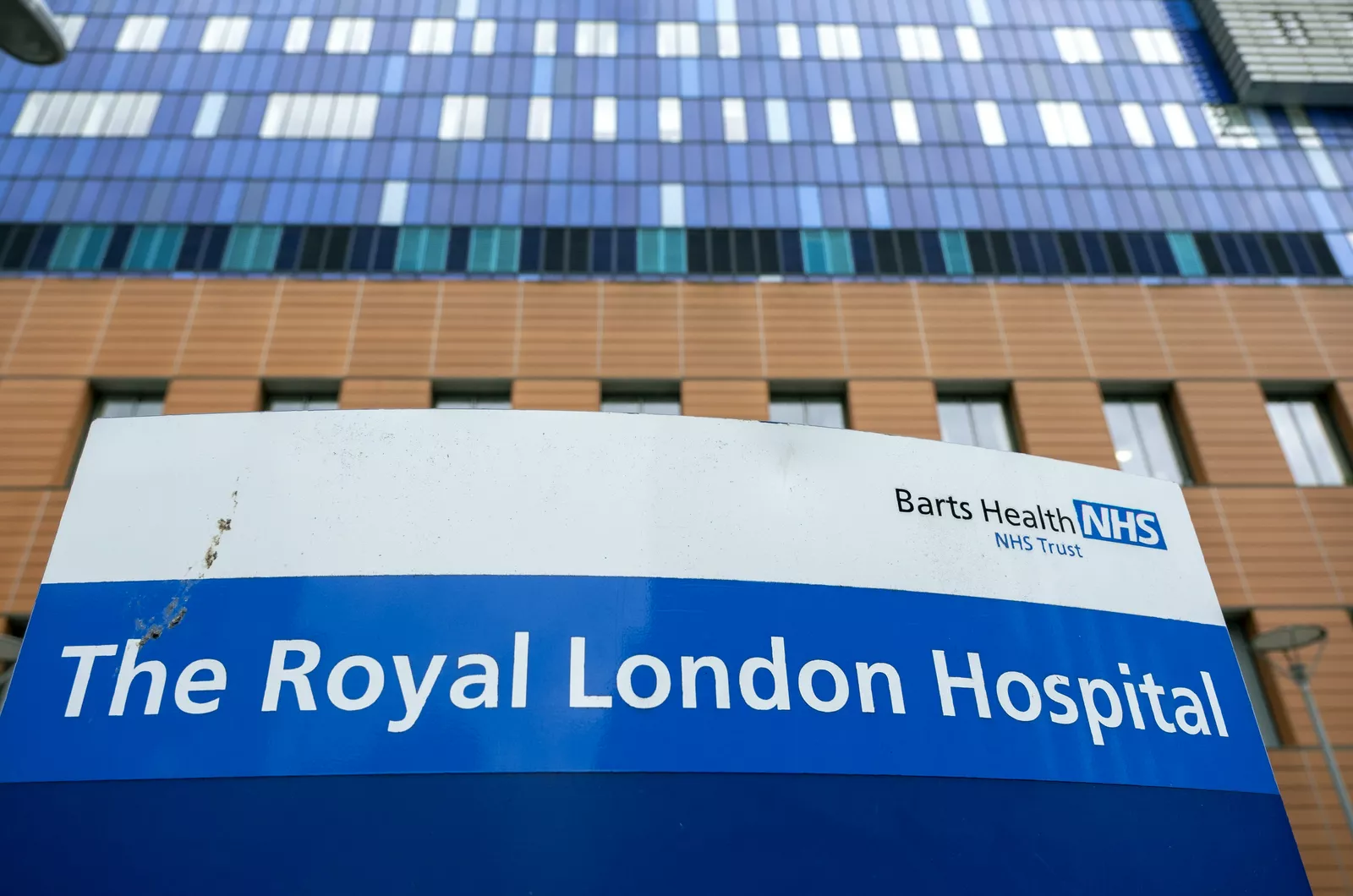
A leading neurosurgeon is pursuing a High Court claim for more than £200,000 against an NHS trust after a hospital lift he was in plunged four floors, leaving him with what he describes as life-changing injuries.
Dr Steven Tominey, a Neurosurgical Specialty Registrar based at the Royal London Hospital in Whitechapel, alleges the traumatic incident has caused severe physical disability and psychological harm, impacting his ability to perform his demanding profession. The Barts Health NHS Trust has admitted a breach of its duty of care but is contesting the extent of the damages claimed.
The moment the lift fell
According to details presented at the High Court by his legal team, the accident happened in the early hours of March 15, 2024, between 7am and 7.30am, as Dr Tominey was finishing a night shift. He entered the lift on the 12th floor. The carriage began to shake before suddenly dropping approximately four floors, coming to an abrupt stop around the 8th floor.
Dr Tominey told the court he was convinced he was going to die during the fall. His left leg sustained the full force of the impact as his weight transferred through it. In severe pain and unable to stand to reach the emergency button, he lowered himself to the floor and crawled to activate the alarm. He was rescued between five and ten minutes later and taken to the accident and emergency department within the same hospital.
Life-altering injuries and ongoing struggle
An X-ray revealed Dr Tominey had suffered a fractured left tibial plateau and fibula head – a devastating break to the knee and lower leg. This injury required major surgery, but the initial operation did not set correctly. Consequently, he was forced to undergo a second procedure to shorten one of his legs.
The consequences are permanent. He now walks with a pronounced limp and lives with ongoing pain. His lawyers state this directly affects his surgical work, as he struggles to be on his feet for the long periods required in theatre. Beyond the physical damage, the trauma of the incident triggered significant depression and symptoms of post-traumatic stress disorder (PTSD), for which he has undergone a course of Eye Movement Desensitisation and Reprocessing (EMDR) therapy.
Dr Tominey’s legal claim argues that the accident has “highly likely” held back his career progression and caused profound disruption to his personal life. His representatives contend that Barts Health NHS Trust, as his employer, owed him a non-delegable duty to provide a safe workplace under legislation such as the Health and Safety at Work etc. Act 1974.
A legal dispute over damages
While the Trust has formally admitted a breach of duty, its defence challenges key elements of Dr Tominey’s claim. Court documents show the Trust has “put the claimant to proof as to the nature, cause, occurrence and happening of the alleged accident”. Furthermore, it disputes the causation of the damages he has suffered and the substantial amount of compensation sought, which exceeds £200,000.
The incident has cast a spotlight on wider concerns regarding NHS infrastructure. It emerged that in the 24 hours preceding Dr Tominey’s accident, another lift at the Royal London Hospital had also fallen. Hospital managers subsequently shut down four other lifts for urgent safety checks.
This was not an isolated national event. The day before, on March 14, a ceiling collapsed onto a patient on life support in an intensive care ward at the Princess Alexandra Hospital in Harlow, Essex. These incidents have been cited by critics as evidence of a crumbling NHS estate following years of underinvestment. The Royal London Hospital itself was rated as “Requires Improvement” overall in its last full Care Quality Commission report in 2016, with some services deemed “Inadequate”.