

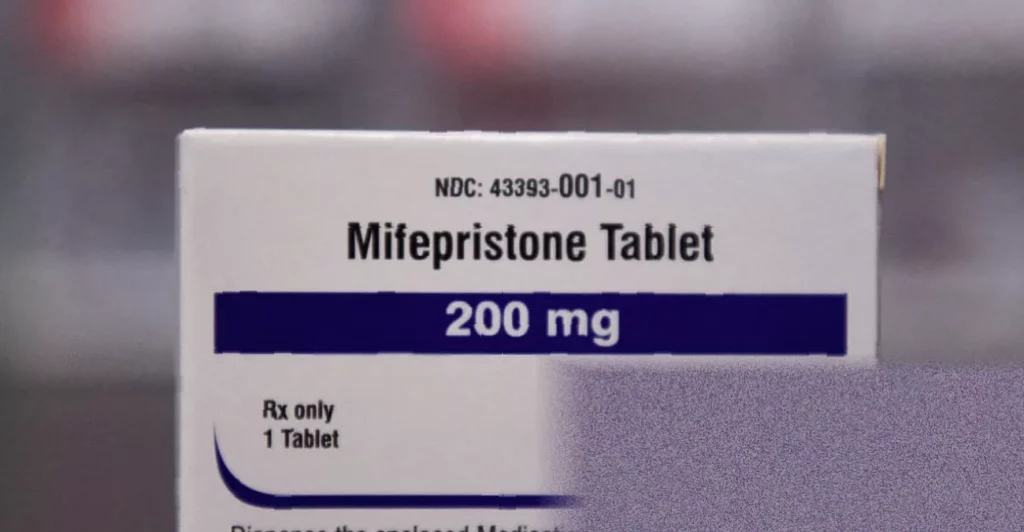
The US Supreme Court has temporarily reinstated nationwide access to mifepristone, blocking a lower court ruling that threatened to upend the availability of the abortion pill used in nearly two-thirds of pregnancy terminations across the country.
Supreme Court intervention
Justice Samuel Alito signed an order on Monday pausing a ruling from the US Court of Appeals for the Fifth Circuit that had imposed new limits on the drug. The Fifth Circuit’s decision, issued on Friday, 1 May 2026, had prevented abortion providers from prescribing mifepristone through the mail and required in-person dispensing. The Supreme Court’s action is an administrative stay that will remain in effect until at least 5pm ET on 11 May, giving the justices additional time to consider emergency appeals filed by the drug’s manufacturers.
Alito has given the state of Louisiana until 5pm ET on Thursday, 7 May, to respond to those appeals. The court will then decide whether to keep the restrictions blocked or allow the appellate ruling to take effect.
The Fifth Circuit ruling and the lawsuit behind it
The restrictive ruling originated from a conservative three-judge panel of the Fifth Circuit in New Orleans, widely regarded as one of the most conservative appellate courts in the United States. The panel included one judge appointed by George W. Bush and two by Donald Trump. Their decision came in response to a lawsuit filed by the state of Louisiana against the Food and Drug Administration (FDA).
Louisiana’s lawsuit argues that allowing mifepristone to be prescribed via telehealth and dispensed through the mail ignores potential health risks and enables patients to circumvent state abortion bans. The state specifically challenges the FDA’s 2023 decision to permanently relax the in-person dispensing requirement for mifepristone, contending that the agency did not adequately support that policy change with data — a claim disputed by medical experts and scientists.
Mifepristone was first approved by the FDA in September 2000 for medical termination of pregnancy through seven weeks gestation, a limit extended to ten weeks in 2016. During the Covid-19 pandemic, the FDA voluntarily adopted a rule in 2021 permanently relaxing the requirement that the pill be obtained in person, after finding that the drug “may be safely used without in-person dispensing.” In 2023, the agency further allowed any retail pharmacy to become certified to fill mifepristone prescriptions, consistent with a congressional directive that FDA rules should not create unnecessary burdens on patients.
Emergency appeals and legal arguments
In response to the Fifth Circuit’s ruling, Danco Laboratories, manufacturer of the branded mifepristone Mifeprex, and GenBioPro, which produces a generic version, filed emergency appeals to the Supreme Court on Saturday, 2 May. They warned that the lower court’s decision “injects immediate confusion and upheaval into highly time-sensitive medical decisions” and would cause “chaos” for patients and providers.
The legal battle follows the Supreme Court’s unanimous rejection in 2024 of a separate challenge to mifepristone access brought by anti-abortion doctors and medical groups. In that case, the court ruled that the plaintiffs lacked the legal standing to sue the FDA, a decision seen as a major victory for reproductive rights advocates after the Supreme Court overturned the federal right to abortion established by Roe v Wade in 2022.
Monday’s order is not the first time Justice Alito has intervened in the mifepristone dispute. In April 2023, he extended a temporary pause on a lower court order that would have revoked the drug’s FDA approval entirely, also allowing the court more time to consider emergency requests.
Reactions from advocacy groups and medical organisations
Alexis McGill Johnson, president of the abortion rights group Planned Parenthood Action Fund, said: “While mifepristone access returns to where it was on Friday morning, the whiplash and chaos that patients and providers are navigating have already had real consequences for real people’s lives and futures.”
Julia Kaye, a senior staff attorney with the American Civil Liberties Union’s Reproductive Freedom Project, said: “While this is a positive short-term development, no one can rest easy when our ability to get this safe, effective medication for abortion and miscarriage care still hangs in the balance. The Supreme Court needs to put an end to this baseless attack on our reproductive freedom, once and for all.”
Nancy Northup, president and CEO of the Center for Reproductive Rights, described getting abortion pills via telehealth as a “lifeline” since Roe v Wade was overturned and said restricting access is not based on science. Molly Meegan, chief legal officer of the American College of Obstetricians and Gynecologists (ACOG), noted that mifepristone is one of the most studied medications and is conclusively safe, including when prescribed via telehealth and dispensed by mail.
The science and prevalence of mifepristone
Mifepristone is taken alongside misoprostol in a two-drug regimen that decades of research have shown to be safe and effective. Hundreds of studies confirm its safety, and more than 7.5 million Americans have used the drug since its FDA approval in 2000. The combination is 99% effective, according to US studies, and research shows it is just as safe when provided via telehealth as in a clinic.
In 2023, medication abortions accounted for 63% of all abortions in the formal health care system, up from 53% in 2020. By the first half of 2025, about one in four clinician-provided abortions in the United States were provided via telehealth, with the vast majority using the mifepristone–misoprostol regimen. In states where abortion is legal and doctors can prescribe via telehealth, fewer than 2% of prescriptions for abortion drugs are filled in person.
Louisiana’s lawsuit is one of several brought by states seeking to restrict mifepristone access nationwide. Other states, including Texas and Florida, have challenged the FDA’s original approval of the drug, while some Republican-led states have enacted laws to curb access to abortion pills. Conversely, some Democratic-led states have passed laws to protect providers who prescribe mifepristone via telehealth to patients in states with bans.